BLOG // 2026.03.30 // 07:00 SGT
The Next Phase of Agentic Infrastructure: Scaling from Hype to Production
As AI transitions from experimentation to full-scale deployment, hyperscalers are heavily investing in the infrastructure to support autonomous agents. We explore the latest macro trends in agent logging, cloud scale, and real-world implementations.
The conversation around AI is rapidly maturing. We're past the phase where writing a poem with an LLM was impressive. Now, the focus is squarely on execution, reliability, and scale. When you deploy an AI agent to handle your data, trade your crypto, or orchestrate your supply chain, you aren't just looking for "smart"—you're looking for predictable, observable, and secure. We're also seeing the rise of multi-modal model orchestration and RAG architectures that demand far more context and reasoning power than simple text generation ever did.
Looking at the latest data points across the industry, the signal is clear: the infrastructure layer is racing to keep up with the demands of agentic workflows. Here are the top macro trends I'm tracking and why they should be on your radar.
 Global cloud infrastructure spending is surging as hyperscalers build out the necessary capacity for production-level AI.
1. Hyperscalers Double Down on Infrastructure
The foundational layer for all of these intelligent workflows is compute, and the numbers show a massive shift from experimentation to production.
- Record Cloud Spending: According to Omdia's recent report, global cloud infrastructure spending hit $110.9 billion in Q4 2025, a massive 29% year-on-year growth. This isn't just organic SaaS growth; this is hyperscalers aggressively expanding their generative AI hardware scaling capacity to meet the demands of enterprise AI implementation moving into production.
- Custom Silicon: While NVIDIA remains dominant, the market is diversifying. Companies like Broadcom are seeing significant growth in custom AI ASICs as hyperscalers develop their own silicon to optimize the specific, heavy workloads of agentic AI.
As a leader, the lesson here is that the constraint won't be raw capability; it will be your organization's readiness to leverage the infrastructure that is actively being built for you.
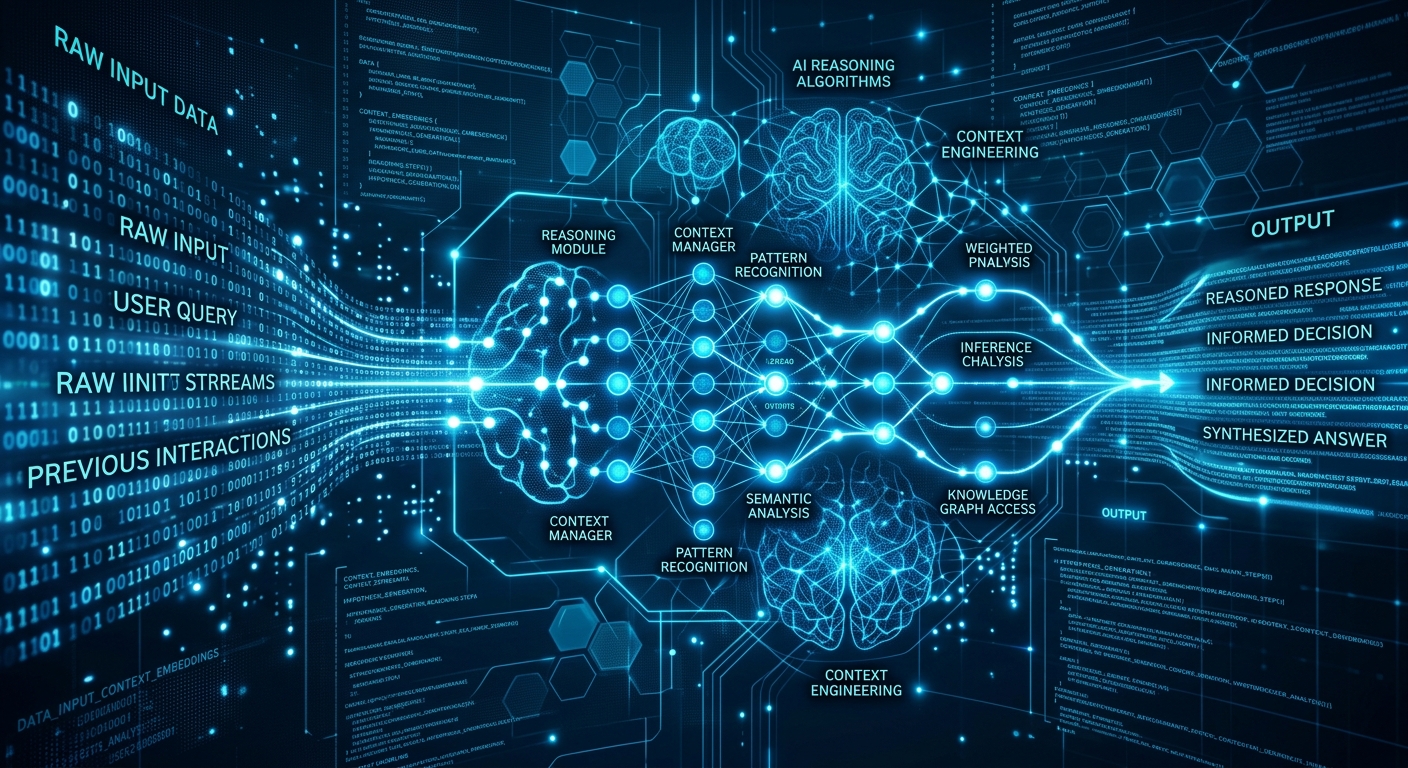 A high-tech visualization of context engineering and AI reasoning pathways in enterprise environments.
2. The Critical Need for Observability and Logging
When an AI system operates autonomously—making decisions, calling APIs, interacting with customers—you absolutely must know why it did what it did.
- Deep Dive into Agent Logging: The necessity of tracking an agent's reasoning paths and decision points is becoming a top priority. As AgntLog points out, understanding the internal workings of sophisticated agents operating in dynamic, high-stakes environments is just as important as the final output.
- Framework Integration: We are seeing rapid maturation in deployment frameworks. The community is actively integrating tools like LangChain with the Microsoft Agent Framework to deploy multi-agent systems with real infrastructure, managed identity, and container orchestration.
This is the unglamorous but vital work of scaling AI. If your engineering teams aren't prioritizing robust logging and observability for their LLM applications, they are building up technical debt that will be incredibly painful to pay down.
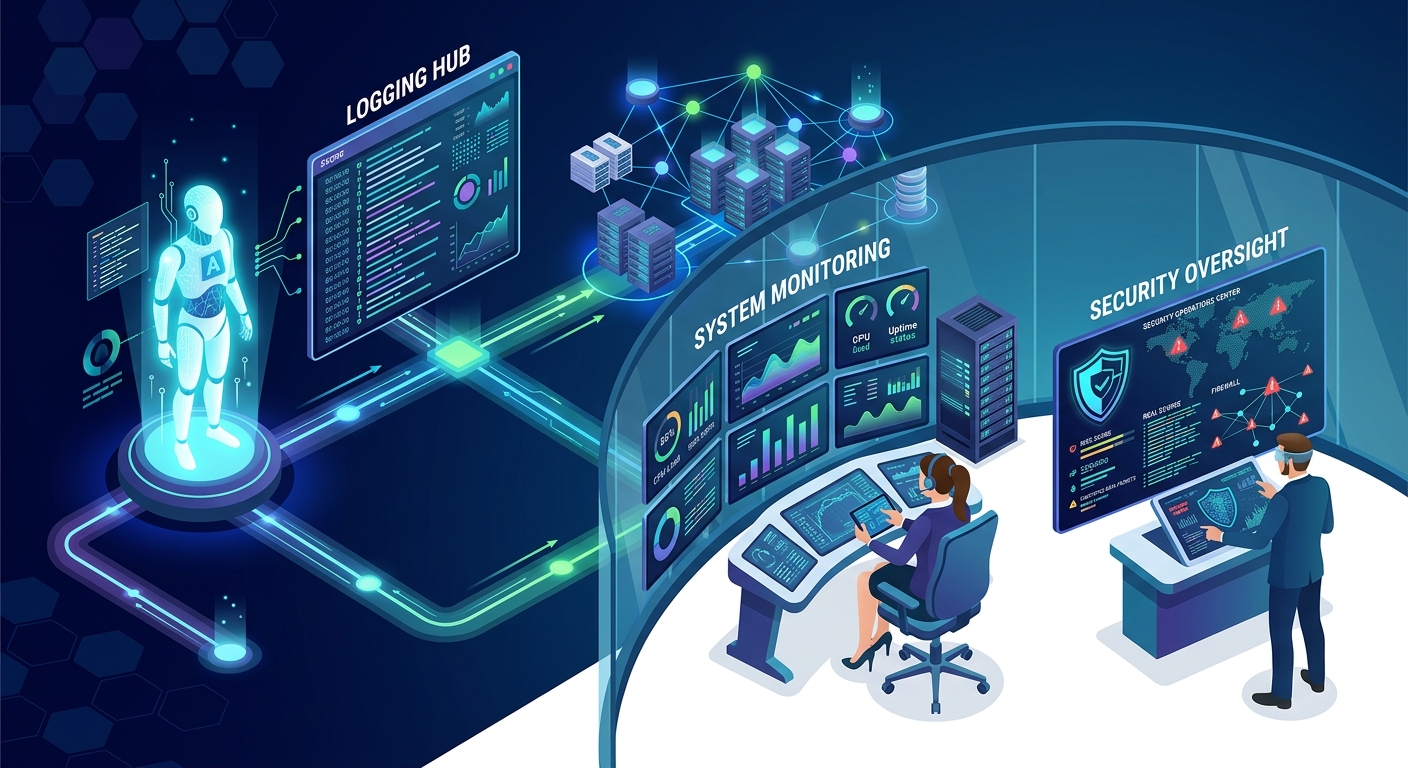 Robust logging and observability are no longer optional when deploying autonomous agents in enterprise environments.
 A futuristic AI supply chain orchestration map glowing on a digital display in a dark control room.
3. Agents Penetrating the Physical and Financial Worlds
The real world is messy, but AI agents are increasingly being trusted to navigate it.
- Financial Autonomy: Trust Wallet's integration of AI-powered crypto trading agents is a perfect example. These aren't simple algorithmic triggers; these are agents capable of automated transactions across diverse blockchain networks based on user-defined strategies.
- Defense and High-Stakes Simulation: In perhaps the most dramatic example of agentic simulation, the German military is utilizing the "GhostPlay" environment where AI agents play out thousands of "what-if" scenarios in seconds. The goal isn't to replace humans, but to manage the overwhelming scale of data in critical decision-making chains.
These implementations prove that the trust barrier is being broken in sectors where the cost of failure is extremely high.
The Bottom Line
The narrative has shifted from "what can AI generate?" to "how do we reliably manage what AI executes?" The organizations that win in this next phase won't necessarily be the ones with the flashiest models, but the ones with the most robust infrastructure, logging, and operational discipline.
Are your teams focused on building the observability necessary for autonomous agents? What hurdles are you facing as you move from proof-of-concept to production?
Let's discuss. Connect with me on LinkedIn and share your thoughts. Let's learn and build alongside a community of like-minded builders.
Bryan.AI