BLOG // 2026.04.13 // 14:01 SGT
The Death of Hand-Rolled AI Agents
Foundation models are moving up the stack—spending finite engineering cycles on custom agent plumbing is no longer a weak moat, but a massive operational liability.
At Amazon, we didn't rack our own servers. At ShopBack, we didn't build our own payment gateways. Yet, for the last three years, every AI engineering team in Singapore and beyond has been hand-rolling their own agentic infrastructure — wrestling with raw model APIs, memory management, and fragile prompt chains.
That era of brute-force building is quietly coming to an end.
The shift from building primitives to consuming managed services is the most predictable cycle in tech. We are hitting that inflection point for autonomous systems right now. Today’s news cycle confirms what operators have felt brewing for months: the abstraction layer has finally arrived, and the threat vectors have immediately followed.
The End of Hand-Rolled Agents
I see pitch decks every week from startups claiming to have built proprietary agent frameworks. It was a weak moat in 2024; today, it is a negative indicator. Why spend engineering cycles on plumbing when the foundation model providers are moving up the stack?
Anthropic has just shifted the landscape by dropping their Managed Agents Platform for enterprise AI. This is the AWS moment for agentic workflows. They are abstracting away the heavy lifting of agent development, turning what used to be weeks of fragile Python scripting into a managed enterprise service.
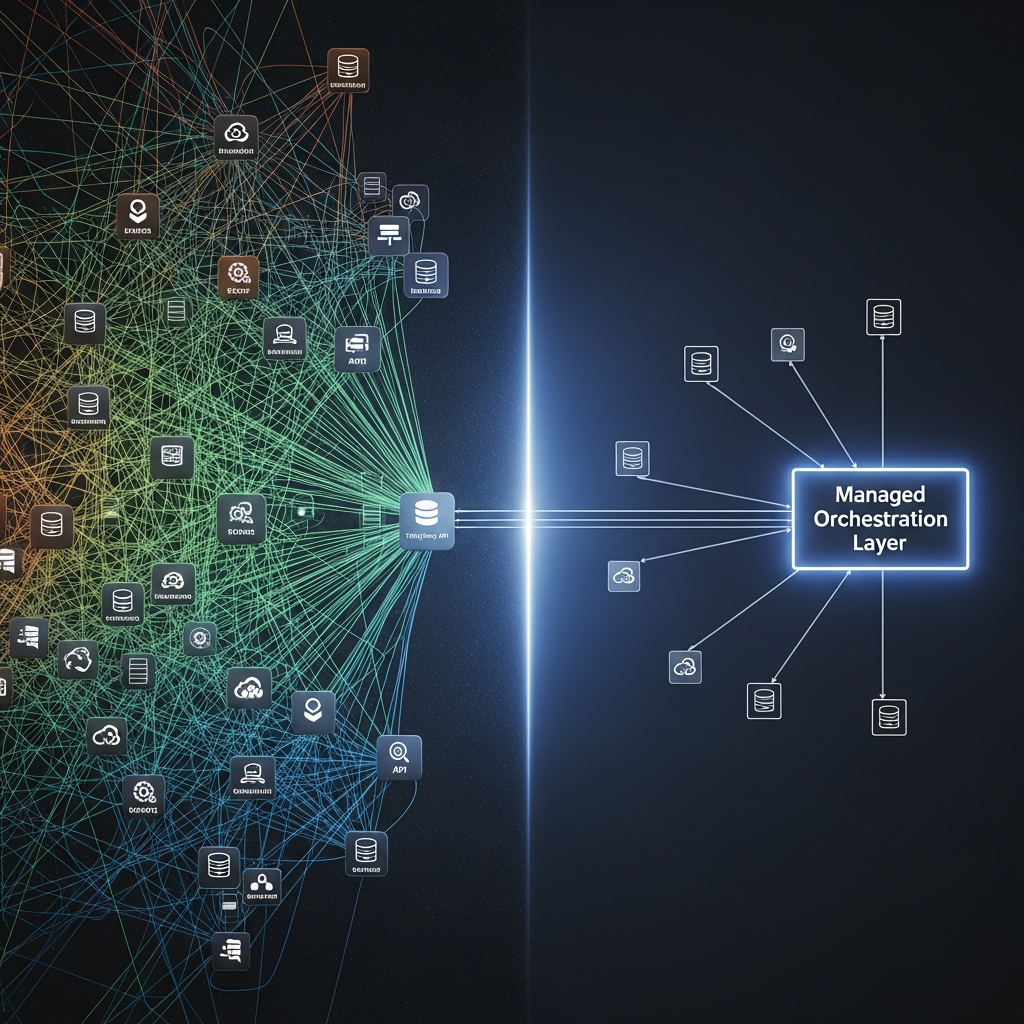
When infrastructure is commoditized, the value shifts up the stack. If you are a CTO, your hiring criteria has to change immediately. The market is already signaling the rise of the AI Orchestrator Economy. The most valuable skill is no longer writing the agent from scratch. The premium is on orchestration — stringing managed models together to compound business value without breaking the system.
Time is the ultimate constraint across your career, your family, and your finances. Do not waste your team’s time building what Anthropic will manage for you.
Boring Patterns Drive Production
Demos are cheap. Anyone can make an open-ended autonomous agent look like magic on a MacBook in a controlled environment. Deploying that same agent to handle thousands of concurrent customer requests across APAC without hallucinating a catastrophic refund policy? That is where the reality check hits.
The hype machine promises Artificial General Intelligence that can figure out any task. The reality of deployment is far more constrained. Builders who actually ship are coalescing around The Six Agentic AI Patterns That Actually Matter.
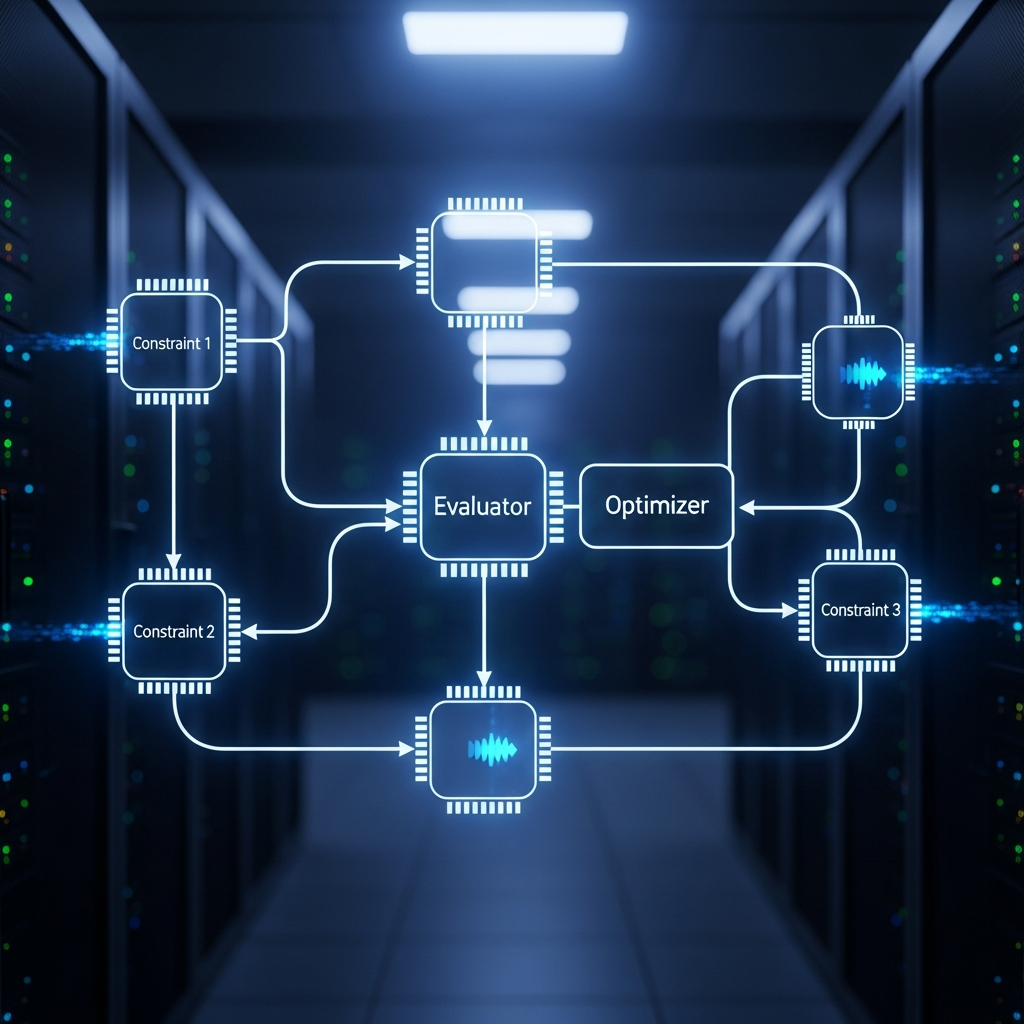
Real production systems don't rely on a single god-model thinking out loud. They rely on predictable, bounded patterns: routing, parallelization, and evaluator-optimizer loops. You don't need a model that can do everything. You need a workflow that fails gracefully. Reliability at scale requires constraining the model, not setting it free. If your architecture doesn't map to these proven patterns, you aren't building a product — you are funding a science experiment.
The Threat Surface Inverts
When you give models agency, you give them a blast radius.
We used to worry about prompt injection making chatbots say embarrassing things. Now, the stakes are measured in orders of magnitude. The security landscape hasn't just evolved; it has completely inverted. We are seeing reports of AI Agents being tested to attack the real web. The irony is sharp — the very benchmarks we built to evaluate AI safety are now being weaponized as the vulnerabilities to exploit real-world systems.

It gets more tactical and much more dangerous. Researchers have just uncovered malicious AI agent routers capable of stealing crypto. Think about the implications of that. In an agentic architecture, the router is the brain stem. It directs traffic between models and tools. If the router itself is compromised, your entire orchestration layer becomes a weapon against your own balance sheet.
You cannot bolt security onto an autonomous system after the fact. If your agents have read/write access to your financial infrastructure, the orchestration layer is your new perimeter.
The moat in 2026 isn't the model you use. It isn't the framework you deploy. The moat is your ability to orchestrate managed primitives faster than your competitors, while mathematically proving your routers aren't bleeding capital out the back door. Choose your complexity wisely.