BLOG // 2026.04.19 // 18:00 SGT
The Agentic Shift: Building AI That Actually Ships
Forget the model hype; the real AI shift is to distributed agentic systems requiring robust engineering and infrastructure to move from demos to actual deployment.
The noise around AI has been deafening for years. Demos, promises, venture capital flowing like a river. But if you’re operating at scale, if you’re building actual products that need to deliver, you quickly learn to distinguish the hype from what truly moves the needle. Today, on April 19, 2026, we’re seeing the real shift—away from abstract models and towards concrete, agentic systems that fundamentally change how we build, operate, and even think about organizations.
The Agentic Shift — From Models to Orchestrated Systems
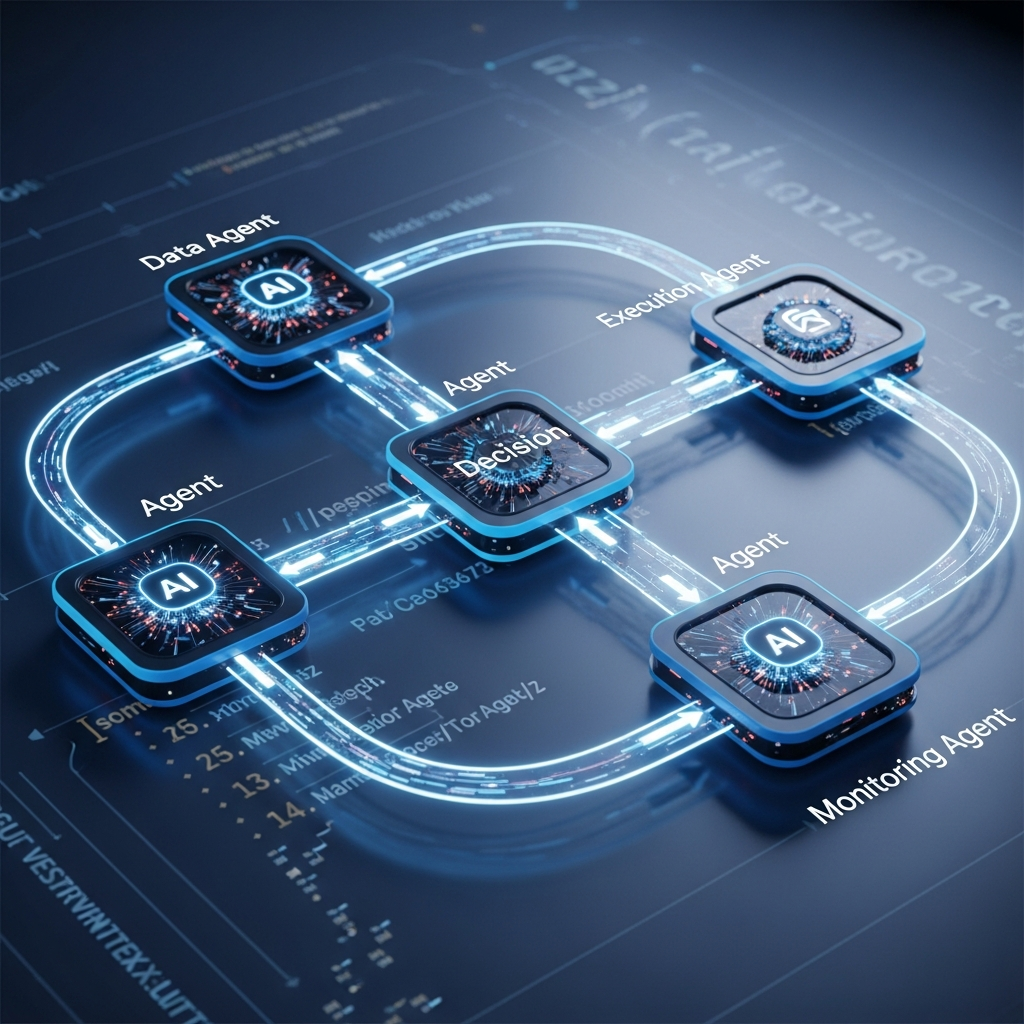
We’re past the point where the conversation is just about larger language models. The focus has sharpened considerably. The latest OpenClaw React Client Update—adding "model per agent," a CLI tool, and "auto-start"—isn't just a feature release; it's a clear signal. We are moving from a world where you interact with a single, monolithic model to one where distributed, specialized agents handle tasks. The ability to build custom tools and manifest plugins, as detailed by OpenClawCrew, isn't theoretical; it's about making these agents truly actionable and extensible. This isn’t a future concept—it’s the present reality of how complex AI systems are being engineered.
Consider Moxn’s recent launch: "Git-like version control for documents, built for AI agents." This isn't for human collaboration anymore. This is infrastructure for autonomous systems. If agents are going to collaborate, iterate, and learn, they need robust versioning and state management—a clear audit trail for their actions and outputs. Walter Gugenberger’s discussion on "living specs for AI agents" further underscores this necessity for dynamic, evolving blueprints that can adapt as agents learn and environments change. What happens when an agent's "spec" isn't a static document but a constantly updated reflection of its capabilities and goals? That's the challenge we're tackling.
This isn't merely about individual agents; it's about how they collectively form an organization. Cyberwisdom's "HAKDB Model" and their vision of "Architecting the 'Company as Code' Reality" isn't hyperbole. It’s the logical endpoint of this agentic shift. When you can define processes, roles, and even decision-making flows as code, managed and executed by intelligent agents, you're not just automating tasks—you're rebuilding the operating system of a business. This isn't about replacing people; it's about fundamentally rethinking how work gets done, how value is created, and how quickly an enterprise can adapt. The implications for agility and scale are immense—orders of magnitude beyond what traditional human-centric hierarchies can achieve.
AI’s Deeper Penetration — Specialized Impact, Real Dollars
The general-purpose AI hype is settling. Now we see targeted strikes—AI not just as a tool, but as an embedded, mission-critical component in specific, high-stakes domains. This is where the real value is being extracted, and where operators need to pay close attention.
OpenAI’s acquisition of AI personal finance startup Hiro is telling. It’s not just about building bigger models; it’s about owning the application layer in valuable verticals. Personal finance is complex, data-intensive, and highly regulated. If an AI can genuinely navigate that landscape—managing risk, optimizing portfolios, personalizing advice—it unlocks massive value. This isn't a demo; it's a strategic move to integrate AI where the money is, where trust is paramount. The cost of error in this domain is astronomical, making the precision and reliability of AI agents critical for adoption.
Then there's Anthropic’s secretive Mythos AI. Its ability to "hunt crypto smart contract flaws at machine speed" is a game-changer for DeFi. We're talking about potentially "billions in DeFi" at risk if flaws aren't caught. This isn't just an efficiency gain; it's a new frontier in cybersecurity, where the speed and scale of AI can protect against vulnerabilities that human auditors might miss. The stakes couldn't be higher—the difference between secure digital assets and catastrophic financial loss. This is the kind of specialized AI application that doesn't just improve a process; it fundamentally changes the risk profile of an entire industry.
Even seemingly mundane tasks like automating ticket classification with AI agents represent this deep integration. It's about taking a core operational burden—often a bottleneck for customer service and internal efficiency—and applying AI to solve it at scale. This frees up human capital for more complex, empathetic interactions. These aren't flashy innovations, but they represent the daily, compounding gains that truly transform businesses. The cost savings and improved customer experience aren't just marginal; they're foundational to competitive advantage.

The Human Element — Adapting Our Skills
The question isn't if AI changes jobs, but how and what skills remain critical. The market is already signaling the shift, and ignoring it is a luxury few can afford.
We're seeing a clear, accelerating demand for roles like "AI Engineer" and "Data Engineer." These aren't just new titles; their strategic importance is escalating. An "AI Engineer" isn't just someone who trains models; they're the architects connecting those models to real-world systems, ensuring they function reliably within complex agentic frameworks. The "Data Engineer" remains foundational—without clean, structured, and accessible data, even the most advanced AI models are crippled. This isn't a passing trend; it's the core infrastructure for the next decade of digital transformation.
The market is responding to this demand with practical upskilling opportunities, like the "AI SEO Course in Johor Bahru 2026." This isn't about theoretical AI research; it's about equipping professionals with the tools and techniques to leverage AI for tangible business outcomes—in this case, improving search visibility. It’s a pragmatic response to a skills gap that's already here in our region.
"What an Oracle foretells about jobs and careers in the AI era" isn't about doomsaying. It's about recognizing that repetitive, predictable tasks are increasingly susceptible to automation. The value shifts to human skills that are harder to replicate: critical thinking, complex problem-solving, creativity, emotional intelligence, and—crucially—the ability to design, oversee, and optimize AI systems themselves. Our careers are no longer just about execution; they're about orchestration. Time is the ultimate constraint, and if AI can give us back hours from grunt work, what do we choose to do with that reclaimed time? That's the real question for individuals and for businesses.

The future isn't about AI replacing us. It's about AI becoming the new operating system for our work, our finances, our entire economic fabric. The question isn't if you'll use AI, but if you'll build it, optimize it, or simply be managed by it. Choose wisely.