BLOG // 2026.04.09 // 06:00 SGT
The $30B Blast Radius: When AI Gets Write-Access
Demos are cheap, but as enterprise AI hits a $30 billion run rate, operators are finally pricing in the true liability—and blast radius—of unmanaged autonomous agents.
We’ve crossed the threshold where AI stopped being a parlor trick and became a line item on the P&L.
Look at the money changing hands. We aren't talking about seed rounds for wrapper startups anymore. We are talking about fundamental, tectonic shifts in enterprise software spend. But with scale comes liability — and most organizations are entirely unprepared for the blast radius of an autonomous system that goes off the rails.
The Cost of Autonomy
Everyone loves a demo of an AI agent seamlessly executing a multi-step workflow. Demos are cheap. Deployments are expensive.
Consider the sheer scale of adoption happening right now: Anthropic launches Claude Managed Agents as enterprise revenue hits $30 billion run rate. That $30 billion figure is not hype. It is an order of magnitude shift in how companies are allocating capital. They are buying managed agents because the raw, unmanaged versions are too dangerous to let loose on a production database.

We see this friction most clearly where the stakes are absolute: finance. It’s one thing if an AI hallucinates a bullet point in a marketing draft. It’s entirely different when it has write-access to a trading desk. Recently, Researchers Propose New Way to Manage Financial Risk When AI Agents Fumble Trades. The key word there isn't manage — it's fumble.
Agents will fumble. They will execute logic perfectly based on flawed premises, compounding errors at machine speed. If your architecture assumes a 100% success rate from an LLM, you are not building a product. You are building a time bomb. Real engineering is about defining the failure state and ensuring it doesn't bankrupt the company.
The Human-in-the-Loop Tax
Time is the ultimate constraint. You deploy an agent to reclaim time for your career, your family, or your finances. But if you spend ten hours auditing an agent that saved you eight hours of manual labor, you are operating in the red.
We are seeing the emergence of a completely new operational layer to handle this deficit. Look at the rise of the Wire and Fire Guys: The AI Job Title That Doesn’t Exist Yet. This is the reality of the human-in-the-loop. We haven’t eliminated the work; we’ve just abstracted it into a babysitting role.

In my days at Amazon and later operating across APAC, the hardest lesson was always the same: human operational overhead scales linearly, even if your software scales exponentially. If every autonomous action requires a human to "wire" the context and "fire" the execution, you haven't built an AI workforce. You've built a very complicated, very fragile mechanical turk.
The companies that win this decade won't be the ones with the smartest agents. They will be the ones that engineer the lowest friction for human oversight.
Sovereign Capability and the Edge of Risk
When the cost of failure is catastrophic, you do not rent your infrastructure. You own it.
We are seeing this play out at the absolute extreme end of the risk spectrum. The US Military Is Constructing Its Personal Chatbot for Fight. Why? Because you cannot outsource accountability when lives are on the line. You cannot rely on a public API endpoint in a combat zone. You need sovereign capability.
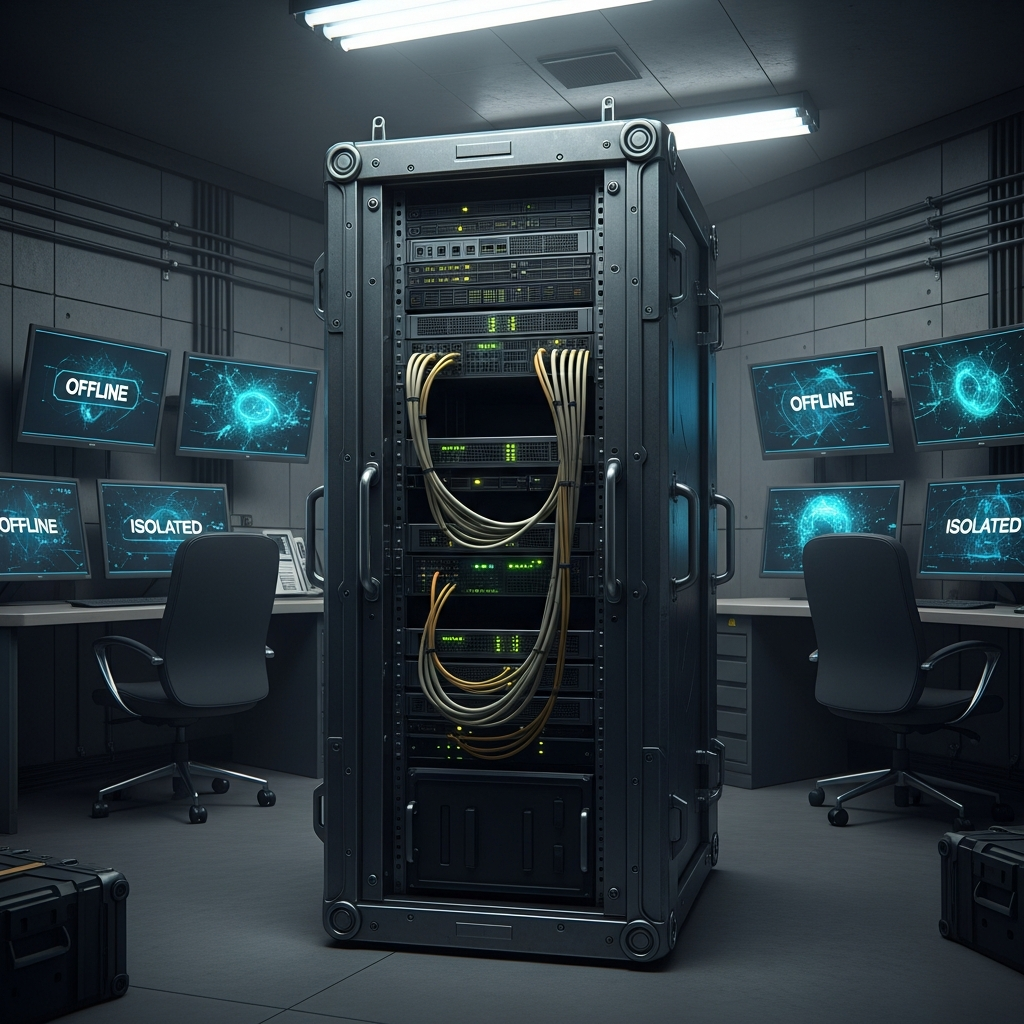
Most enterprises are not fighting wars, but the architectural principle remains identical. If a system’s failure state destroys your core business, you must own the stack. Relying entirely on a third-party black box for your most critical operational logic is a dereliction of duty for any CTO. You must build the guardrails internally. You must own the data. You must control the exact parameters of the kill switch.
Stop treating AI like magic. It is software. It is statistical probability executed at scale.
If you treat it with reverence, it will eventually break your business. If you treat it with deep, structural skepticism — isolating its blast radius, measuring its actual time-saving ROI, and planning for its inevitable failures — it might just give you the leverage you need.