BLOG // 2026.04.01 // 22:00 SGT
Enterprise Agentic Shifts and Semantic Governance
A pragmatic look at how enterprise AI transitions from simple copilots to structured, semantic-driven agentic infrastructure.
It is easy to get caught up in the daily noise of AI announcements. But when you filter for compounding behavior and pragmatic shifts in how work actually gets done, the most important transition happening right now is the move toward agentic infrastructure. We are moving past the era of conversational copilots and entering a phase where models act as semi-autonomous operators within enterprise environments.
This isn't an overnight switch. It is a slow, methodical integration that requires new layers of infrastructure, governance, and compute management.
The OS Layer for Agents
One of the structural changes we are seeing is the attempt to formalize the environment in which these agents operate. Instead of piecing together disparate scripts, there is a push for a unified "operating system" for enterprise AI. A notable indicator of this trend is Sycamore’s recent $65 million seed round, aimed at building exactly this kind of trusted foundation. This layer isn't about the models themselves; it is about reducing the time to solve problems by standardizing how agents access data and execute tasks securely.

The Compute Profile is Changing
As agents begin to handle multi-step reasoning, looping, and reflection, the underlying compute requirements shift. The operational pattern is no longer just a single, massive GPU inference request. It is becoming clear that agentic workflows are increasingly CPU-heavy, challenging how enterprises have provisioned their hardware over the last two years. Scaling these systems requires a balanced architecture rather than blindly throwing more accelerators at the problem.

Standardizing Production Baselines
Moving an agent from a successful prototype to a reliable production service remains the hardest part of the journey. Enterprises need predictable baselines to measure if an agent is actually improving over time. The open-source community is actively trying to bridge this gap. For instance, Solo.io's introduction of the agentevals project is a pragmatic step toward standardizing how we evaluate agent safety and performance in real-world scenarios. It is less about building a smarter model and more about ensuring the one you have behaves consistently.
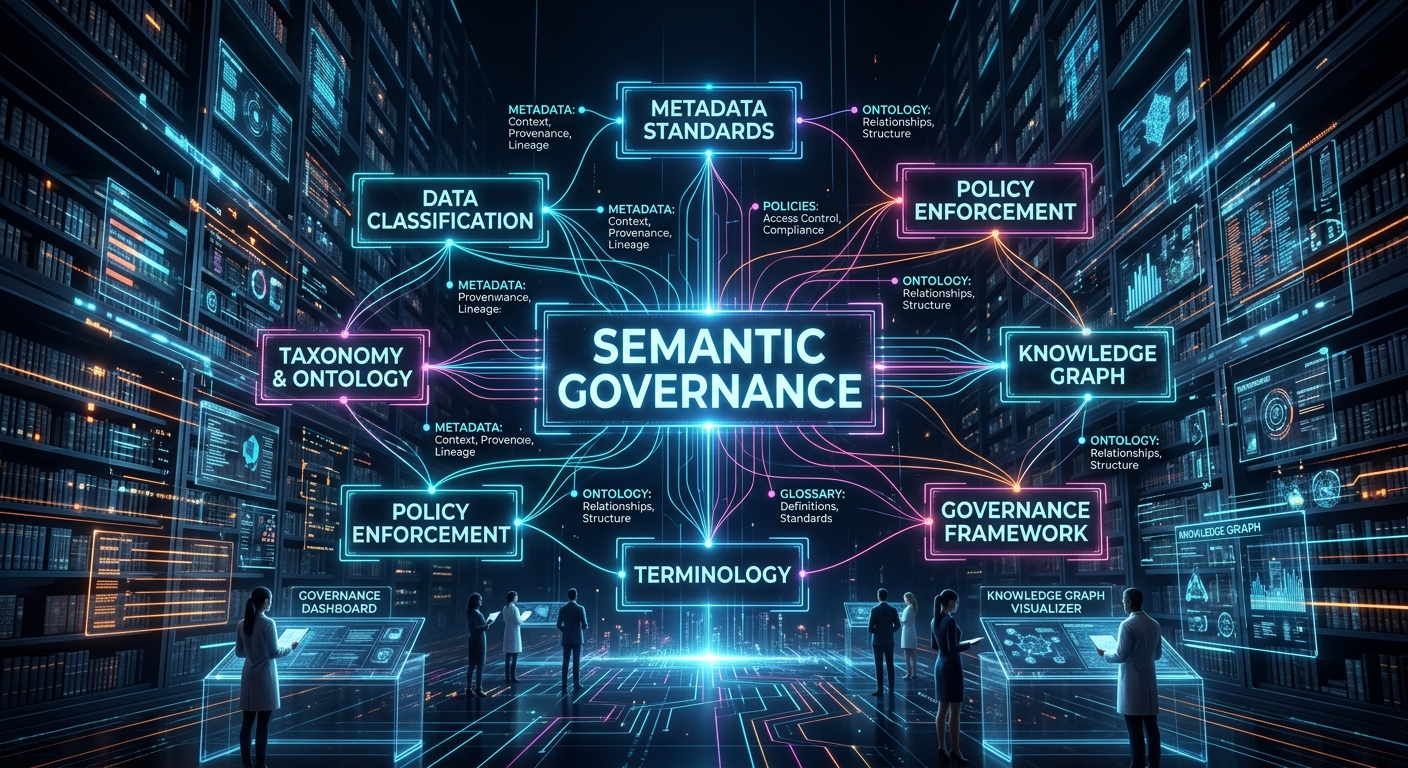
Semantic Governance: Controlling the Meaning
Perhaps the most critical challenge is model drift—not in the statistical sense, but in the semantic sense. When autonomous agents operate across thousands of tasks, their interpretation of business rules can slowly degrade. Without explicit guardrails, they lose the precise context of their instructions.
This is why we are seeing a focus on semantic governance. Companies are realizing that explicitly imposing semantic authority is necessary to keep models aligned with business reality. Tools are emerging to handle this in real time, such as Rubrik's Semantic AI Governance Engine (SAGE), which focuses on intent-driven oversight rather than static manual reviews.

At the end of the day, these developments aren't about magic. They are about building robust, predictable systems. The enterprises that succeed here won't be the ones with the largest models; they will be the ones that master the unglamorous work of governance, evaluation, and infrastructure. It’s about leaving the enterprise baseline better than we found it.