BLOG // 2026.04.08 // 14:00 SGT
Edge AI is Breaking the Cloud Abstraction
The Valley pitches clean cloud APIs, but the explosion of localized troubleshooting guides reveals a hard truth—dragging AI workloads back to the edge is an operational nightmare.
When you see consumer tech blogs spinning up multi-language troubleshooting guides for an enterprise tool, you know two things are true. First, the adoption curve has gone vertical. Second, the deployment reality is a nightmare.
I spent the morning looking at the traffic patterns across our regional deployments. The narrative in the Valley right now is that AI is a clean, infinitely scalable cloud API. The reality on the ground here in APAC—and globally—is that we are dragging infrastructure back to the edge. It is messy, it breaks, and it requires operators who actually understand system architecture, not just prompt engineering.
The Cloud Abstraction is Fracturing
Look at what is actually being published today. We have step-by-step guides popping up in French, German, and Portuguese just to fix OpenClaw malfunctions. This isn’t theoretical edge-case debugging. These are mainstream SEO plays trying to capture the massive volume of frustrated developers trying to keep local agents alive.
Why are they struggling? Because we are moving workloads out of the centralized cloud. NodeMac's latest breakdown highlights the alignment of OpenClaw scheduled tasks using launchd on Mac mini M4 gateways. Read that again. We are back to configuring local daemons on desktop-class hardware to act as AI gateways.

The industry is realizing that latency, privacy, and token costs cannot be solved by a monolithic cloud provider. If you are processing localized retail data or internal corporate workflows, bouncing every token to a US-based server is architectural malpractice. You push the compute to the edge. But the edge is fragile. When a local launchd script fails, your autonomous workflow dies silently. The operators who win this cycle won't be the ones with the best prompts—they will be the ones who master local agent orchestration and uptime.
Agents Talking to Agents Requires Memory and Standards
We are finally moving past the era of single-agent wrappers. The real compounding value of AI happens when systems interact without human intervention. But if you've ever tried to daisy-chain autonomous agents in production, you know the hallucination drift is catastrophic.
The tooling is finally catching up to the theory. Today, we are seeing detailed architectures for building OpenClaw A2A Plugin Bridges, allowing developers to publish Agent Cards and accept cross-agent tasks. This is the foundation of an agentic economy. But an economy requires a common language. That’s why the release of benchmarks and standards for Tool Use and Function Calling is critical. Without rigid schemas, Agent A cannot trust the output of Agent B.
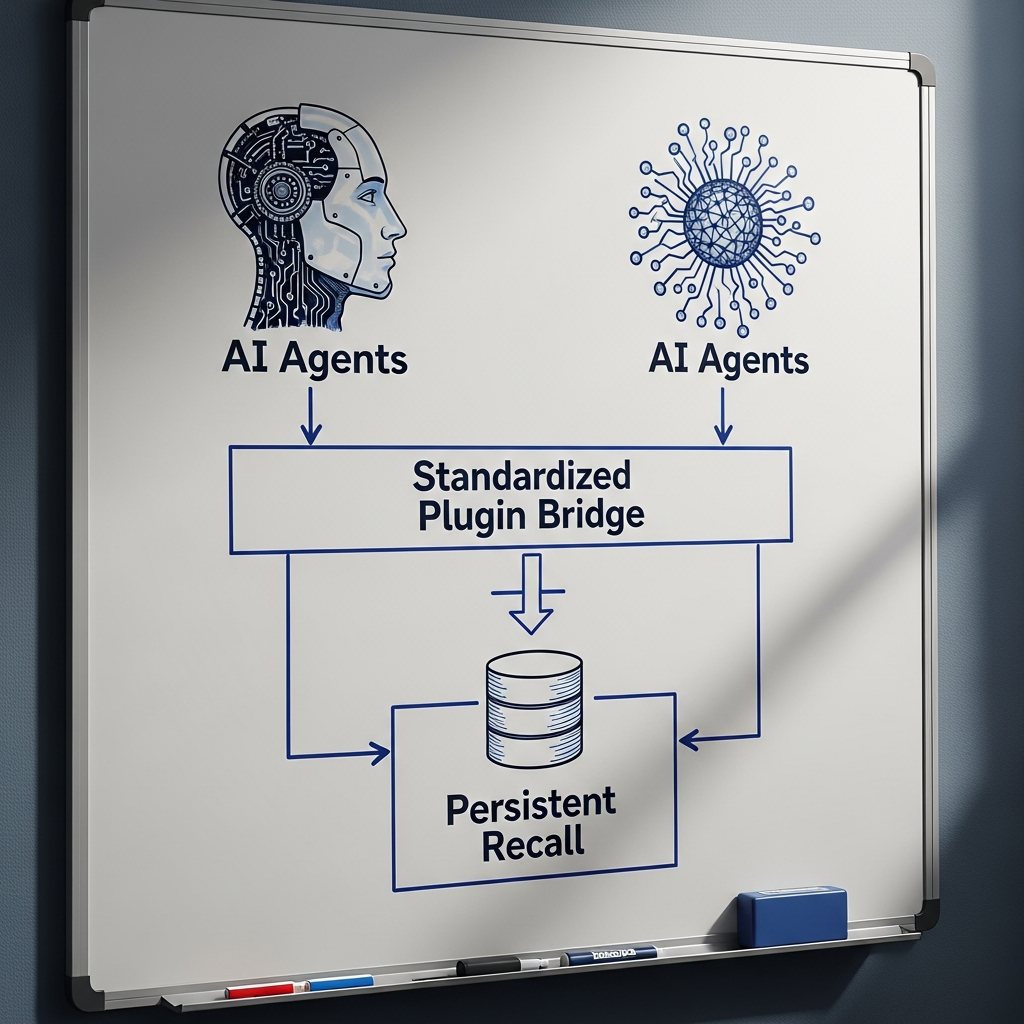
And then there is the constraint of time. A cross-agent task is useless if the system forgets the context halfway through the execution. Frameworks like Mem0 for persistent AI recall are attempting to solve this. If you cannot maintain state across a multi-step, multi-agent workflow, you do not have an autonomous system. You have a parlor trick. Time is the ultimate constraint in business—if your agents spend half their processing cycles re-establishing context, your unit economics will bleed out.
Token Economics Dictate Survival
This brings us to the hard truth about models. Big Tech wants you to believe that massive, generalized models are the answer to everything. They aren't.
Look at the hardware footprint required for daily operations. There is a reason the market is rooting for tiny open-source model makers like Arcee. It is the exact same reason we are seeing the rise of tools like Unisound U2Claw, specifically positioning itself as a token-efficient, safer desktop AI agent.

Token efficiency is the new compute margin. If you are using a trillion-parameter model to execute a basic desktop file-sorting function or a localized database query, you are burning cash. Orders of magnitude matter. The compounding cost of bloated API calls will destroy a startup's runway faster than bad hiring. Small, specialized models running locally or on edge gateways are the only sustainable path for enterprise deployment.
There is a widening gap in the market right now. A piece published today highlighted leadership confidence versus employee uncertainty in the 2026 AI gap. Executives are confident because they watch keynote demos. Employees are uncertain because they are the ones trying to fix broken local gateways and manage cross-agent hallucination loops.
Stop buying the hype. Get your hands dirty with the infrastructure. If your strategy relies entirely on a vendor's cloud API, you don't own your product—you are just renting their margins.