BLOG // 2026.04.20 // 02:01 SGT
AI Agents: When Your Software Starts Doing, Not Just Talking
The AI conversation has moved past slick demos and reactive tools; the critical shift is towards deploying autonomous agents that proactively execute multi-step tasks, delivering real leverage and measurable impact on the ground.
We’ve been through the "AI is going to change everything" keynote circuit for long enough now to know the drill. Demos look slick. Promises sound grand. But when you’re on the ground, building, shipping, and trying to hit numbers, the rubber meets the road very differently. This isn't about theoretical breakthroughs anymore. It's about what’s actually deploying, what’s moving the needle, and where the real leverage lies. And right now, that leverage is shifting.
The Agentic Shift: From Tools to Autonomous Systems
For years, we’ve talked about AI as a tool—a sophisticated assistant, a smarter search engine, a better content generator. And it has been. We’ve seen it automate basic tasks, write marketing copy, or even draft simple emails. But that’s changing. The conversation, and more importantly, the development, is moving towards AI agents—autonomous systems that don't just respond to prompts, but proactively execute multi-step tasks to achieve a defined goal.
We're seeing this shift explicitly called out—from "bots to AI agents"—in discussions about [ChatGPT alternatives for 2026](https://www.samonlinemarketing.nl/blog/beste-chatgpt-alternatieven-voor-2026-van-chatbots-naar-ai-agents/). It’s not just a semantic rebrand; it’s a fundamental architectural shift. Think about it: a chatbot waits for your command. An agent, however, might monitor your inventory, identify a low stock item, find a supplier, negotiate a price, and place an order—all with minimal human intervention. This isn't just a smarter tool; it's a self-directed operator. The bdesk.news points to "AI Evolving From Tools to Autonomous Systems in 2026: The Rise of Agentic Intelligence" [AI Evolving From Tools to Autonomous Systems](https://bdesk.news/ai-agentic-intelligence-autonomous-systems/). This isn't hype. This is how the software stack is being rewritten.

What does this mean for operations? It means moving beyond simple API calls and into orchestrating intelligent workflows. It's less about asking an AI to do something, and more about giving an AI a mandate and letting it figure out the how. The complexity shifts from prompt engineering to goal engineering and robust error handling. Because an autonomous agent failing silently is far more dangerous than a chatbot giving a wrong answer.
Enterprise Reality: Resilience and Adoption Aren't Optional
Building an agent that works in a lab or a small proof-of-concept is one thing. Deploying it at scale within a complex enterprise environment is another beast entirely. This isn't just about the AI itself; it's about the infrastructure, the data pipelines, and the operational resilience.
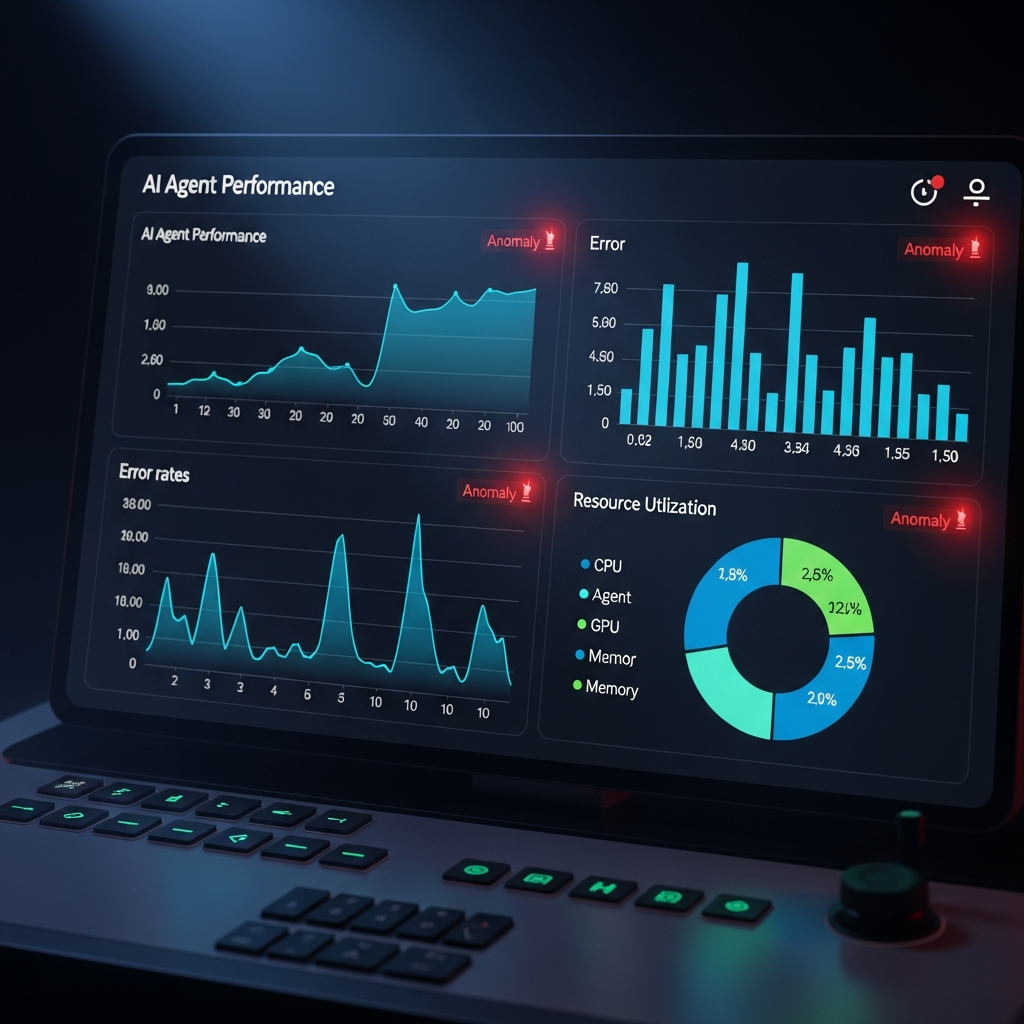
Consider the news about Cohesity partnering with Datadog [to deliver AI agent resilience](https://www.cohesity.com/es-es/newsroom/press/cohesity-partners-with-datadog-to-deliver-ai-agent-resilience/). Why is this significant? Because agents, by their nature, are constantly interacting with systems, making decisions, and taking actions. If an agent goes rogue, or misinterprets a directive, or simply crashes, the downstream impact can be severe. Observability and rapid recovery aren't luxuries; they're foundational requirements. You need to know what your agents are doing, why they're doing it, and have a clear path to roll back or intervene when necessary. This is the difference between a cool demo and a production-ready system.
We're also seeing agentic AI change cybersecurity operations, moving from SIEM to semi-automatic SOCs, as reported by FPT University's IA-Lab [Agentic AI in cybersecurity](https://iahn.fpt.edu.vn/tin-tuc/tu-siem-den-soc-ban-tu-dong-khi-agentic-ai-thay-doi-cach-van-hanh-an-ninh-mang). This isn't just about detecting threats faster; it's about agents taking pre-emptive action to mitigate them. But the control plane—the human oversight, the ability to validate and verify—becomes paramount. It's why we're seeing roles like "Enterprise AI Adoption Lead" emerge. Someone has to bridge the gap between AI capability and organizational readiness. This isn't just about technical deployment; it's about change management, risk assessment, and legal frameworks.
The Money Shot: Agentic Shoppers and New Value Creation
All the talk about agents and enterprise architecture is interesting, but what does it mean for the bottom line? For revenue? This is where the numbers start to get compelling.
One headline jumped out: "AI Traffic to US Retailers Jumps 393% in Q1 as Agentic Shoppers Outspend Humans" [AI Traffic to US Retailers Jumps 393%](https://cryptonews.net/news/other/32730284/). Let that sink in. A nearly four-fold increase in traffic attributed to AI, with these "agentic shoppers" outspending their human counterparts. This isn't a marginal improvement; this is an order of magnitude shift in consumer behavior and market dynamics.
What are "agentic shoppers"? They are AI agents acting on behalf of consumers—researching products, comparing prices, making purchase decisions, and executing transactions autonomously. This isn't just about a chatbot recommending a product; it’s about an AI agent completing the entire buying journey. For businesses, this means the nature of online retail traffic is fundamentally changing. Your target audience isn't just humans anymore; it's also the sophisticated AI agents representing them.

The implications are profound. If agents are driving more traffic and higher spending, then your marketing, sales, and product strategies need to adapt. Are your product listings optimized for agent consumption? Can your APIs handle programmatic purchasing at scale? Is your customer support ready to interact with an agent, not just a human? This isn't about AI being a nice-to-have; it's about AI becoming the primary interface for a significant—and growing—segment of the market. And the companies that understand this shift will be the ones capturing the real value.
The transition from AI as a tool to AI as an autonomous agent isn't just another tech trend. It's a fundamental re-architecture of how work gets done, how businesses operate, and how value is created and captured. Many are still debating the nuances of large language models. The smart money is already building the control planes for the agents.