BLOG // 2026.04.18 // 02:01 SGT
AI Agents: The Trillion-Dollar Shift from Lab to Live
AI agents are moving beyond brittle demos into production, driving a multi-trillion-dollar "agent economy" where real memory, autonomous action, and messy integration define actual impact.
The noise around AI agents has been deafening for a while now. Demos are one thing— slick, curated, often brittle. But what matters, what truly shifts the needle, is deployment. We're starting to see real agents move beyond the lab and into production, and with that comes both staggering potential and the inevitable, messy reality of integrating them into existing systems.
The Agent Economy: From Concept to Trillions
The conversation has shifted. No longer is it purely about LLMs, but about how these models are encapsulated into autonomous agents—systems that can perceive, reason, plan, and act. Take Hermes Agent, for instance, touted as a self-improving AI agent that actually remembers you. This "memory" is crucial; it means context persists, and interactions compound, leading to more effective outcomes over time. Similarly, Gupshup, a player with significant reach in APAC, has launched Superagent, an autonomous AI agent aimed at scaling customer conversations. This isn't just a chatbot; it's about offloading entire conversation flows, reducing human intervention, and potentially transforming service delivery at scale [https://voiceofasean.com/government/gupshup-launches-superagent-the-autonomous-ai-agent-for-customer-conversations-at-scale/].
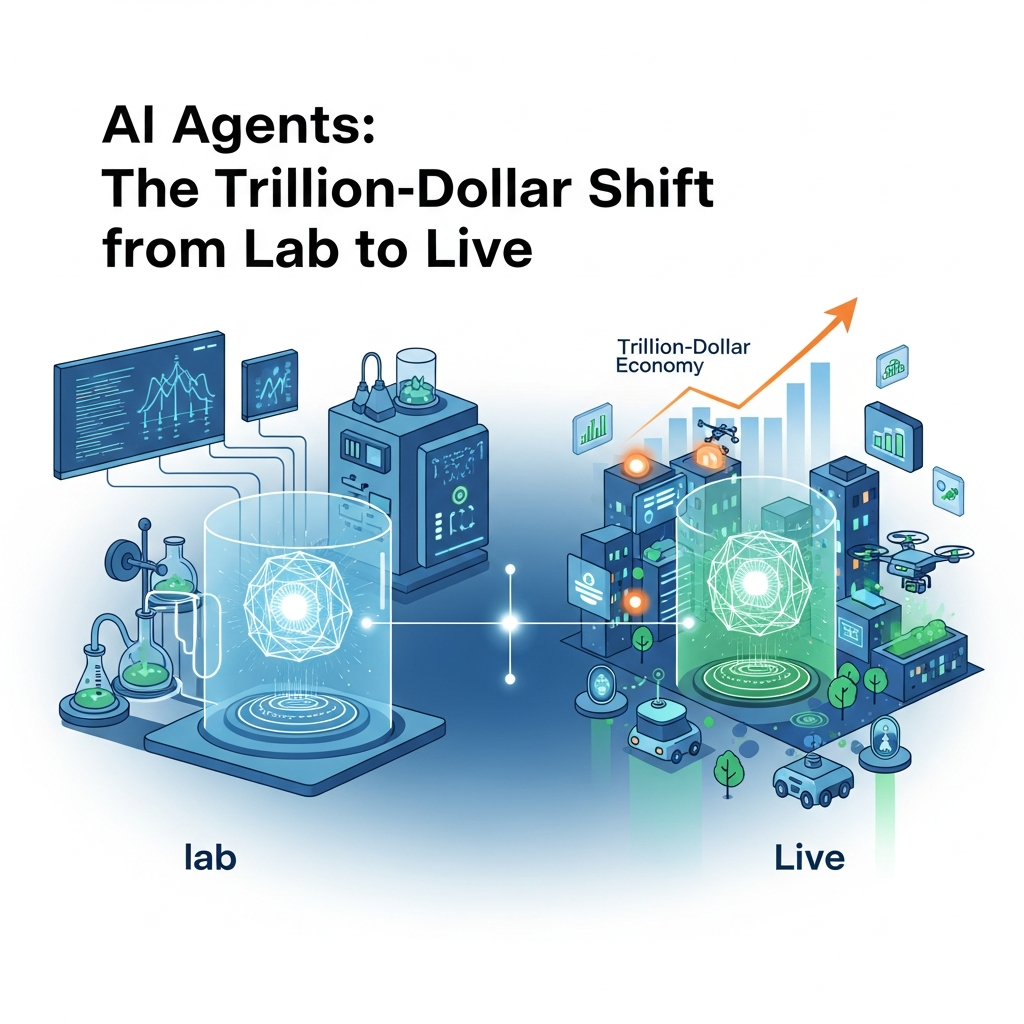
But the scale isn't just about customer service. The "agent economy" in crypto is already a staggering force, with a reported $28 trillion flowing through it. That number isn't theoretical—it's capital moving, driven by automated, intelligent entities [https://trendycrypto.online/popular-news/staggering-28-trillion-flows-through-cryptos-agent-economy/1836]. This isn't some distant sci-fi scenario; it's happening now, influencing financial markets and business operations. The implications for efficiency are immense, but so are the risks. As AI agents become more prevalent, the cybersecurity attack surface expands dramatically, a point highlighted by concerns over risks in the OpenClaw era [https://adtrend.com.br/agentes-de-ia-na-era-do-openclaw:riscos-de-ciberseguranca-em-plena-expansao/]. More autonomy means more points of failure, more vectors for exploitation. We need to build with safety and resilience in mind from day one, not as an afterthought.
Cutting Through the AI-Washing
Every new tech cycle brings its share of hype, and AI is no different. The term "AI-washing" has entered the lexicon, exemplified by companies like Allbirds being called out for it [https://finance.yahoo.com/sectors/technology/articles/weekly-closeout-allbirds-ai-washing-101900931.html]. It’s easy to slap "AI-powered" on a product or strategy and expect a bump in valuation or buzz. The reality is, many of these claims are thin, lacking any measurable, compounding impact on the bottom line. This isn't just about integrity; it's about misallocating resources and distracting from real problems.
Meanwhile, away from the glitzy announcements, AI is quietly transforming businesses—especially in regions like Africa, where practical applications are being integrated to solve concrete operational challenges in 2026 [https://topaiafrica.com/en/ai-transforming-african-businesses/]. This is where the real value lies: not in "emotional intelligence" breakthroughs that sound impressive but often remain in the realm of academic papers or highly controlled demos [https://praiktijk.nl/ai-krijgt-emotionele-intelligentie-een-doorbraak-in-menselijke-samenwerking/], but in the mundane, repeatable tasks that can be automated and optimized. Forget the grand pronouncements; look for the quiet, consistent improvements in efficiency, cost reduction, or new market access. That's the signal in the noise.
The Tangible Impact on Legacy Systems
The agent economy and the broader AI shift aren't just for startups. They're forcing established institutions to adapt, or risk being left behind. Consider the challenge facing Italian banks and their potential to lag in tokenization. This isn't just a niche fintech concern; it's about the fundamental infrastructure of finance evolving, and if traditional players don't move, they'll find themselves operating on an increasingly irrelevant stack [https://www.economymagazine.it/tokenizzazione-perche-le-banche-italiane-rischiano-di-restare-indietro/]. The same forces are at play in higher education, where universities are actively building MCP (Managed Content Platform) data layers specifically to leverage AI agents—a clear recognition that future learning and administrative systems will be agent-driven [https://ibl.ai/blog/universities-mcp-data-layer-ai-agents-higher-education/].
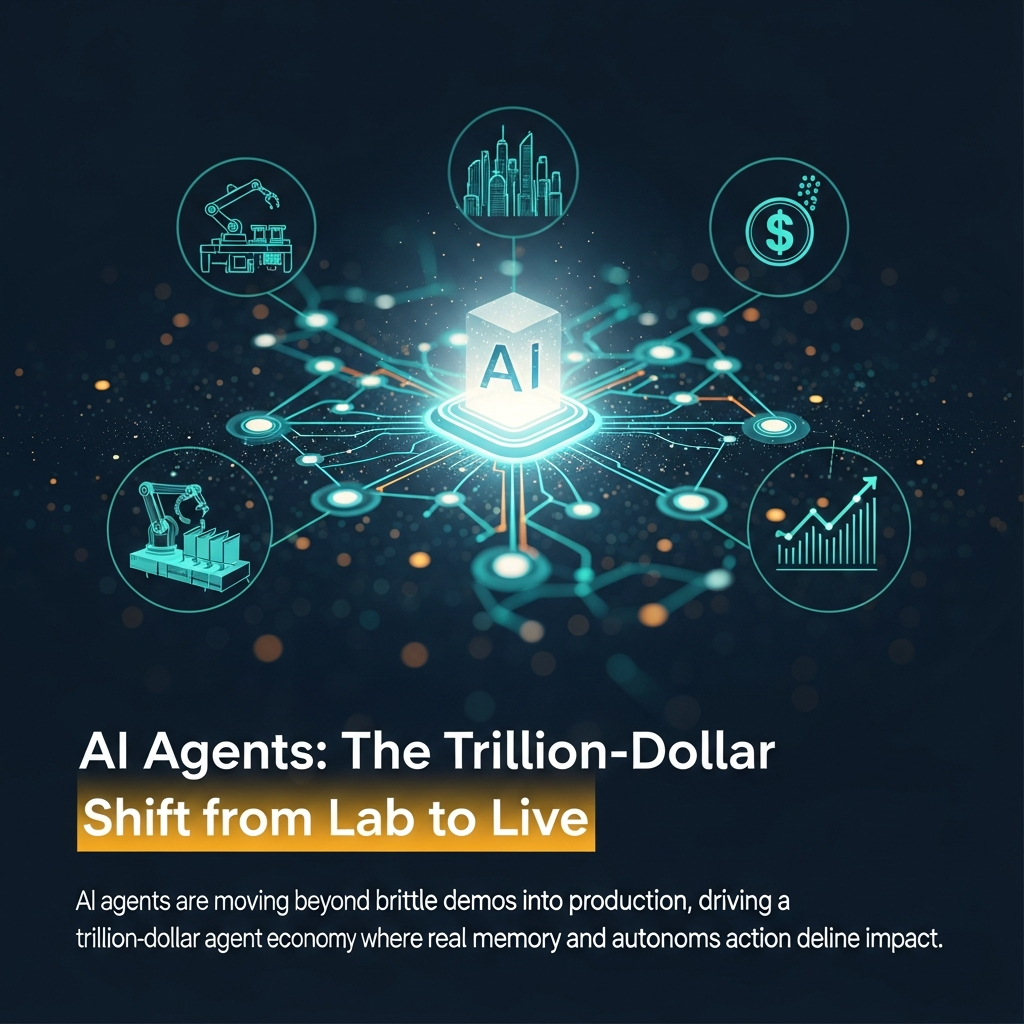
These aren't abstract trends. They're direct threats and opportunities. If your business relies on manual processes, legacy data structures, or a slow decision-making cycle, the compounding gains of agent-driven systems—whether in finance, customer service, or internal operations—will quickly create an order-of-magnitude gap. Time is the ultimate constraint, and these new capabilities are compressing it for everyone.
The real work is in the trenches—building, deploying, iterating, and securing. The $28 trillion flowing through crypto's agent economy isn't a future projection; it's a present reality. Are you building for it, or just talking about it?