BLOG // 2026.04.20 // 18:01 SGT
AI Agents: The Enterprise Sprawl Is Real
AI agents promise orders of magnitude efficiency, but enterprise adoption is already wrestling with 'agent sprawl'—a messy reality of unmanaged complexity, security, and predictability beyond the demos.
The noise around AI agents has reached a crescendo. Everyone’s talking about them, from product demos to venture pitches. But out here, on the ground, what we're seeing is less about the grand vision and more about the messy reality of getting these things to actually work—and not just work, but scale, securely, and predictably.
Agentic AI: The Double-Edged Sword of Enterprise Adoption
Lennix, OKX’s Global Business Officer, talks about AI agents reshaping trading models, building out an Onchain OS as underlying infrastructure. That's a significant claim, a fundamental shift in how financial markets might operate. Imagine autonomous agents executing complex strategies, learning, adapting, driving efficiency orders of magnitude beyond what manual traders can achieve. The potential for compounding gains is immense.
But then you look at the enterprise space, and a different picture emerges. Agentic AI is going mainstream, sure, but companies are already wrestling with "agent sprawl" [https://aesopacademy.org/ai-news/articles/2026-04-13-agentic-ai-mainstream-enterprise.html]. This isn't surprising. Every new layer of abstraction, every new tool that promises autonomy, inevitably introduces complexity if not managed rigorously. We saw it with microservices, then serverless functions. Now, it's agents. Without a coherent strategy, without clear boundaries and observable behavior, you end up with a tangled mess of processes that are hard to debug, harder to secure, and impossible to optimize. The initial productivity gains quickly evaporate under the weight of operational overhead.

The promise is alluring: agents taking action, as Product Hunt Daily highlighted back in March [https://ustack.app/ja/blogs/producthunt-daily-2026-03-24]. But action without oversight is chaos. This is why discussions around "deploying Agentforce in the Public Sector the right way" [https://www.salesforceben.com/deploying-agentforce-in-the-public-sector-the-right-way/] are critical. The public sector, with its stringent compliance and security requirements, is often a bellwether for enterprise maturity. If they're worried about "the right way," it signals that the operational playbook for agentic AI is still being written. And that playbook needs to address not just the "how to build" but the "how to control," "how to audit," and "how to decommission."
From Demos to Deployments: The Infrastructure Reality
The real work isn't in the demo. It’s in the deployment. When we talk about AI, we’re often talking about code that needs to run, data that needs to be stored, and services that need to be maintained. That's infrastructure. The multiple mentions of "How To Install OpenClaw On VPS Server In 2026" across various language blogs – Dutch, Maltese, French, Vietnamese – isn't about hype; it's about a foundational need. It signals that operators, globally, are looking for practical, accessible ways to get their AI tooling up and running on commodity hardware. This isn't about million-dollar cloud contracts for everyone; it's about cost-effective, hands-on deployment for the masses.
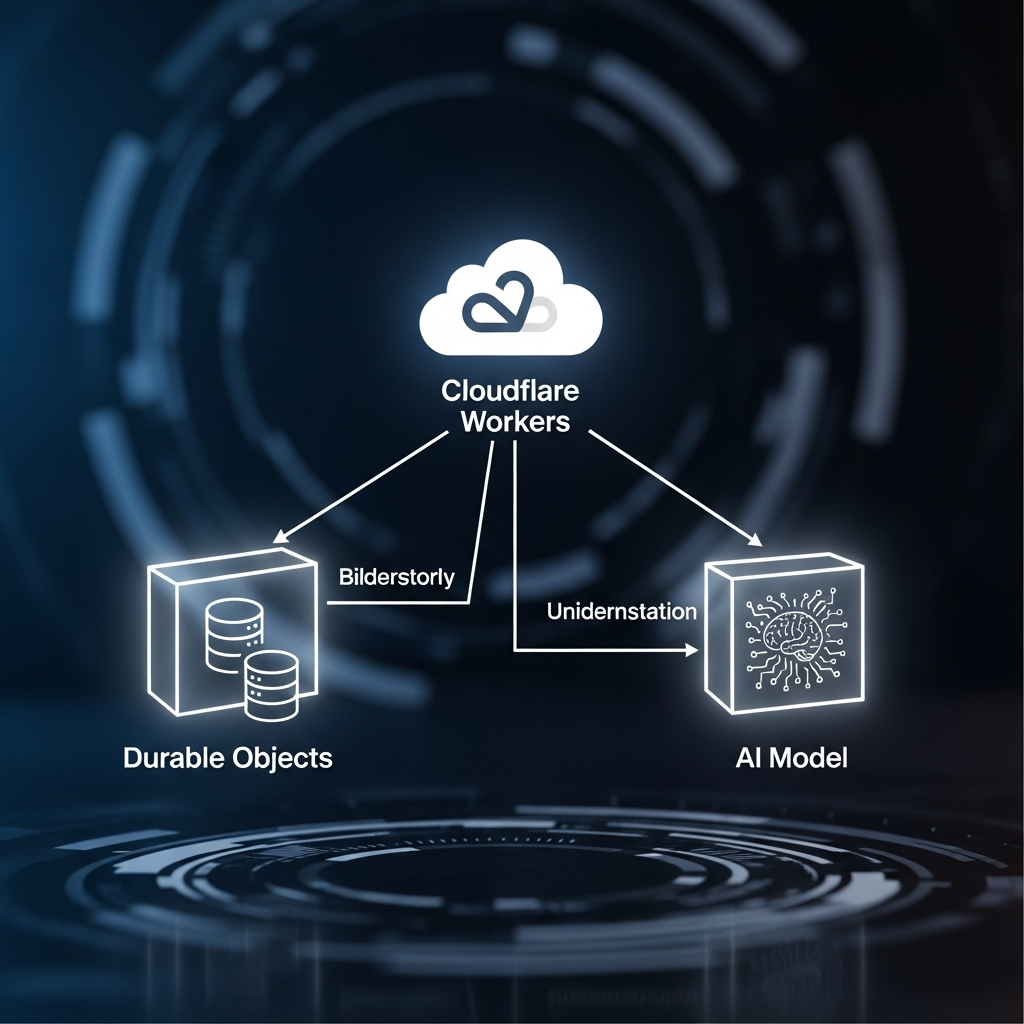
This pragmatism extends to how we build AI-driven applications. Cloudflare Workers with Durable Objects, for instance, are being highlighted for AI-generated apps [https://milkztq.com/article/cloudflare-workers-durable-objects-for-ai-generated-apps]. This combination offers stateless compute with stateful storage, critical for building agents that can remember their context and maintain long-running processes without incurring massive server costs or architectural complexity. It’s a move towards more resilient, scalable, and ultimately, more deployable AI.
Consider the industrial sector. Treon is launching AI-native maintenance to automate industrial uptime at scale [https://ai-watch.jp/english/48929/]. This isn't a "nice-to-have" feature; it's about reducing downtime, extending asset life, and directly impacting the bottom line through operational efficiency. These are real-world applications where AI's value isn't theoretical but measurable in terms of saved millions and increased output. This is where the rubber meets the road for ROI, demanding robust, always-on infrastructure and precise integration.
The Unseen Edge: Security and Financial Impact
AI isn't just changing how we build, but how we secure. The CXTMS blog warns that "AI in Manufacturing Security Is Getting Weird Fast, and Logistics Teams Are in the Blast Radius" [https://cxtms.com/blog/ai-manufacturing-cybersecurity-logistics-risk]. This isn't just about protecting AI models from attack, but about AI creating new attack vectors within existing systems. If an autonomous agent can manage inventory or control machinery, imagine the impact of a compromised agent. The blast radius could be enormous, moving from data theft to physical sabotage. We're not just securing data anymore; we're securing autonomous systems that can manipulate the physical world. This demands a paradigm shift in our security thinking—from perimeter defense to agent-level trust and verification.
On the financial front, the market is clearly taking notice. Tigress Financial raising its target on Booking (BKNG) due to AI momentum is a case in point [https://news.investingchannel.com/article/723919/b-riley-resets-booking-bkng-pt-after-split-tigress-financial-raises-target-on-ai-momentum-2]. Investors are betting on AI's ability to drive efficiencies, personalize experiences, and ultimately, increase revenue. But what are the underlying metrics Booking.com is reporting? Is it conversion rate improvements? Cost per acquisition reductions? Or is it simply a general sentiment play? As operators, we need to dig into the numbers, understand the compounding effects, and distinguish between a genuine step-change in performance and a narrative-driven valuation bump.

The ability to leverage tools like "Claude for Sheets" for 3-year startup financial modeling [https://minhaskills.io/en/blog/claude-for-sheets-modelagem-financeira-startup-3-anos/] shows a clear move towards democratizing sophisticated analysis. This empowers founders and finance teams to iterate faster, explore more scenarios, and make data-driven decisions. But as with any powerful tool, the output is only as good as the input and the human judgment applied. It's an accelerator, not a replacement for critical thinking.
The hype cycle will continue its churn. Our job, as builders and operators, is to cut through the noise. Focus on the foundational infrastructure, the measurable impact, and the inherent risks. The real value of AI isn't in its theoretical potential, but in its robust, secure, and scalable deployment. Anything less is just a demo.