BLOG // 2026.04.19 // 22:00 SGT
AI Agents: The Cost of Agency and Access
Malicious AI agents like ClawHavoc are now actively exploiting financial systems, proving the 'agent economy' hype masks a critical and immediate security debt that demands upfront engineering, not just automated plumbing.
We’re seeing the first real teeth of malicious AI agents. Fyntralink reports on ClawHavoc, a specific set of OpenClaw malicious skills, actively targeting financial employees in Saudi institutions with Amos stealer agentic AI. This isn't theoretical vulnerability — it's a deployed threat, right now. The "fever of AI agents" isn't just hype; it’s generating real security concerns, as ISTOÉ DINHEIRO notes. This is the reality of putting powerful, autonomous systems into the wild.
AI Agents: Security and Scale
The landscape of AI agents is evolving fast, but not always predictably. On one hand, we have concrete threats. The ClawHavoc incident isn't a speculative paper on potential attacks; it’s a report detailing actual malicious AI agent skills used to compromise financial institutions. This is the hard truth: the moment an agent gains agency and access, it becomes a target for exploitation. Every new capability is a new attack surface. We need to build with this in mind from day one, not as an afterthought—because the cost of retrofitting security into an already deployed agentic system is often orders of magnitude higher.
Meanwhile, the "agent economy" in crypto is already seeing staggering numbers—$28 trillion flows through it. But before you picture armies of sophisticated AI bots making complex trading decisions, Insight Bonds points out a crucial detail: 76% of that is just bots shuffling stablecoins. That’s scale, yes, but it’s mostly automated plumbing, not general intelligence. This is the reality check we need: massive financial flows are being driven by narrow, automated agents, not necessarily intelligent ones. It shows the sheer volume of bot activity but also highlights the difference between task automation and true autonomous reasoning.
Still, the utility side is advancing. OpenClaw Guild is launching multi-user AI agent servers for teams, indicating a move towards practical, collaborative agent deployment. This isn't just individual developers tinkering; it's about making agentic workflows accessible and manageable for organizations. Tools for building multi-agent systems with SmolAgents, featuring code execution and tool calling, are becoming more common. This pushes the boundaries of what AI can automate, but it also amplifies the need for robust security and oversight. The more tools an agent has, the more damage it can inflict if compromised.

The Capital Influx and Its Real Impact
The money pouring into AI is staggering. Sequoia Capital just raised a $7 billion expansion fund specifically to back AI startups. This isn't small change; it’s a commitment that will reshape the startup landscape for years. We also see firms like a16z continuing their aggressive play in generative AI. What does this mean for operators on the ground? It means more competition for talent, inflated valuations, and an expectation of hyper-growth that might not always be sustainable.
For founders, this capital influx is a double-edged sword. Yes, there's more money available, but the bar for demonstrating product-market fit and a clear path to scale is higher than ever. You're not just competing with other startups anymore; you're competing with a market flooded with capital, all chasing the same perceived opportunities. It's easy to get caught up in the hype cycle, but sustainable growth still comes down to solving real problems for real customers, not just having a slick demo. The market will eventually separate the signal from the noise, and only those with tangible value will survive the inevitable shakeout.
Even regional markets are seeing this push. FAST Ventures launched MATTE, an AI marketing studio specifically for MENA’s SMB agencies and advertisers. This isn't just Silicon Valley; the capital and the tools are flowing globally, creating localized competition and opportunity. The question isn't if AI will impact your industry, but when and how quickly your competitors will leverage this capital to build their own capabilities. Complacency is a luxury no one can afford right now.

Operational Reality: It's Not Just About the Model
The "Harness Effect" is a stark reminder that deploying AI is far more complex than just picking the "best" model. Codex Blog highlights that the same model can score 16 points higher in a different tool or environment. Think about that for a moment. This isn't about model quality alone; it’s about the entire operational stack—the data pipelines, the inference environment, the integration layers. It’s about the harness you build around it. Your infrastructure and tooling can make or break a model's performance in the real world.
This complexity is why we’re seeing roles like 'Strategic AI Transformation Lead' at companies like Writer. It’s not just about building algorithms; it’s about orchestrating an entire organizational shift. Many teams still get "meeting intelligence" wrong, even in 2026, because they focus on the technology, not the human and process integration. The gap between a promising demo and a production-ready, value-generating system is vast. It’s where most projects ultimately fail.
The demand for practical AI skills is clear. We're seeing 'AI SEO Courses' pop up in places like Khulna, Bangladesh. This isn't just about data scientists anymore; it’s about upskilling marketing teams, operations, even HR. The "day bots started hiring us" might sound like a sci-fi headline from Profit Strategy Alerts, but it points to a future where AI isn't just a tool, but an orchestrator of human labor. This shift requires practical, applied knowledge across the board. If you’re not continuously learning how to operate with AI, you’re falling behind. The models are getting better, but the real competitive advantage lies in your ability to integrate and leverage them effectively across your entire business—not just in a pilot, but consistently, at scale.
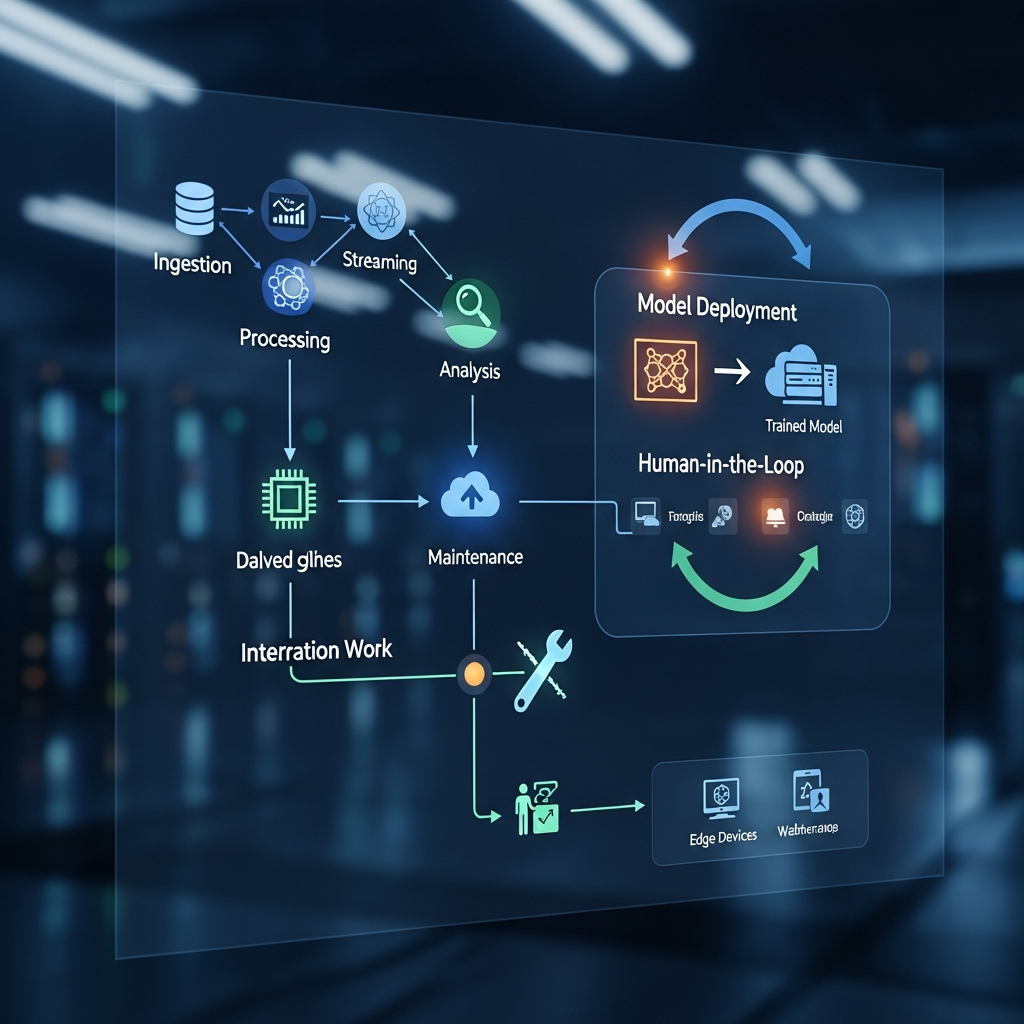
The AI race isn't about who builds the flashiest demo or raises the most capital. It's about who can consistently bridge the chasm between raw model capability and reliable, secure, value-generating operations. The real competitive edge is built not in labs, but in the trenches of day-to-day deployment and the relentless pursuit of operational excellence.