BLOG // 2026.05.02 // 18:01 SGT
AI Agents: The Control Vacuum is Today's Shadow IT
The rapid, unmanaged proliferation of powerful AI agents is creating a dangerous 'Shadow MCP' landscape, mirroring the challenges of shadow IT but with autonomous entities that interact with critical systems, demanding urgent control.
The Agent Wild West — Shadow AI and the Control Vacuum
I see it happening in every company, big or small. Someone in marketing spins up an AI agent to handle social media responses. Finance prototypes one to chase invoices. Engineering, of course, has a dozen running to optimize code or triage bugs. They're fast, cheap to start, and often — terrifyingly — effective. Darri Eythorsson built an AI trading platform in six days; that speed is not unique. It’s what makes AI agents so compelling, and so dangerous, when deployed without oversight.
We’re past the point of asking if AI agents will proliferate. They already have. The real question is how we manage the fallout. Tray.ai recently highlighted "Shadow MCP" (Managed Copilot Programs) as the new "shadow IT" — and that’s a stark, accurate warning. We spent decades battling shadow IT, trying to rein in uncontrolled software installations. Now, we're facing autonomous entities that can execute tasks, make decisions, and interact with critical systems. This isn’t just about an unapproved Slack integration; it’s about a bot with potential access to financial data or customer interactions. We're entering the bureaucracy of bots, where we need to control the controller. https://tim-schipper.nl/blog/de-bureaucratie-van-bots
Consider Stripe's move to introduce Link for AI agents' digital wallets. https://techpusula.com/stripe-ai-ajani-dijital-cuzdan-link This isn’t just a convenience; it’s a clear signal that AI agents are graduating from glorified chatbots to entities that handle real money. When an agent can initiate a payment, the stakes for security, auditing, and compliance skyrocket. Are you confident every agent in your organization, especially the "shadow" ones, has the necessary guardrails for financial transactions? Are you even aware of them all? The risk profile of an organization scales exponentially with every unmanaged AI agent deployment. This isn't theoretical; it's a balance sheet liability waiting to happen.

The Scoped Access Mandate and Cost Consciousness
The immediate response to the "agent wild west" must be control. Specifically, scoped access. Airia laid it out clearly: AI agents need scoped access to enforce security across your entire integration stack. https://airia.com/why-ai-agents-need-scoped-access/ This isn't a nice-to-have feature; it's foundational. Just like you wouldn't give a new intern root access to your production database, you shouldn't give an AI agent carte blanche across your APIs and data stores. The blast radius of an errant or compromised agent could be catastrophic. Implementing granular permissions, clearly defined roles, and strict monitoring protocols for every agent interaction—that’s non-negotiable.
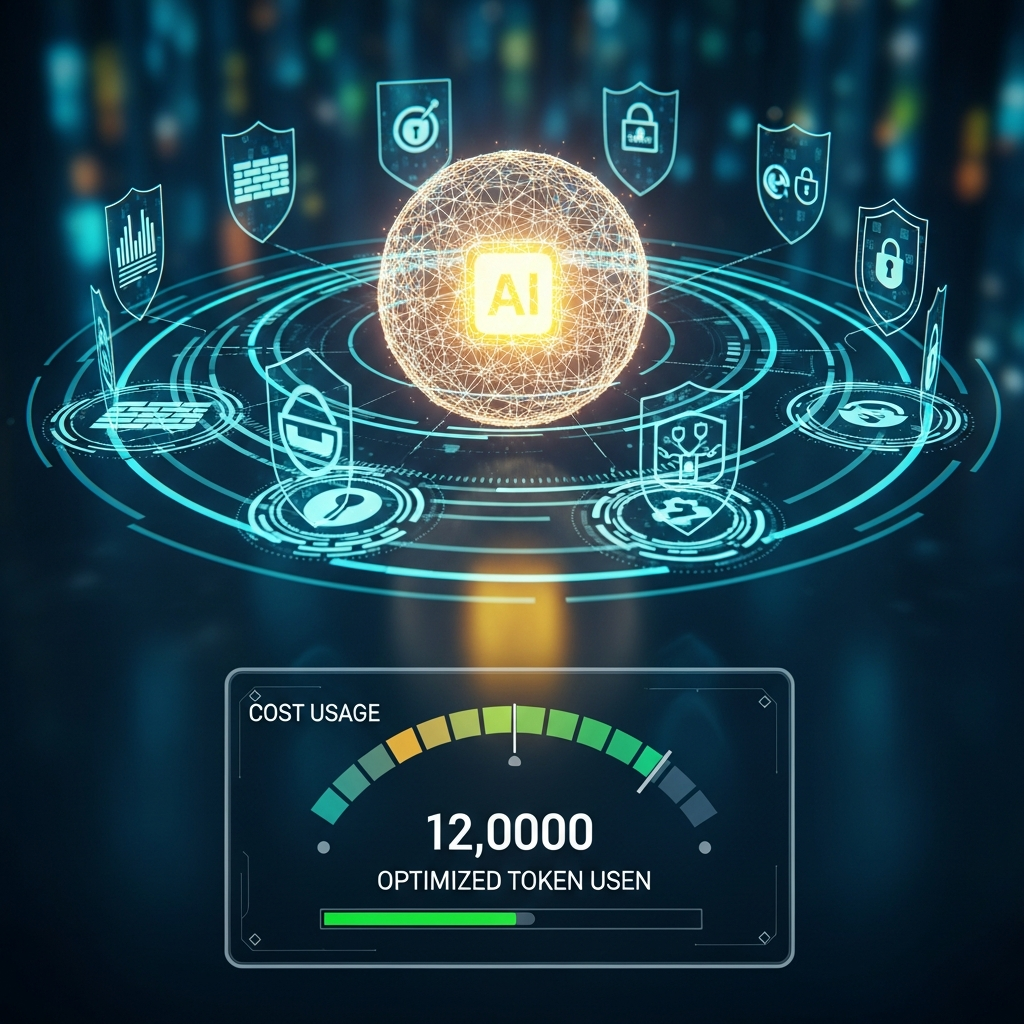
But control isn't just about security; it's about efficiency, especially cost efficiency. Running AI agents, particularly those interacting with large language models, incurs token costs. These costs, if left unchecked, can quietly balloon into significant operational expenses. Smntcn.com recently detailed methods for reducing token costs, a topic that's far from academic for any CTO looking at the bottom line. https://smntcn.com/en/article/kak-sokratit-raskhody-na-tokeny-pri-rabote-s-ii-1763 It’s about optimizing prompts, caching responses, and choosing the right model for the job—not always the biggest, most expensive one.
This dual imperative of security and cost is driving the demand for specialized platforms. We’re seeing solutions emerge like amazee.ai's fully-managed OpenClaw-Hosting, designed for the secure, sovereign deployment of AI agents. [https://www.pressebox.de/pressemitteilung/mirantis/amazee-ai-startet-fully-managed-openclaw-hosting-fr-die-sichere-souverne-bereitstellung-von-ki-agenten/boxid/1296015] This isn't just about hosting; it’s about providing the infrastructure for controlled execution, auditability, and efficient resource utilization. For us operators, it means thinking critically about where our agents live, who can access them, what they can access, and how much each interaction truly costs. Security and cost efficiency aren't separate concerns in the age of AI agents; they are deeply intertwined operational realities.
SaaS Disrupted – The New Build vs. Buy Calculus
The rise of AI agents isn't just changing how we operate internally; it's fundamentally reshaping the software vendor landscape. The SaaStr blog recently published a post, "We Vibe Coded Our Own AI VP of Marketing and Customer Success Platform. Two Vendors Just Lost $20k+ Each. And They’ll Never Know Why." https://tryrunable.com/posts/we-vibe-coded-our-own-ai-vp-of-marketing-and-customer-succes This anecdote isn't an anomaly; it's a canary in the coal mine for many SaaS providers. When a small team can "vibe code" a solution that replaces two vendors, it signals a profound shift.
Is the SaaS business model dead, as Informatra provocatively asked, looking ahead to 2028? https://www.informatra.com/service-as-software-saas-business-model-dead-2028/ Not entirely, but it's certainly undergoing a rapid, painful transformation. The value proposition of a SaaS product used to be its convenience, integrated features, and minimal setup. Now, with generative AI and agents, much of that "convenience" can be replicated or even surpassed by internal teams with a few skilled engineers and a clear understanding of their specific business context.
This means the "build vs. buy" decision has shifted dramatically. The cost and time to build a custom solution leveraging AI have dropped precipitously. Why pay a recurring $20k+ for a marketing platform when an internal agent can perform the core functions with better customization and data sovereignty? SaaS vendors need to move beyond simple automation wrappers. They must offer truly differentiated value—deep vertical expertise, proprietary data sets, unparalleled integration capabilities, or highly specialized models that are impossible to replicate in-house. For operators, this is an opportunity to reclaim control over their tech stack, optimize for their unique workflows, and potentially unlock significant cost savings. But it also demands a disciplined approach to internal development, ensuring these custom agents are built with the same rigor and security considerations as any commercial product.

The era of AI agents isn't just about new tools; it's about a fundamental re-evaluation of control, cost, and core value in our technology stack. Ignore it at your peril—your competitors aren't.