BLOG // 2026.04.18 // 18:00 SGT
AI Agents: The Causeway Between Demo and Production
The promise of autonomous AI agents is loud, yet operational reality demands more than demos—it requires overcoming a massive engineering chasm with foundational intelligence and robust tooling.
The noise around AI agents is deafening. Every other week, a new demo promises fully autonomous systems that will run your business while you sleep. But anyone who’s actually built and deployed these systems knows the chasm between a slick demo and a production-ready agent is wider than the Causeway during rush hour.
AI Agents: Beyond the Hype Cycle
We're seeing a clear push for practical, autonomous agents. Emergent, a startup from India, for instance, has introduced Wingman—an autonomous AI agent aimed at automating business tasks. This isn't just theory; it's a direct response to the demand for operational efficiency. But "autonomous" isn't a binary state; it’s a spectrum. The devil, as always, is in the details of execution.
Consider the underlying tech that enables these agents. Projects like Hippo v0.21.0 are focusing on "biologically-inspired memory for AI agents with multi-tool support" as reported by OpenClaw Radar. This isn't just about making an agent chat better; it’s about providing the foundational intelligence for sustained, complex task execution across different tools. If an agent can't remember context or effectively use various APIs, it's just a chatbot with extra steps. Similarly, orchestrating these complex agents, especially those built on specific models like Claude, requires dedicated tooling. OpenClaw Radar also highlighted Stockade, an orchestration tool for Claude code with channel support and security layers. These are the unsung heroes—the infrastructure plays that make the agent dreams even remotely plausible.
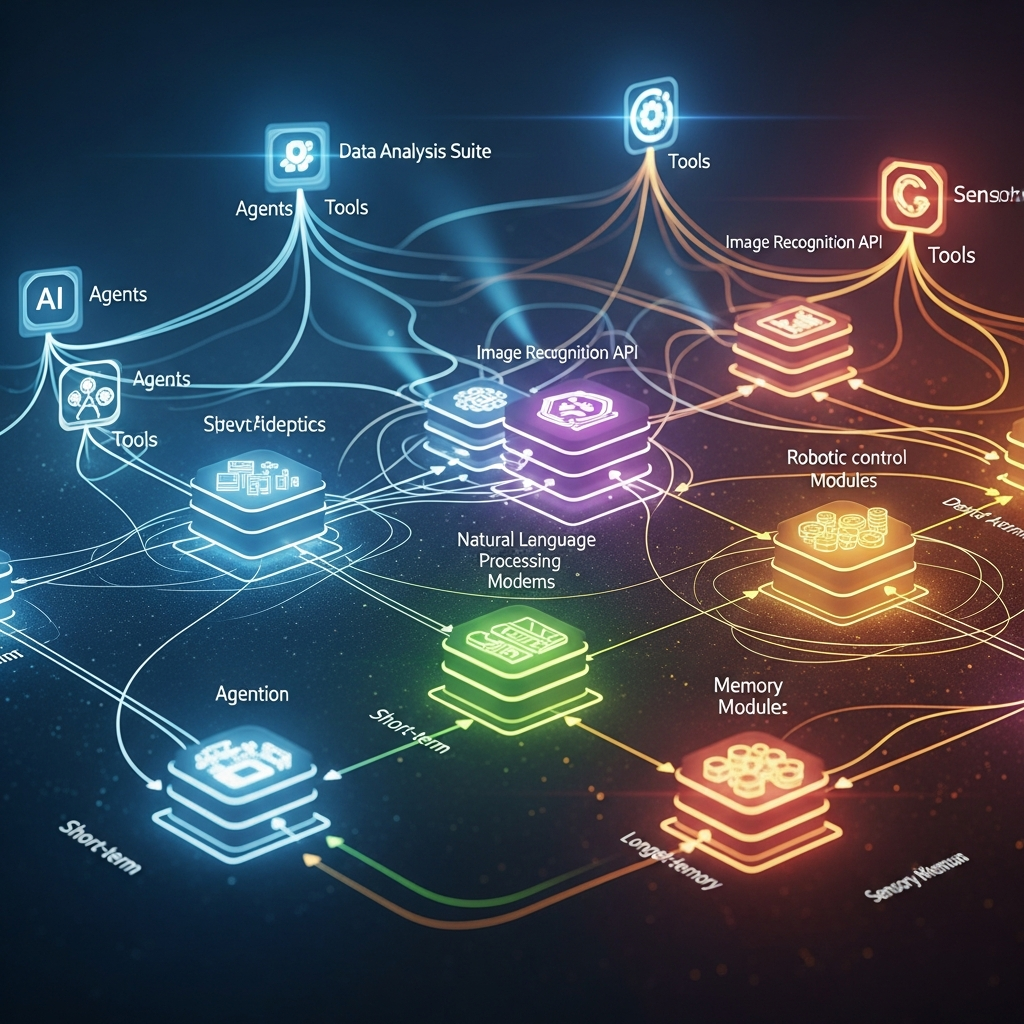
Even giants like Meta are putting significant bets on this. Mark Zuckerberg is driving Meta’s $135 billion AI investment to automate internal operations, according to AI Tool Compare. This isn't about selling a product to external customers yet; it's about eating their own dog food, applying AI to streamline their colossal internal machinery. That's a strong signal that the real work—the heavy lifting of integrating AI into core workflows—is happening behind the scenes, away from the public eye.
The reality on the ground for many businesses is that these "autonomous" agents still need a human in the loop, or at least robust integration points. HighLevel's Canny board shows a clear demand for a "user (team member) replied trigger" needed for automations. This isn't about fully replacing humans; it's about augmenting them, ensuring that the human touch can intervene or validate when needed. That's where the rubber meets the road for companies like Cresta, which is hiring a Product Design Intern for an "AI and Human Agents Platform"—acknowledging that the best systems are often hybrid. The notion that agents will just "figure it out" and operate flawlessly from day one is a fantasy. It requires meticulous design, continuous feedback loops, and robust error handling.
The Metrics That Matter: Valuations and Value
The market is showing us some hard truths about what truly constitutes value. Snowflake, once a darling of the data world, has fallen 48% from its 52-week high. Is SNOW finally a buy, as TIKR.com asks? Perhaps, but the question itself highlights a crucial point: high valuations built on future potential can be fleeting. The market corrects, and it corrects hard when profitability and tangible returns don't keep pace with the narrative.

This market sentiment extends to how AI is monetized. It's not enough to say you "use AI." You need to demonstrate how it moves the needle on revenue, reduces costs, or unlocks entirely new business models. We're seeing this shift in how established players are adapting. ServiceNow, for example, is undergoing an "AI-driven shift in licensing," as reported by NowBen. This isn't just adding AI features; it's fundamentally rethinking how they charge for their services, tying pricing to the value AI delivers, not just access to the software itself. That's a critical evolution—from feature-based pricing to value-based pricing, driven by AI's impact.
For individuals and companies alike, the focus must be on acquiring "million dollar skills" and building profitable tech companies, as emphasized by sites promoting career mastery or operating systems built on Microsoft. It's about leveraging AI tools to generate high-income skills or to build systems that grow profitably. An "AI SEO Course in Chandler 2026" isn't just about learning a new tool; it's about directly applying AI to a measurable business outcome—ranking higher, driving traffic, increasing conversions. It’s about building a pipeline that delivers, not just a demo that impresses.
The reality is that capital is no longer cheap, and investors are scrutinizing every dollar spent. Meta's $135B AI bet isn't just a tech play; it's a strategic move to automate internal operations and drive efficiency at scale. That's a direct link to the bottom line—cost savings, productivity gains—that can justify such massive investments.
We're past the phase where just having "AI" in your pitch deck was enough. The market, both for talent and for capital, demands substance. It demands deployments that work, agents that actually automate, and technologies that deliver measurable returns. The next frontier isn't just building AI; it's making AI pay.