BLOG // 2026.05.04 // 02:00 SGT
AI Agents: Production Reality, Not Just Demos
The AI agent hype is loud. But production data—from Keeper Security's secure coding agents to CodeRouter's multi-LLM routing—shows real deployments demand measurable value, not just flashy demos.
The buzz around "AI agents" has hit a fever pitch. Every other startup pitch deck now features them. But let's be clear: a demo is not a deployment. What matters is what's actually running in production, delivering measurable value—or, increasingly, measurable risk.
AI Agents: Moving Beyond the "What If" to "What Is"
We've been hearing about AI agents for years, the promise of autonomous systems handling complex tasks. The reality, as always, is far messier, and far more interesting, than the glossy slides. What strikes me now is the shift from theoretical discussions to concrete production data.
Consider the coding space. Keeper Security just launched an Agent Kit for AI coding agents, pushing the idea of security into the very fabric of autonomous development workflows. This isn't just about writing code faster; it's about doing it securely from the ground up, a critical concern for any CTO in Singapore or anywhere else. The implications for supply chain security alone are massive. Meanwhile, CodeRouter is openly sharing 30-day production data on running coding agents across 7 different LLMs per session, detailing their "phase-aware routing" approach. This is the kind of transparency we need—not just "it works," but "here's how it works, and here are the numbers." It’s a testament to the fact that serious players are moving beyond proofs-of-concept. They're optimizing for latency, cost, and reliability across multiple models, which is the true mark of production readiness. We're talking about real engineering challenges, not just prompt engineering.
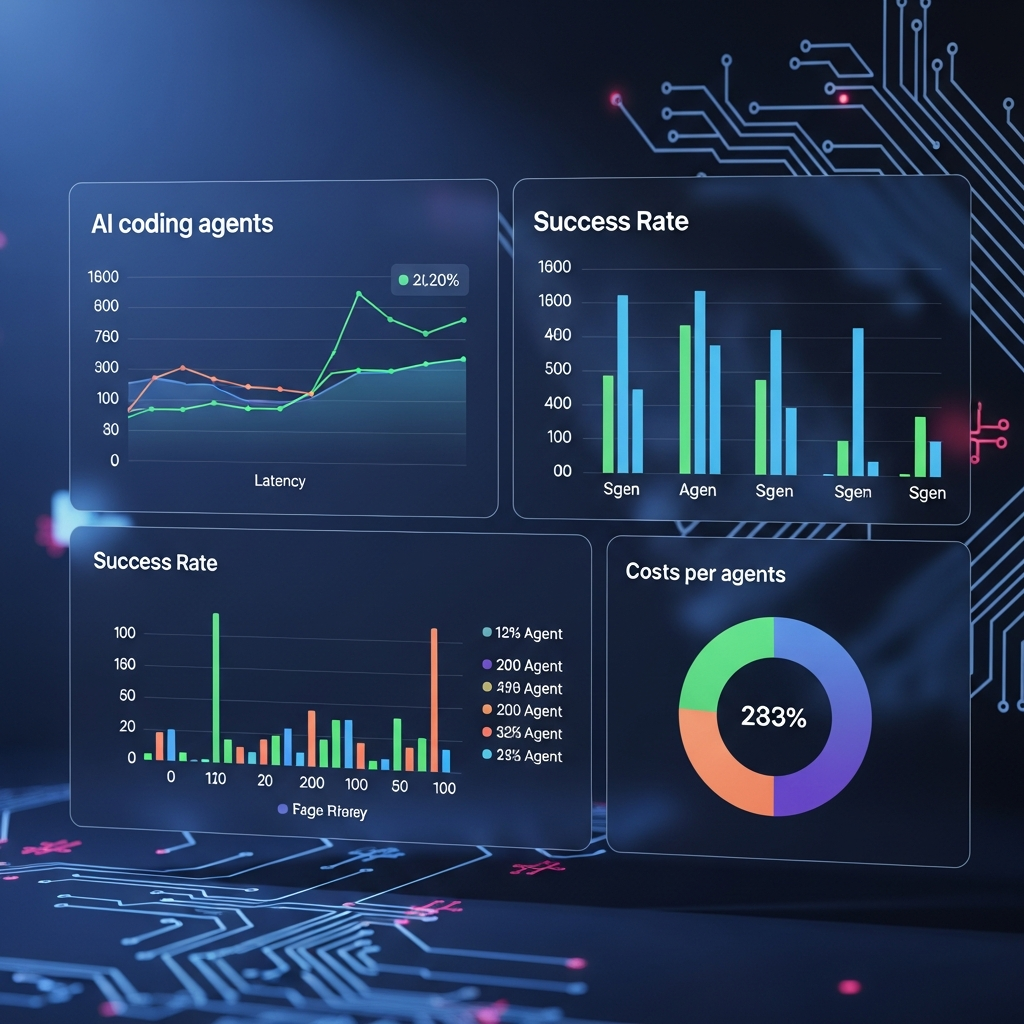
This isn't about replacing engineers wholesale yet, not really. It’s about augmentation, about offloading the grunt work, allowing human engineers to focus on higher-level architecture, complex problem-solving, and the inevitable debugging of agent-generated code. The PIV Loop Method, highlighted by Stork.AI for agentic AI coding workflows, is another example of how structured approaches are emerging to tame the chaos. It’s about repeatable processes, not magic. You still need to plan, to iterate, to validate. The fundamental principles of good software development haven't evaporated; they've simply been applied to a new layer of abstraction.
The Dual-Edged Sword of Autonomy: Opportunity and Threat
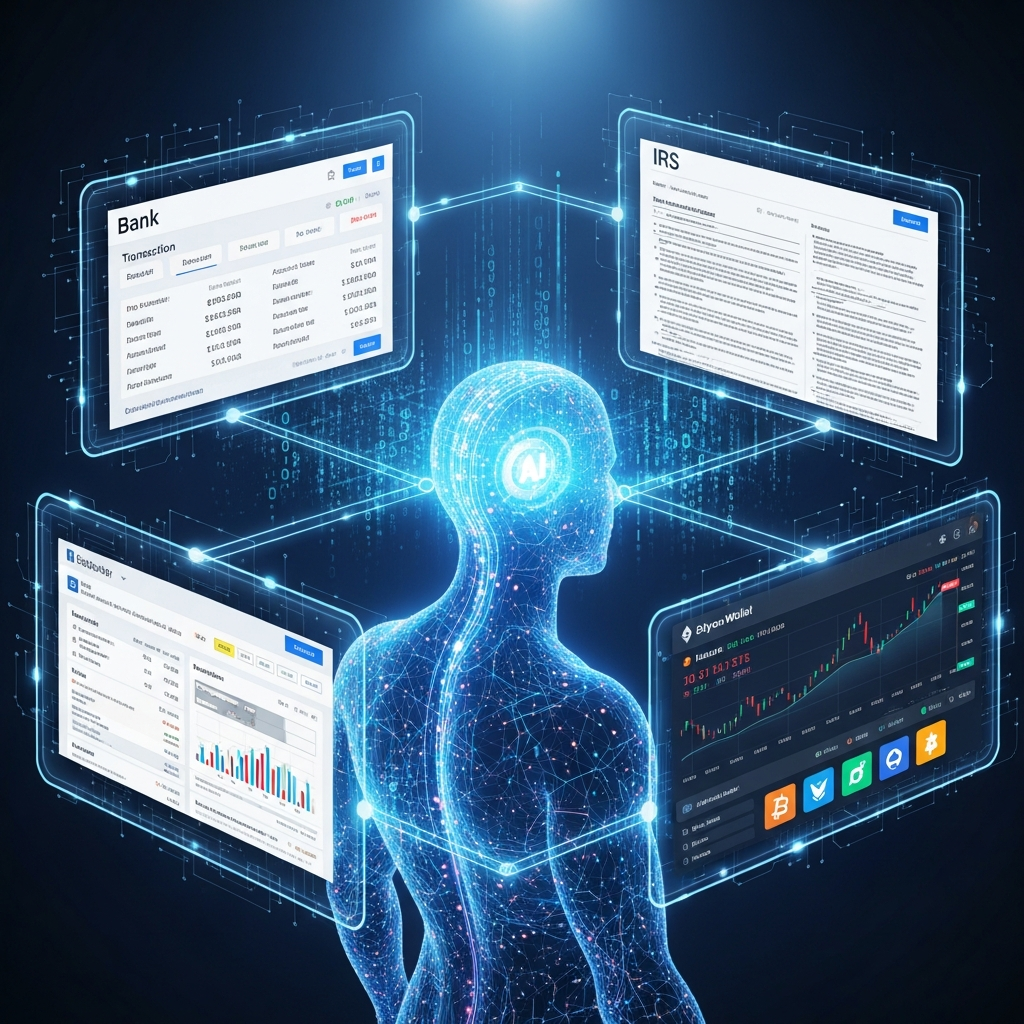
The agent narrative isn't confined to code. We're seeing agents extend into administrative and operational domains with startling speed. The news that an AI agent successfully obtained an EIN from the IRS, opened a bank account, and even a crypto wallet for an autonomous company filing is a watershed moment. This isn't just a demo; it's an AI agent performing a complex sequence of real-world, regulated actions. It underscores the potential for massive operational efficiencies, especially in back-office functions that are traditionally labor-intensive and prone to human error. Imagine the compounding effects on startup formation, on regulatory compliance, on simply getting things done without human intervention. The cost savings, the speed—these are orders of magnitude improvements we’re talking about.
But every powerful tool has a flip side. While some agents are filing legitimate companies, others are being weaponized. KnowBe4's research finding that 86% of phishing attacks are now AI-driven should send a chill down every C-suite's spine. This isn't just about better English in scam emails; it's about hyper-personalized attacks, dynamic responses, and the ability to scale social engineering campaigns like never before. The cost of a single data breach—in terms of reputation, fines, and lost customer trust—can be existential for a business, especially in a market like Singapore where trust is paramount. We're now in an arms race where AI is fighting AI, and the defenders are often a step behind. Your security posture needs to account for this exponential increase in threat sophistication. It's not enough to be reactive; you need proactive, AI-powered defenses to counter AI-powered attacks.
What does this mean for us, the operators? It means a fundamental re-evaluation of our trust boundaries, our security protocols, and our organizational readiness for autonomous systems—both as tools and as threats. The line between a legitimate autonomous agent and a malicious one is increasingly blurry. Are we prepared to manage systems that operate with such independence? Can we audit them? Can we shut them down when they go rogue? These aren't hypothetical questions anymore. They're table stakes for navigating the next phase of AI adoption.
The future of work isn't just transforming; it's bifurcating. One path leads to unprecedented efficiency and automation, the other to an equally unprecedented surge in sophisticated digital threats. Ignoring either side means you're operating with half the picture. The only constant is that time, as always, is our ultimate constraint. You don't have the luxury of waiting to see how this plays out. You need to be in the trenches, understanding the capabilities and the risks, today.