BLOG // 2026.05.03 // 02:00 SGT
AI Agents: Payments Are The Linchpin. No Money, No Scale.
The shift of AI agents from demos to real-world deployment is hitting the hard wall of secure, scalable payments, forcing the creation of specialized financial infrastructure to handle autonomous programmatic commerce.
The talk around AI agents has shifted. For a long time, it was academic papers and impressive demos. Now, especially here in Singapore and across APAC, we’re seeing the hard edges of deployment. We're moving from "what if" to "how do we actually make this work at scale, securely, and profitably?" That's where the rubber meets the road.
The Agent Economy: Payments are the Linchpin
We’ve all seen the flashy videos of AI agents autonomously completing tasks. But how many of those tasks involve real money, transacted securely, across different systems? Not many, historically. This is changing fast. OKX, for instance, is rolling out an Agent Payments Protocol specifically designed for AI business cycles. This isn't just about moving tokens; it's about enabling a new class of automated, programmatic commerce. Think about what that means for fraud, chargebacks, and regulatory compliance. The complexity compounds exponentially with every autonomous decision.
Similarly, we're seeing dedicated entities like NanoPay emerge as a "General Agent". This signals a market recognizing the need for specialized infrastructure—agents built to handle other agents' financial interactions. It’s a meta-layer of financial operations that was science fiction just a few years ago. And right here in Singapore, Visa has launched its Agentic Ready Programme with 13 banks and fintech partners. This isn't a pilot program or a whitepaper. This is a multinational financial giant pushing for real-world integration, defining standards and processes for how AI agents will interact with the existing financial rails. They're not waiting for a perfect general AI; they’re building for the agents we have today.
What does this tell us? The agent economy isn't a future concept; it's here, and it demands robust payment infrastructure. Without it, all the fancy task execution in the world means nothing if you can't reliably pay for services, settle accounts, or monetize your agent's work. This is where the engineering focus needs to be now—not just on agentic reasoning, but on agentic transaction integrity and financial compliance. Otherwise, it's just a demo, not a business.

Governance and Trust: The Enterprise Gatekeepers
As agents move into critical business functions, the conversation inevitably shifts from capability to control. Who is accountable when an agent makes a mistake? How do we audit its decisions? These aren't new questions in enterprise software, but AI agents introduce an entirely new dimension of complexity. Oren Michels, CEO of Barndoor AI, emphasizes mastering governance, trust, and enterprise success. He's not wrong. You can build the most brilliant agent, but if a Fortune 500 company can't trust it, it won't cross the firewall.
This is why "decision infrastructure" and "decision traces" are becoming critical. ElixirData is talking about Decision Infrastructure for Agentic Video Intelligence and Decision Traces for AI Analytics. This isn't about making AI smarter; it's about making it auditable. Every step an agent takes, every input it considers, every output it generates—it all needs a clear, immutable record. Without this, you have a black box, and no serious enterprise will deploy a black box for anything mission-critical. Especially not when the stakes are as high as national security, evidenced by Google, Nvidia, and other tech titans signing an AI deal with the Pentagon. When military applications are on the table, the demand for explainability and control becomes paramount.
The market for Privileged Access Management Solutions is also expanding, and this isn't a coincidence. As agents gain more autonomy and access to sensitive systems—like a Bloomberg Terminal getting an AI makeover—the security perimeter isn't just about human users anymore. It’s about managing and monitoring the "privileges" of autonomous entities. Trust in AI isn't built on a model's accuracy alone; it's built on a verifiable, auditable chain of decisions and a robust security posture. Anything less is a liability waiting to happen.

The Platform Wars Continue: OpenClaw and Developer Lock-in
While the industry grapples with agent deployment and governance, the underlying LLM platforms continue to evolve—and sometimes spark controversy. Claude's "controversial stance" on something called "OpenClaw" is a case in point. The details are sparse in the news, but the framing "game changer for developers" hints at a shift in how developers interact with or leverage Claude's capabilities. Historically, "open" in tech often implies flexibility, community, and avoiding vendor lock-in. A "controversial stance" on such a concept suggests a tension between platform control and developer freedom.
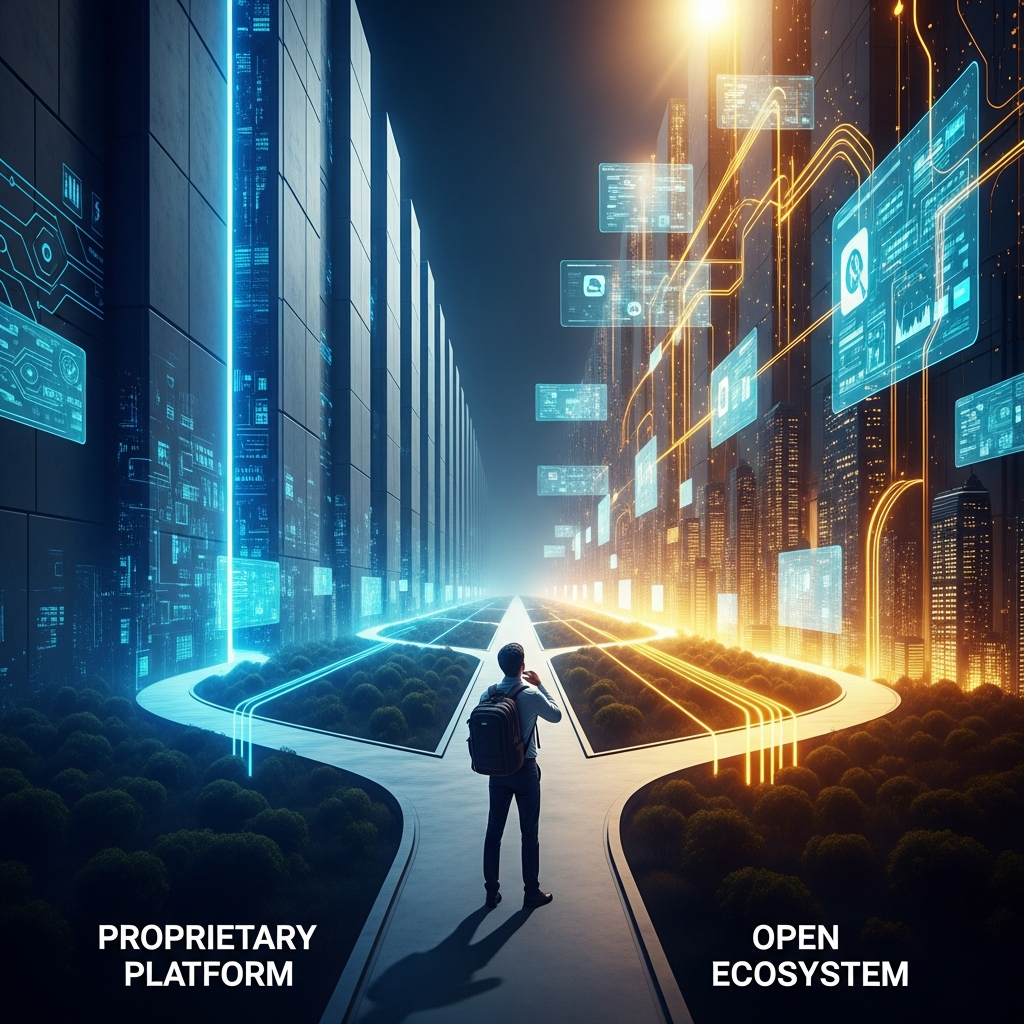
For builders, especially in startups, these platform decisions are existential. Do you build on a closed, proprietary system for its perceived stability or superior performance today, knowing you might be locked into its pricing and feature roadmap tomorrow? Or do you lean into more open, composable systems, even if they require more integration work, to retain flexibility and mitigate future risk? There’s no easy answer, but every "controversial stance" from a major player forces us to re-evaluate our long-term architectural choices. The choice of your foundational AI platform isn't just a technical one; it's a strategic business decision that impacts your velocity, costs, and ability to pivot for years to come. Don't be seduced by shiny APIs without looking at the fine print—and the strategic intent behind them.
The AI revolution isn't about magical intelligence appearing overnight. It’s a grinding, incremental process of building, securing, governing, and integrating these capabilities into the real world. The hype cycles will continue, but for operators, the focus remains on the hard problems: making agents transact securely, ensuring their decisions are auditable, and choosing platforms that won't strangle your future. Everything else is just noise.