BLOG // 2026.04.11 // 22:03 SGT
AI Agents Just Ship Technical Debt Faster
The hype machine sells AI agents as a magic wand, but unless you rebuild your CI/CD for non-human commit volumes—you are simply scaling technical debt by an order of magnitude.
The Codebase Clash
I’ve spent enough late nights managing deployments at ShopBack and scaling infrastructure at Amazon to know that developer tooling is a religion. You don't mess with an engineer's environment unless you bring an order-of-magnitude improvement. Right now, we are watching a fundamental shift in how software gets written — and it’s tearing engineering teams apart.
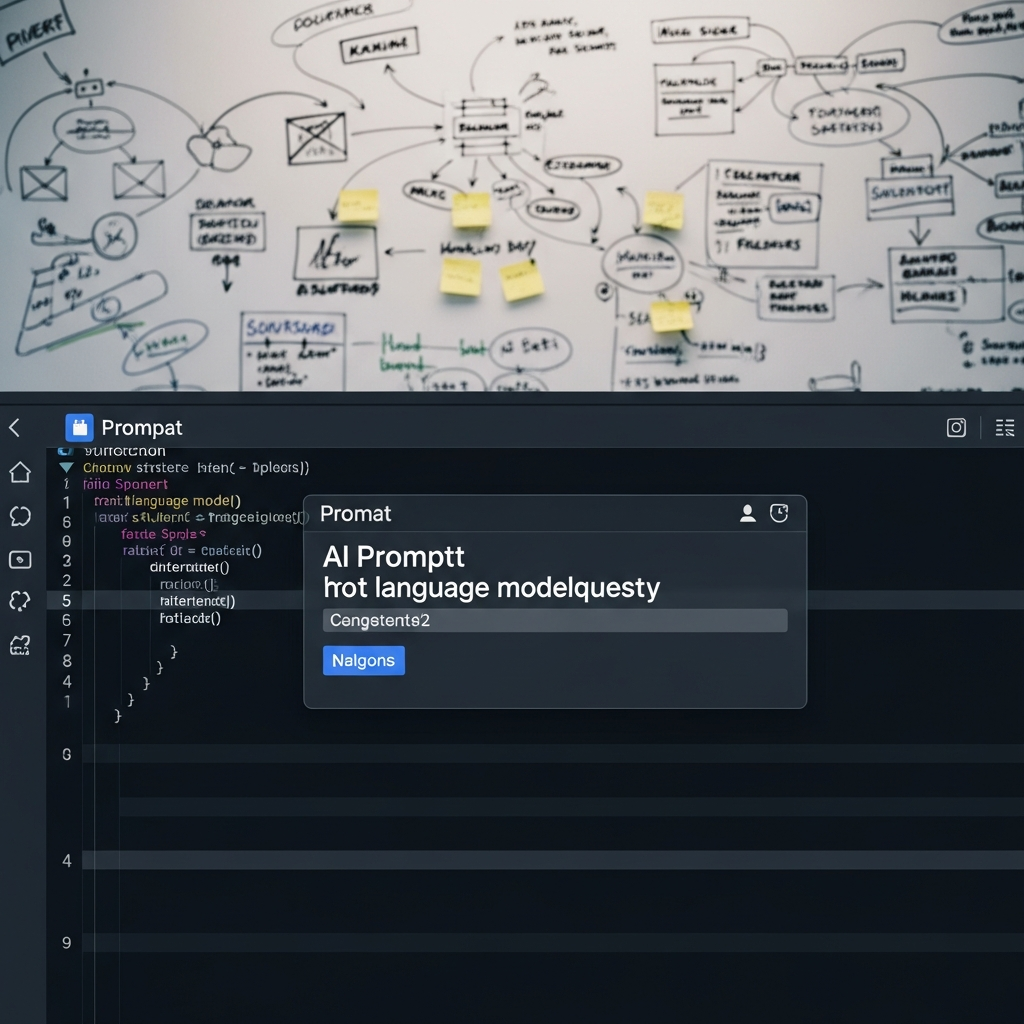
There is a very real tech clash shaping organizations over how AI coding agents are redefining the modern IDE. This isn't the old Vim versus Emacs debate. It’s a structural shift in production. The hype machine sells this as a magic wand that turns junior devs into 10x engineers overnight. The reality on the ground in APAC? It’s messy. Integrating autonomous agents into legacy codebases breaks things. You spend less time writing syntax and more time reviewing machine-generated logic.
If your engineering culture doesn't adapt to code review at scale, AI agents will just help you ship technical debt faster. The winners here aren't the ones adopting the flashiest tools — they are the ones rebuilding their CI/CD pipelines to handle non-human commit volumes.
Corporate Agents and Real Money
Demos are cheap. Deployments are expensive. The industry loves to argue over timelines to artificial general intelligence, but that's a distraction. While Twitter debates the AGI paradox and decodes Jensen Huang’s statements on the new economy of corporate agents, a quieter, far more lucrative transition is happening right in front of us.
An AI that drafts emails is a neat productivity hack. An AI that controls a balance sheet is a paradigm shift. We just crossed that line. B.AI has gone global, launching full-stack financial infrastructure that lets AI agents hold money, build credit, and pay their own bills. Read that again. The agent isn't just generating an invoice — it is paying it.
This is where the compounding really starts. Autonomy without financial capability is just automation. When agents can hold capital, build their own credit profiles, and execute financial transactions without a human in the loop, the bottlenecks in procurement and cloud infrastructure provisioning disappear. But so do your guardrails. If you are a CTO and your agents are holding actual money, your security posture isn't just about data privacy anymore. It’s about treasury management. Are you ready for an agent to overdraft your corporate account because of a hallucinated API call?

The Regulatory Clock
You can build the most advanced agentic workflow in the world, but if the regulators shut it down, your ROI is zero. Time is the ultimate constraint. I evaluate it across three domains: career, family, and finance. In the enterprise world, compliance is the heaviest tax on that time — and the bill is coming due.
For those operating out of Singapore or the broader APAC region, it’s tempting to treat European regulation as background noise. That is a mistake that will cost you market access. The EU AI Act has a hard deadline looming in August 2026. Businesses are scrambling to finalize their action plans right now. We are exactly four months out.
This isn't an abstract legal problem; it’s an engineering constraint. If your agents are autonomously spending money and writing production code, how are you logging their decision trees for an audit? The regulators do not care about your sprint velocity. They care about accountability. If your architecture can't explain why a financial agent executed a specific trade or why a coding agent pushed a specific patch, you are a liability.

The Hard Truth
Look at the board. The IDE is being hollowed out by coding agents. Corporate AI is holding its own money and building credit. The regulatory net drops in August.
Most startups are still building thin wrappers around language models, hoping for an acquisition. They are playing a game that ended two years ago. The next generation of massive enterprise value won't come from a smarter conversational interface. It will come from operators who figure out how to safely hand a credit card and root access to a machine — and keep the auditors happy while doing it.
Stop playing with the demos. Wire the infrastructure.