BLOG // 2026.04.24 // 14:01 SGT
AI Agents: In Production, Trust Trumps Hype.
The current AI agent hype overlooks the hard truth: enterprise deployment demands agents earn trust through proven reliability, stringent security, and seamless integration into critical business workflows.
It’s April 2026, and the industry chatter is saturated with "AI Agents." Every vendor has an agent. Every startup is building an agent. From quantum agents to compliance agents, it feels like we've hit peak hype, but the question for operators like us isn't what's possible in a lab demo—it's what's actually driving value in production.
The Agentic Enterprise: Trust, Not Just Talk
We're seeing a clear divide: the flashy proofs-of-concept versus the grind of enterprise deployment. The reality is, agents in the wild, solving real business problems, are still rare. Why? Trust. And security.
Wharton’s AI Agent Blueprint highlights this exactly: trust beats hype in 2026. What matters isn't just an agent's capability, but its reliability, its auditability, and its integration into existing workflows. This isn’t a new problem; it's the same hurdle every transformative technology faces. Businesses move at a different pace than tech demos. They need guarantees, not just promises. When Comply launches the financial services industry's first agentic compliance platform, MCP Server, enabling teams to build custom AI agents without developers, that’s a concrete step. It addresses a specific, high-stakes domain where compliance isn't optional—it's foundational. This implies a level of robustness and control far beyond what a general-purpose agent can offer out-of-the-box.
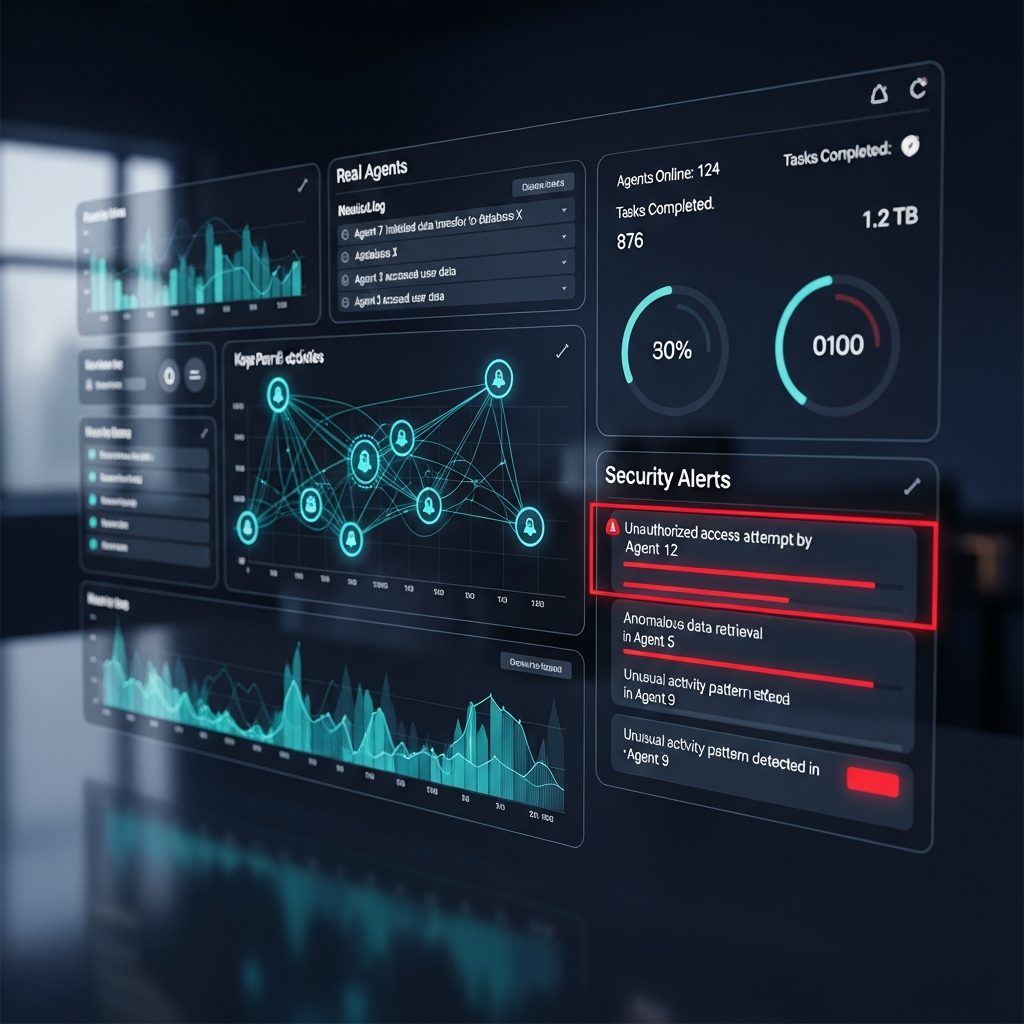
And then there’s security. The more autonomous these agents become, the more critical their security posture. Acalvio's ShadowPlex agent being embedded within Gemini Enterprise is a significant move. It's about cyber deception, detecting and deflecting threats. In an era where "Global Cyber Warfare Security Trends 2026" is a real headline, having agents that defend other agents, or the systems they interact with, isn’t a nice-to-have. It’s a prerequisite for any widespread agent adoption. Think about the attack surface: hundreds, thousands of autonomous entities, each with potential access to sensitive data or critical systems. The implications for data integrity and operational continuity are immense. This isn't just about preventing breaches; it's about maintaining operational resilience in an environment where the threats are constantly evolving—often powered by AI themselves.
The Unseen Engine: Compute, Context, and Cost
Behind every agent, every large language model (LLM), lies a colossal amount of compute. The excitement around "cheaper AI" is directly tied to the underlying infrastructure. Nvidia’s "120B Brainchild" promises just that: lower costs, even as they continue their "bigger brags." This isn't merely about bragging rights; it's about pushing the efficiency frontier. For AI to truly scale, especially in a region like APAC where cost-efficiency dictates adoption rates, the economics must work. A 10x improvement in compute efficiency isn't just linear progress; it can unlock entirely new business models and applications.
Consider DeepSeek v4 dropping with a 1 million context window. That's an order of magnitude increase in what a model can "remember" and process in a single interaction. For agents, this is transformative. An agent with a 1 million context window can handle far more complex tasks, maintain longer conversations, and understand deeper nuances in a business process without losing its "train of thought." Imagine an agent reviewing an entire business plan—not just a few paragraphs—and cross-referencing it with market data. This kind of capability moves agents from clever tools to genuine collaborators.
The Cloud Computing Market Surge, driven by AI and hybrid cloud innovations, isn't accidental. It's the bedrock upon which this agentic future is built. Companies are pouring billions into this infrastructure because the demand for AI workloads is exponential. Amazon Bedrock, with its company-wise memory integration via Amazon Neptune and Mem0, is another piece of this puzzle. It’s about creating persistent, contextual intelligence for agents across an enterprise—not just stateless calls. This is where the compounding effect kicks in: better compute, larger context, and persistent memory combine to create more intelligent, more effective agents. But it also means the cost of running these agents, and the data they consume and generate, becomes a critical metric to track. Are we building 10x better solutions, or just 10x more expensive ones?

The agentic future isn't a question of if, but how. It's about engineering reality, not just dreaming of it. The real progress isn't in another demo that goes viral; it’s in the quiet, painstaking work of integrating these capabilities into the messy, complex operations of real businesses, securing them against an ever-present threat, and making the economics work at scale. That’s where the value is created, for real.