BLOG // 2026.04.28 // 14:00 SGT
AI Agents in 2026: Production Value, Not Just Demos.
The 'Year of AI Agents' hype misses the point: 2026 demands agents that ship to production, streamline operations, and deliver persistent, measurable value, not just impressive demos.
Everyone's calling 2026 the "Year of AI Agents." You see it splashed everywhere — from 7 Agentic AI Breakthroughs That Make 2026 the "Year of AI Agents" promising to make this the year for AI agents and money-making, to Google and Kaggle launching intensive courses to master them. Even Adobe is reportedly killing its Experience Cloud to go all-in on agents. On the surface, it looks like a gold rush.
But let's be direct. This isn't about demos anymore; it's about deployment. We've seen "breakthroughs" before. What matters is what lands in production and delivers measurable value. AWS cutting days off AI agent development is a good start. It addresses a real pain point: speed to market. But speed is only half the equation.

The real question for operators is, what kind of agents? Are we talking about AstrBot, an AI Infrastructure Agent, quietly streamlining backend operations? Or are we talking about the grand vision of OpenAI reportedly working on a smartphone to "deliver comprehensive AI Agent Service"? The latter is a bold play, a bet on a new form factor for ubiquitous AI. But what specific, persistent problems does it solve that existing platforms don't, beyond novelty?
For the enterprise, the focus remains on tangible outcomes. We're past the "cool tech" phase. We need agents that integrate seamlessly, handle edge cases, and most importantly, operate with a degree of reliability that doesn't introduce more operational overhead than they save. This isn't just about technical prowess; it's about trust.
The Unsexy Truth: Human-in-the-Loop is Standard
This brings me to the core challenge of any enterprise AI deployment: trust and governance. It's why Human-in-the-Loop Became the Standard Enterprise AI Operating Model. Forget the fully autonomous, self-correcting agent for a moment — that's still largely R&D. In the real world, especially in regulated industries or where accuracy directly impacts revenue, human oversight isn't a fallback; it's the primary control mechanism.
Consider claims denial management in dentistry automation. An AI agent might flag a suspicious claim, but a human still needs to review, verify, and make the final decision. Why? Because the cost of an incorrect denial — lost revenue, customer dissatisfaction, regulatory fines — far outweighs the cost of human review. The AI acts as an accelerator, a force multiplier, not a replacement.

This isn't about lack of faith in AI; it's about practical risk management. Closed-loop business systems are transforming operations in 2026, yes. They automate processes, learn from outcomes, and continuously optimize. But these loops are often closed with a human checkpoint at critical junctures. We're building systems where AI provides recommendations, automates routine tasks, and identifies anomalies, but humans retain the ultimate authority and accountability.
And with greater automation comes greater responsibility for data integrity and security. Keeping secrets out of logs becomes paramount when agents are processing sensitive information across systems. An agent that leaks PII, even accidentally, can cost millions. The operational diligence required for robust, trustworthy AI is far less glamorous than the agentic breakthroughs, but it's where the real work — and real value — lies.
The Shifting Economics of AI
Beyond technical feasibility and operational trust, there's the cold hard reality of cost. AI isn't free. The shift in pricing models is a significant indicator of how the industry is maturing. GitHub Copilot, for instance, is moving to a usage-based model in 2026. This isn't just a billing change; it's a fundamental shift in how developers and engineering leaders will think about their tooling budget.
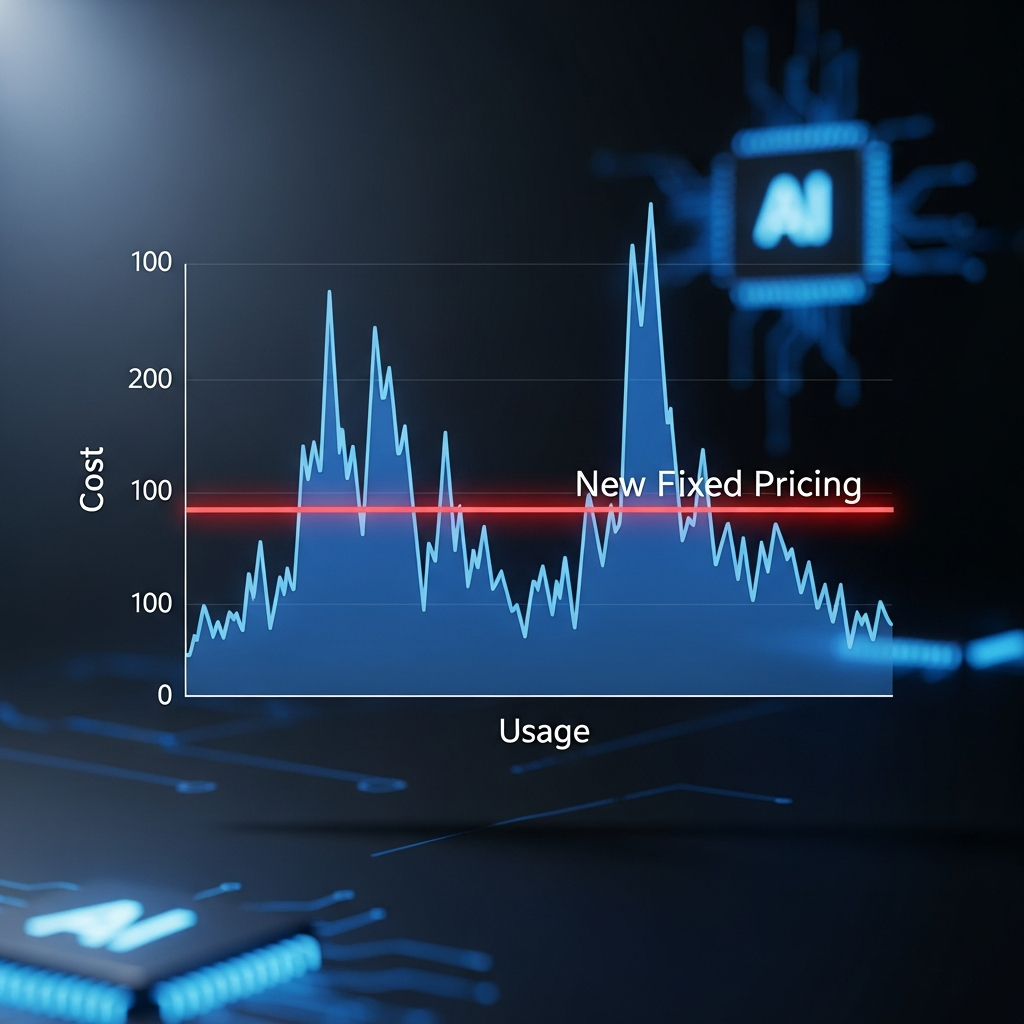
Suddenly, every keystroke, every generated line of code, has a direct cost associated with it. This forces a more disciplined approach to AI assistance. Do you let the agent run wild, or do you guide it more carefully to optimize token usage and, by extension, your spend? This model will push teams to measure the actual ROI of their AI tools more rigorously. It's a move away from flat subscriptions that might be underutilized, towards a direct correlation between value extracted and cost incurred.
Meanwhile, the financial markets continue their own narrative. We see headlines like "UMXM Price Explodes as Manadia’s AI Narrative Fuels Breakout." This signifies that while operators are grappling with the practicalities and costs of deployment, investors are still largely driven by the story of AI. There's a disconnect between the excitement on the trading floor and the grind in the data center.
For startups and enterprises alike, understanding this dual reality is critical. You need to leverage the hype to attract talent and investment, yes. But you also need to anchor your strategy in the pragmatic realities of deployment, governance, and cost efficiency. The promise of compounding returns from AI is real, but it's built on a foundation of meticulous operational execution, not just grand visions.
The "Year of AI Agents" is less about autonomous breakthroughs and more about the quiet, brutal work of integrating these tools responsibly into our existing systems. The market is still betting on the narrative, but smart operators are focused on the unit economics and the human element. If you're not obsessing over trust, governance, and the true cost-per-inference, you're building a demo, not a business.