BLOG // 2026.04.21 // 14:00 SGT
AI Agents: From Demos to Dollars—The Production Reality
The AI agent buzz confuses slick demos with the hard-won reality of integrating them into complex enterprise systems to deliver actual, measurable business value—a chasm for most.
The buzz around AI agents is deafening. Every other LinkedIn post, every conference keynote, every VC deck—it’s full of "autonomous agents" and "super-intelligent systems" that will supposedly run our businesses while we sip kopi. But from where I sit, in the trenches of building and deploying actual tech here in Singapore, I see a different picture. The gap between a compelling demo and a production-ready system that delivers real business value is still a chasm, not a crack.
AI Agents: Beyond the Hype Cycle to Production Reality
Everyone's talking about AI agents as if they're a solved problem—plug and play, right? Not quite. We're seeing a lot of foundational work being done to make agents more accessible, which is a necessary step. AMD's GAIA, for instance, aims to simplify the import and export of custom AI agents across PCs, making it easier for developers to move these components around [https://news.lavx.hu/article/amd-s-gaia-makes-it-easier-to-import-export-custom-ai-agents-across-pcs]. This is good for infrastructure, for portability. But portability doesn't equal utility or, more importantly, profitability.
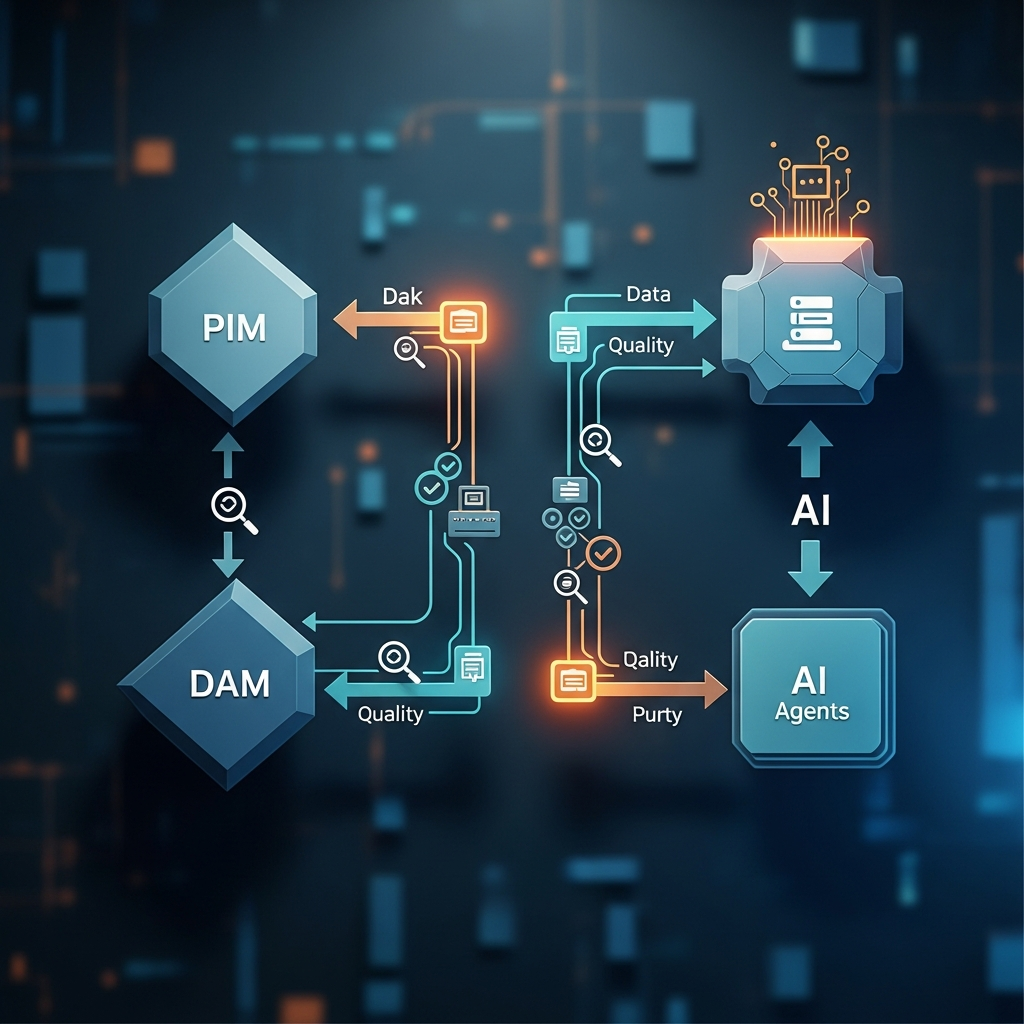
The real work starts when you integrate these agents into existing, complex enterprise ecosystems. Take e-commerce, for example. We're seeing how Product Information Management (PIM) and Digital Asset Management (DAM) systems are becoming crucial in powering AI agent product discovery for brands [https://programminginsider.com/how-pim-and-dam-systems-together-power-ai-agent-product-discovery-for-ecommerce-brands/]. This isn't just about an agent "discovering" products; it's about feeding it clean, structured, and comprehensive data from robust systems. Without that underlying data hygiene—without a solid PIM and DAM—your shiny new AI agent is just another garbage-in, garbage-out machine. It’s a classic case of the AI is only as good as the data it's trained on, and the systems it integrates with.
And then there's the critical question of performance. Are we even measuring the right things? A recent piece provocatively asked, "Decoding AI Agent Performance: Are We Setting Ourselves Up for Failure?" [https://datawizards.cloud/decoding-ai-agent-performance-are-we-setting-ourselves-up-fo]. This hits close to home. Too often, we get caught up in metrics that look good on paper but don't translate to bottom-line impact. A perfectly "autonomous" agent that makes a small mistake 1% of the time can still cost you millions if deployed at scale. We need to be rigorously honest about failure rates, error handling, and the true cost of human oversight. It’s about building systems that are not just smart, but resilient and reliable in the face of commercial pressures.
The Inevitable Trade-offs: Speed vs. Security in AI Adoption
Every decision in tech is a trade-off. There's no such thing as a free lunch, especially when you're operating at scale. This becomes even more apparent with AI adoption. A recent study highlights a stark reality: AI adoption forces a trade-off between speed and identity security [https://lerenleren.net/ai-adoption-forces-trade-off-between-speed-en-identity-security-study-finds-4/].
Think about that for a moment. As operators, we're constantly pushing for faster iterations, quicker deployments, getting features into users' hands yesterday. AI promises to accelerate many of these processes—from development to deployment to customer interaction. But that speed often comes at the cost of robust security protocols, thorough identity verification, and audit trails. Are we building fast, or are we building secure? It's a critical question, and one that often isn't given enough airtime until a breach happens.
In a world where data is currency, and identity theft is a constant threat, sacrificing security for speed can have catastrophic consequences—not just financially, but reputationally. For startups, one major security incident can be an existential threat. This isn't just about technical choices; it's a strategic business decision that demands careful consideration, especially in highly regulated markets like finance or healthcare, even here in APAC. You can't just throw AI at a problem and expect miracles without understanding the implicit costs and risks you're taking on.

Grounding Innovation in Reality: The Bottom Line Always Wins
While we dissect the nuances of AI agents and operational trade-offs, it’s crucial to keep one eye on the broader market realities. The tech industry, despite the AI boom, is not immune to economic cycles or the relentless pressure for efficiency.
Case in point: Meta is undertaking its "biggest layoffs in history," starting May 20 with 8,000 job cuts [https://thefutureai.world/metas-biggest-layoffs-in-history-starts-may-20-with-8000-job-cuts-and-these-employees-are-most-at-risk/]. Eight thousand people. That’s not a small number, and it’s not just "re-org." It's a clear signal that even the largest tech companies are scrutinizing every dollar, every headcount, and demanding tangible returns.
What does this mean for us? It means the AI hype cycle, the demos, the grand visions—they all ultimately need to translate into measurable, compounding business value. If your AI solution isn't saving a significant amount of money, generating new revenue streams, or unlocking an order of magnitude of efficiency, it’s just a costly experiment. Don't mistake a proof-of-concept for a viable product. Don't mistake a research paper for a deployed system. The market, eventually, demands results.

The future isn't about how many AI agents you can deploy. It's about how much actual, verifiable value those agents deliver to your customers and your bottom line—because when the market tightens, the fluff gets cut, and only the fundamentals remain.