BLOG // 2026.04.25 // 06:00 SGT
AI Agents: Enterprise Integration’s Build/Buy/Partner Dilemma
Forget the demos; enterprises must make stark choices—build, buy, or partner—to effectively deploy AI agents for tangible, profitable efficiency gains, moving past theoretical potential.
AI Agents: Beyond the Demo, Into the Enterprise
The noise around AI agents is deafening these days. Everyone’s got a demo, a prototype, a vision. But for operators in the trenches—the ones responsible for shipping and keeping the lights on—the question isn't if agents are coming, but how to deploy them effectively, profitably. We’re past the theoretical. We need to talk about implementation.
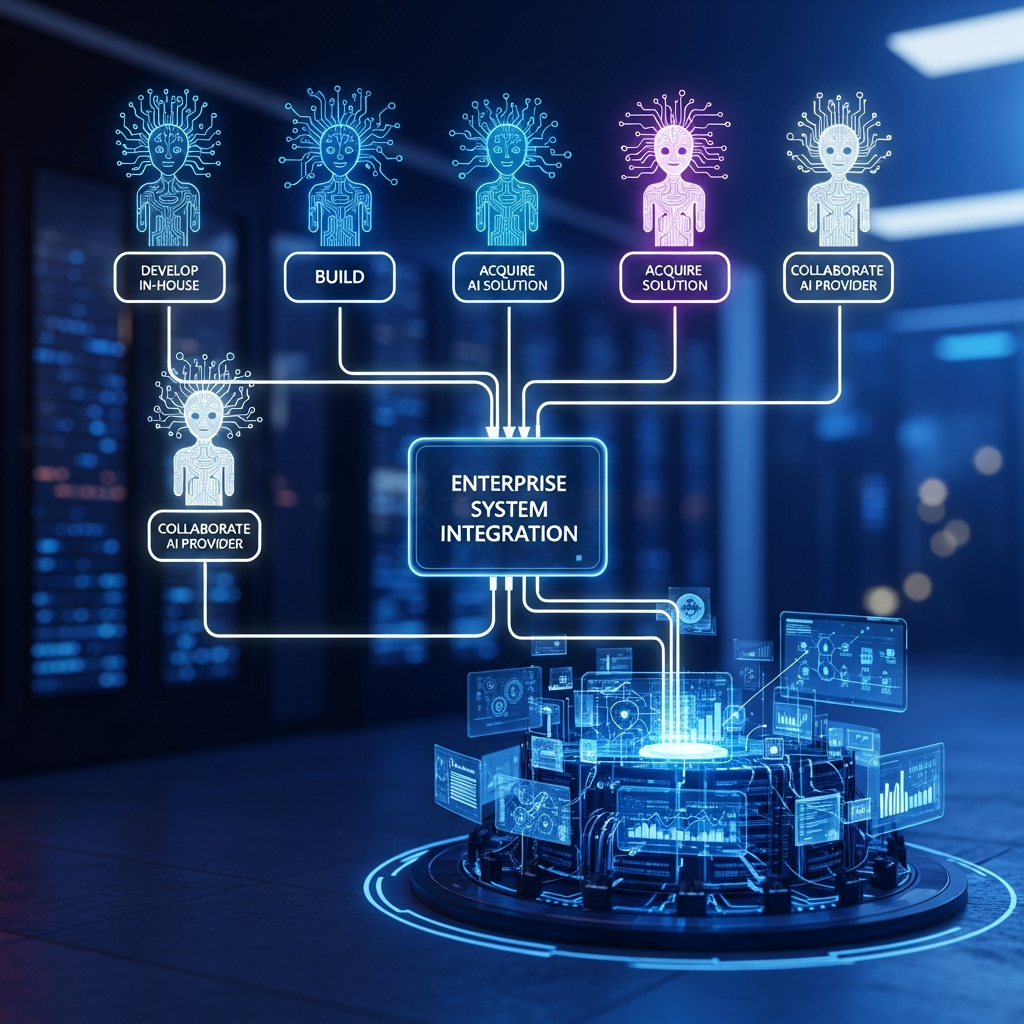
The core strategic decision for any enterprise now isn't just about adopting AI, but specifically, how to integrate agentic AI. The choices are stark: build, buy, or partner? A recent piece lays out this dilemma for 2026, highlighting the various paths companies are weighing. There’s no single right answer, only context-dependent choices with significant trade-offs in control, cost, and speed to market. Building gives you maximum customisation but devours engineering resources and time—the ultimate constraint. Buying offers speed but locks you into a vendor's roadmap. Partnering might offer a middle ground, but requires careful alignment and trust.
What’s clear is that agents are moving from theoretical discussions to concrete applications. In finance operations, for instance, there are already "5 Tested" tools in 2026 leveraging AI agents to automate workflows. This isn’t a future state—it’s now, driving real efficiency gains. And it's not just back-office; the front lines are seeing it too. Volkswagen, acutely aware of the intense competition from Chinese carmakers flaunting new technologies at the Beijing auto show, is equipping its Chinese cars with AI agents. This isn't about incremental improvements; it’s a bid to catch up in a fiercely competitive market where tech differentiation is paramount. Volkswagen's move shows a strategic imperative to embed agents directly into products to meet market demands and stay relevant.
This shift means our underlying infrastructure needs to change fundamentally. Google didn't just tweak its data stack; it rebuilt it for agents taking action, moving beyond a system designed for humans asking questions. The paradigm is shifting from information retrieval to autonomous execution. This has profound implications for data governance, security, and the very architecture of enterprise IT. We're seeing powerful new models emerge, like Moonshot AI's Kimi K2.6, which supports complex tasks, signalling the increasing sophistication of these agentic capabilities. The question isn't if your systems can handle agents, but if they're designed for them.
The Hard Math of AI: Jobs, Spending, and Surveillance
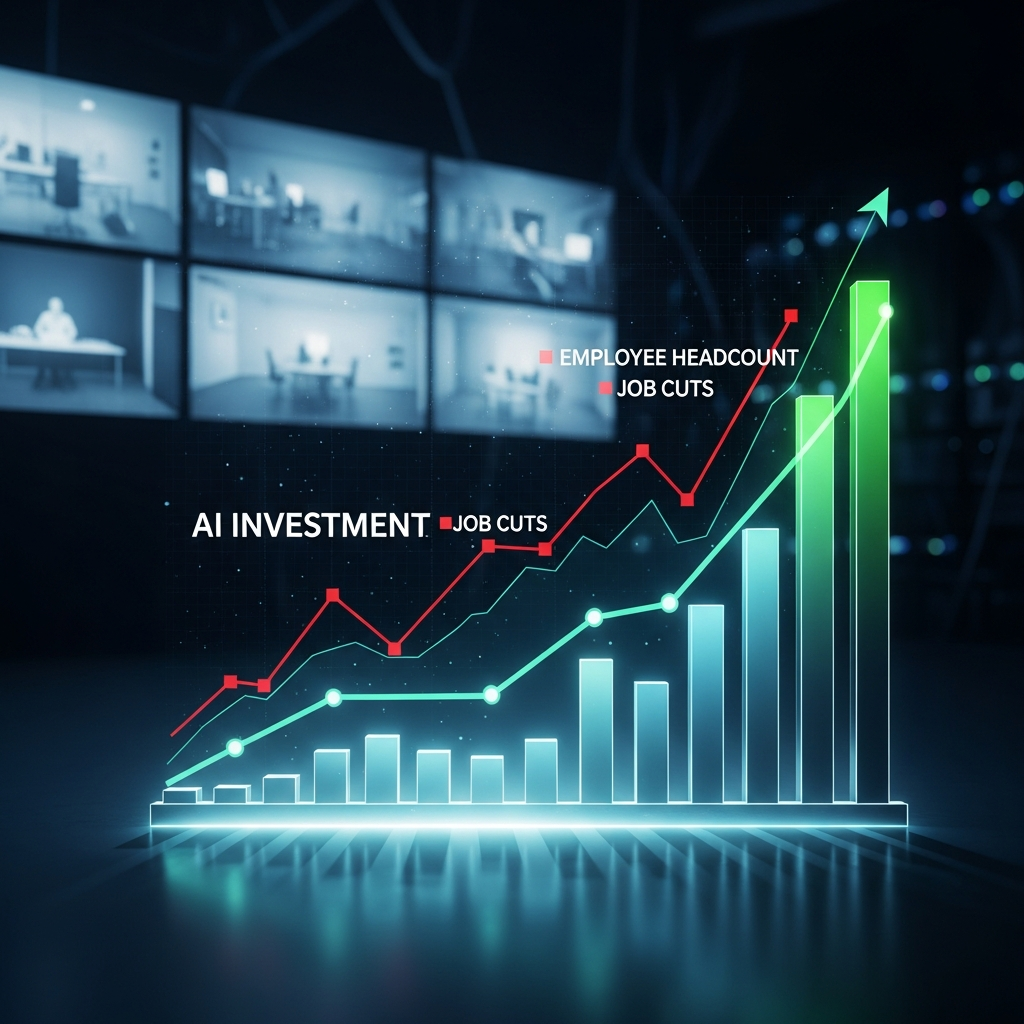
Beneath the excitement of new AI capabilities lies a colder, harder reality: the immense capital expenditure and the human cost of this transformation. Meta, a company synonymous with scale and ambition, is reportedly planning to ax 8,000 jobs in May, following previous layoffs. This isn't a minor adjustment; it’s a 10% cut as Mark Zuckerberg "bets the house on AI." The message is unambiguous: AI is not just about growth; it's about ruthless efficiency and reallocation of resources on an unprecedented scale.
This isn't just about Meta's balance sheet; it's a window into the brutal economics of AI. The compute power, the talent acquisition, the R&D—it all costs staggering sums. Companies are making hard choices, sacrificing existing headcount to fund their AI ambitions. This is the flip side of the "digital transformation" narrative, where an expert advises to "accelerate" it. Acceleration doesn't come cheap, and it doesn't come without casualties.
And then there's the uncomfortable truth about oversight. In a move that raises serious questions about employee trust and privacy, Meta is reportedly planning to start capturing employee mouse movements and keystrokes. While framed as productivity monitoring, it highlights a broader trend: as companies invest heavily in AI to optimize performance, they're also deploying more intrusive methods to measure and manage their human capital. Is this the future of work? A constant, granular surveillance to justify the AI investment? It's a stark reminder that technology, while empowering, can also be deeply dehumanising if not deployed with ethical guardrails.
The global competition is only intensifying these pressures. At the Beijing auto show, the sheer volume of new tech displayed by Chinese carmakers underscores the pace of innovation and the imperative for companies like Volkswagen to embed AI agents just to keep pace. This isn't just about market share; it's about national competitiveness. The stakes are incredibly high, and the operational decisions we make today will determine who survives and who thrives in this new AI-driven economy.
The promise of AI is immense, but the path to realising it is paved with hard choices, significant capital outlay, and often, difficult human consequences. The luxury of observation is over. Every operator needs to make their move, understanding that the cost of inaction is now potentially higher than the cost of a painful transformation.