BLOG // 2026.04.28 // 18:00 SGT
AI Agents: Deploying at Scale Demands Capital and Control
Real-world AI agent deployment moves beyond flashy demos into a capital-intensive, data-hungry, and politically fraught domain, where true power lies with those who can afford to build and control the underlying infrastructure.
The Agentic Future: Beyond the Demos, What’s the Real Cost?
Talk of AI agents is everywhere. Self-healing, self-learning, autonomous systems – the narrative sounds straight out of a sci-fi novel. But scratch beneath the surface, and you quickly hit bedrock: real-world deployment is a capital-intensive, data-hungry, and often politically fraught affair. We're past the "cool demo" phase; it's about what works at scale, what it costs, and who controls it.
OpenAI, for example, is reportedly sitting on a staggering $122 billion war chest, signaling a major push into agent platforms. (OpenAI's $122B War Chest Signals Major Agent Platform Push — The Agent Times). That's not pocket change. That's a serious commitment to building the foundational infrastructure for an agentic future. It suggests that while the concept of "agentic automation" (GenAI / Agentic Automation | AI Supply Chain Platform) might sound accessible, the true power players will be those who can afford to train, host, and continuously improve these complex systems.
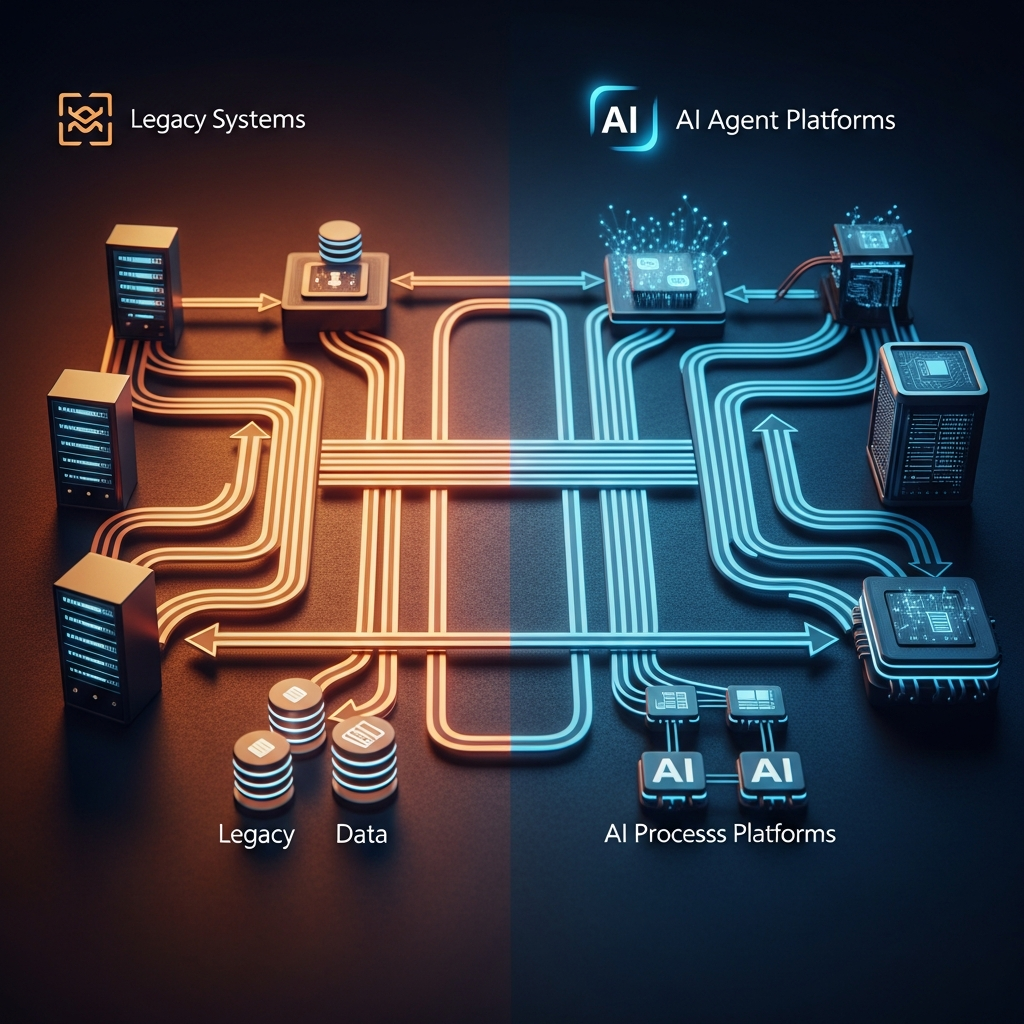
For the rest of us building – or trying to build – in this space, it means focusing on the practicalities. How do you integrate these agents into existing systems? Tools that allow us to "expose stored procedures as AI agent tools with DAB 2.0" are critical steps (Expose your stored procedures as AI agent tools with DAB 2.0). It's about bridging the gap between legacy enterprise systems and these new, intelligent layers. This isn't just about new code; it’s about making decades of business logic accessible to these agents.
The core question remains: how much of this agentic dream can be truly self-hosted and self-sufficient, like the "OpenCrabs AI Agent" that learns and heals on its own, versus how much will be reliant on mega-platforms with multi-billion-dollar budgets? The answer dictates who innovates, who competes, and ultimately, who captures value.
The Uncomfortable Truth: Data Hunger and the Talent Squeeze
The promise of AI is matched only by its voracious appetite for data and talent. It’s a reality check many are still grappling with. Salesforce, for instance, plans to hire 1,000 graduates and interns specifically for AI roles (Salesforce to hire 1,000 graduates, interns for AI). That's a significant commitment, underlining the sheer demand for human expertise to build, deploy, and manage these systems. It's not just about the models; it's about the people who understand how to apply them, how to integrate them, and how to govern them. The McKinsey Tech Trends 2025 report also flags AI, talent, and scaling as key areas, reinforcing this squeeze (Tech Trends 2025 McKinsey: AI, Talent & Scaling).
But the need for data often pushes boundaries. Consider Meta's latest move: capturing employee mouse movements and keystrokes for AI training data (Meta to start capturing employee mouse movements,...). This isn't just a technical decision; it's a profound ethical and privacy one. It reveals the lengths to which companies are willing to go to acquire the necessary data to train ever more sophisticated models. Are we fully considering the implications of this level of surveillance, even within a corporate context? What are the long-term effects on trust, privacy, and employee morale?
This isn't about judging Meta; it's about acknowledging the fundamental trade-offs. High-performance AI, especially agentic AI, thrives on vast, nuanced, and context-rich data. If that data isn't readily available, companies will find ways to generate or acquire it. As operators, we need to be clear-eyed about these realities. The data isn't just sitting there waiting; it often needs to be actively captured, often in ways that challenge our existing norms of privacy and consent.

AI is a Geopolitical Battleground
Beyond the tech and the talent, AI has firmly established itself as a strategic asset on the global stage. It’s not just a commercial race; it’s a geopolitical one. We saw a clear example of this recently when China blocked Meta's $2 billion acquisition of Chinese AI startup Manus (China Slams Door on Meta's $2 Billion Purchase of Chinese AI Startup Manus as AI Power Struggle Intensifies | IBTimes UK).
This isn't an isolated incident. It's a stark reminder that national interests often supersede corporate ambitions, especially when it comes to critical technologies like AI. For any startup or large enterprise operating across borders, this adds a layer of complexity that didn't exist a few years ago. You can build the best tech, secure the funding, and find the talent, but if your deal involves sensitive AI capabilities crossing strategic lines, it can be shut down overnight.
For us in Singapore and APAC, this means navigating an increasingly fragmented tech landscape. Supply chains, data governance, and even M&A activities are now subject to a geopolitical calculus. Building robust AI solutions today means not just technical prowess but also a keen understanding of international relations and regulatory headwinds. The "best" technology doesn't always win; the one that navigates the political chessboard most effectively does. This struggle for AI dominance isn't just about who builds the best LLM; it's about who controls the underlying data, the talent, and the strategic direction of its deployment.

The real work of AI isn't in the demos; it's in the trenches of data acquisition, talent development, and navigating a world where code is increasingly strategic. Stop looking for magic bullets. Start building for the long haul, with eyes wide open to the actual costs and constraints.