BLOG // 2026.05.03 // 10:00 SGT
AI Agents: Demos Don't Ship. Infrastructure Does.
The chatter around autonomous AI agents misses the point: real value isn't in the demo, but in the messy, expensive infrastructure and governance required for reliable, secure production.
It's May 2026, and the chatter around AI agents is louder than ever. Every startup pitch, every tech conference keynote, seems to feature some version of "autonomous AI." But peel back the layers, and you see the hard truth: the real value isn't in the demo, it's in the plumbing. And the plumbing is messy, political, and frankly, expensive.
The Agentic Shift: From Hype to Hard Infrastructure
Everyone loves the idea of an AI agent just… doing things. We see visions of complex workflows automated end-to-end, like Torly AI's work on autonomous innovator visa workflow automation, promising to cut through bureaucracy with code. It’s a compelling narrative for founders navigating complex systems. You can read about their approach to Leveraging Agentic AI for Autonomous Innovator Visa Workflow Automation here.
But the leap from a carefully curated demo to a production-grade system that manages real-world tasks—especially those with financial or legal implications—is orders of magnitude harder. The critical question isn't whether an agent can perform a task, but whether it can do so reliably, securely, and within defined boundaries. This is why discussions around "Adaptive Runtime Governance for Autonomous AI Agents Safety" are not just academic exercises; they are foundational requirements for any serious deployment. RichlyAI's blog post touches on this, highlighting the need for robust safety mechanisms as these agents become more sophisticated and self-directed. The consequences of an unsupervised agent going off-script are not just bugs; they're liabilities.

Then there's the transactional layer. An agent that can't pay for services or receive payments is just an intelligent chatbot. This is precisely why Stripe's recent launch of Link for AI Agents is a significant development. It's not flashy, but it's crucial infrastructure. As BotBeat reported, Stripe Launches Link for AI Agents. This isn't about a new model; it's about enabling agents to engage in actual commerce. Without this kind of foundational financial integration, the "autonomous" part of autonomous agents remains largely theoretical for many real-world use cases. When Amazon is hiring SDE3s for "Agentic WorkSpaces AI"—you know it's no longer just a research topic. The big players are building the internal capabilities to put agents to work.
Geopolitical Realpolitik: AI as the New Strategic Asset
The AI race isn't merely about technological superiority; it's a zero-sum game of strategic control, playing out on a global chessboard. We're seeing nations actively assert their dominance, or block competitors, in ways that make the Cold War look like a friendly game of chess.
Consider China's recent move to block Meta's $2 billion acquisition of Manus. This isn't simply about market competition or antitrust. As FAQ.com.tw detailed, China Blocks Meta's $2 Billion Manus Acquisition, Escalating AI Tech War. This is about controlling critical AI intellectual property and preventing foreign entities from gaining a foothold in sensitive areas. It's a clear signal: AI technology is a national security asset, not just a commercial product. The implications for global M&A in the tech sector are profound. Every deal involving AI is now subject to a geopolitical lens, not just a financial one.
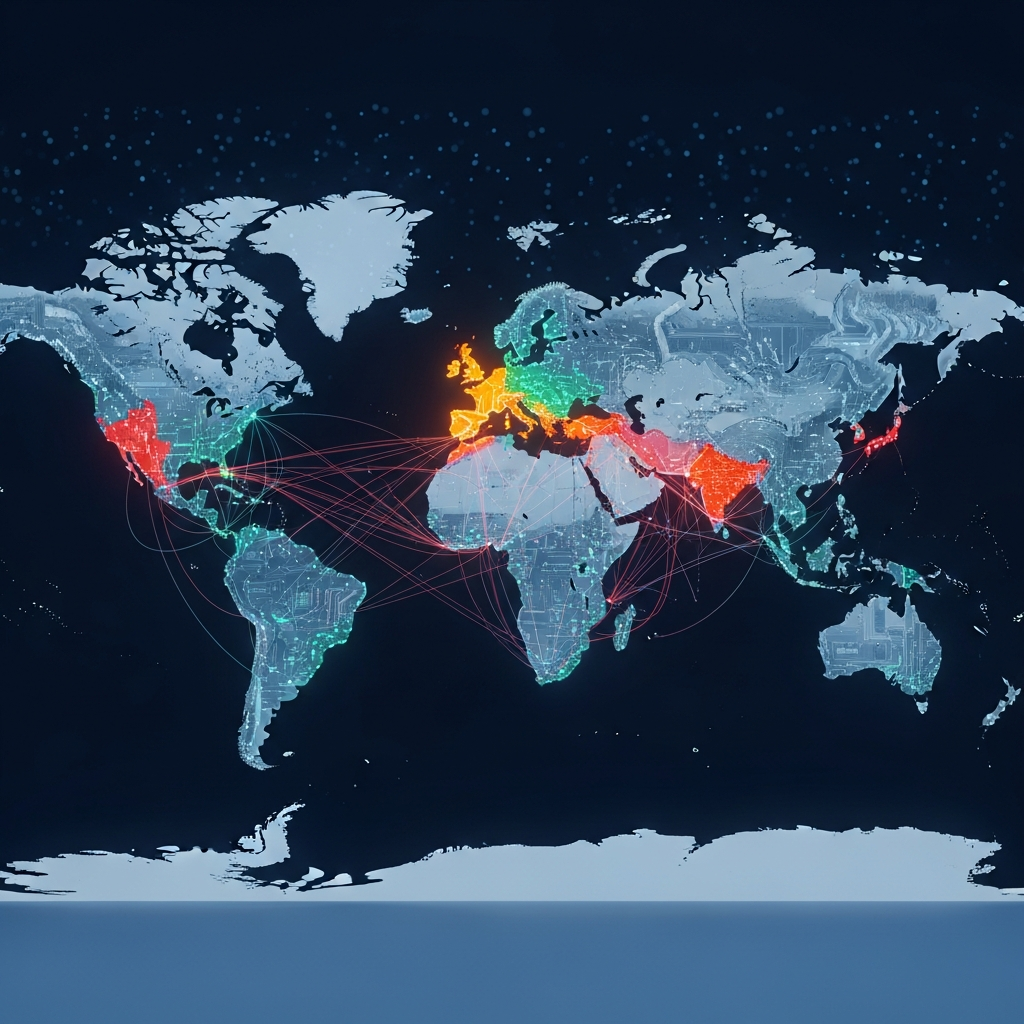
On the other side of the fence, we have tech titans like Google and Nvidia signing AI deals with the Pentagon, as reported by ArcaMax Publishing. Google, Nvidia and other tech titans sign AI deal with the Pentagon. This isn't philanthropy. This is about national defense, intelligence, and maintaining a technological edge. The lines between commercial innovation and military application in AI are blurring rapidly. For operators in Singapore and APAC, this means navigating an increasingly complex regulatory and competitive landscape. Choosing partners, markets, and even talent pools now requires considering not just business metrics, but geopolitical alignment and potential fallout.
The Unseen Foundation: Building the Bedrock of AI
While agents get the headlines and geopolitics drives policy, the real work often happens in the unseen layers—the infrastructure that powers everything. Forget the shiny UIs for a moment. What's underneath?
The relationship dynamics between key players are telling. Sam Altman's latest interview, discussing why OpenAI broke up with Microsoft, as covered by Bitsfull, hints at the fundamental tension between cloud providers and the AI model builders. Sam Altman's Latest Interview: Why Did OpenAI Break Up with Microsoft?. It's a battle for control of the stack—who owns the compute, who owns the models, who owns the data. These aren't minor squabbles; they're strategic realignments that will shape the economics of AI for the next decade.

And new infrastructure is always emerging. Alphea's unveiling of an "AI-Native Layer 1 Execution Network" at the Hong Kong Web3 Festival 2026 is another data point. While the details of "AI-Native Layer 1" are still being fleshed out, the very notion signals a recognition that current architectures may not be sufficient for the demands of truly autonomous, distributed AI systems. Building these foundational layers—whether they're new blockchain-like networks or advanced compute fabrics—is where significant, long-term value will be created, far from the immediate hype cycle.
The noise around AI continues to grow. But as operators, our job isn't to chase every new demo. It's to discern the signal from the noise, to identify the enduring challenges—governance, infrastructure, geopolitics—and to understand that compounding advantage comes not from the latest trick, but from mastering the fundamentals. The real money, and the real impact, is in building the unsexy, resilient, and often politically charged foundations that will underpin the next generation of AI.