BLOG // 2026.04.25 // 22:01 SGT
AI Agents: Beyond the Demo. The Hard Truths of Deployment.
The real story of AI agents isn't in demos, but in the relentless demand for deep engineering talent and secure infrastructure handling real money and complex operations.
The noise around AI agents has been deafening for months. Every other demo shows some autonomous bot doing a task. But what's actually shipping? What's moving beyond a flashy proof-of-concept into real systems, handling real money or real operations? This is where the rubber meets the road for operators in Singapore and beyond. Forget the keynote sizzle reels for a moment. Look at the job boards. Look at the infrastructure plays. Look at where actual capital is flowing, and you'll see a different picture.
The Agentic Shift: From Demos to Deployments
We're seeing a clear signal in the talent market: the demand for engineers who can build these systems is surging. Adobe is hiring Senior AI Agent Engineers in San Jose, while Nvidia is looking for Senior Staff Software Engineers focused on Agentic Automation. These aren't roles for prompt engineers; these are for builders who understand the underlying architecture, the state management, the security implications of autonomous systems. This isn't about automating a single click anymore. It's about orchestrating complex workflows without constant human intervention.
Consider Cobo's move. They just introduced AI Agent Wallet Infrastructure with multi-party security controls. This isn't a toy. This is about automated financial transactions, where security isn't just a feature—it's the foundation. If an AI agent can manage a crypto wallet, execute trades, and interact with DeFi protocols, that's a significant leap. It means the technology is maturing enough for critical, high-value operations. And it's not just finance. The UAE announced a shift toward an AI government model in the next two years. That's a national-level commitment to agentic systems, automating public services and decision-making. We're talking about orders of magnitude impact on operational efficiency, citizen services—and the workforce. The transition from AI as an assistant to AI as an autonomous operator is accelerating faster than many realize. Are your teams ready to build, secure, and govern these systems? Because the talent market tells us it's already here.

The Silent Battle for AI Infrastructure
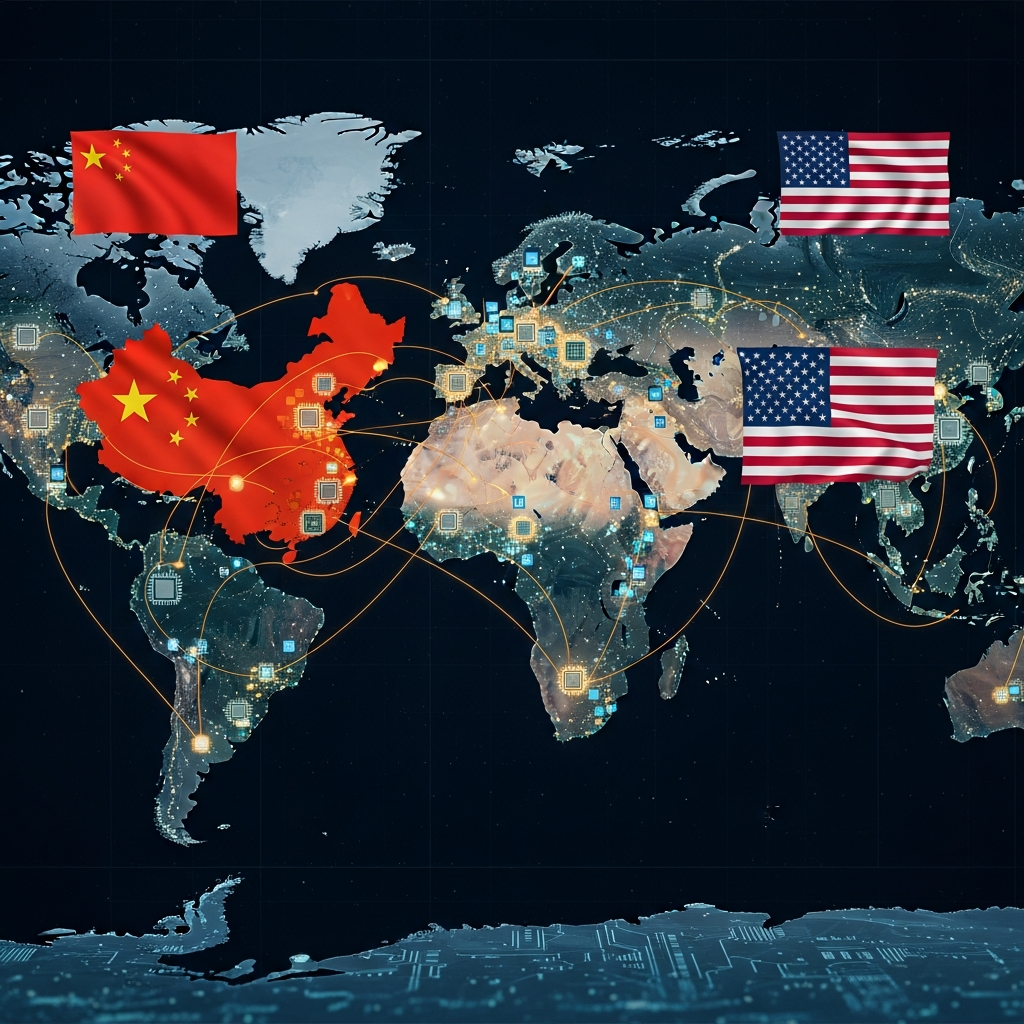
While everyone's debating model sizes and emergent capabilities, the real strategic game is being played at the silicon layer. You can have the smartest model, but if you don't have the chips to run it, it's just a theoretical exercise. The US–China AI race is heating up, with DeepSeek V4 launching on Huawei chips instead of Nvidia. This isn't just about national pride; it's about supply chain resilience, geopolitical leverage, and the fundamental economics of AI development.
Nvidia's stock continues to hit record highs because they own the choke point for high-performance AI computing. But what happens when alternatives gain traction, especially from a strategic competitor like China? For startups and enterprises, this means a few things. First, dependency on a single vendor or a single nation's tech stack is a risk. Diversification, where possible, isn't just good practice—it's essential for long-term viability. Second, the cost of compute isn't going down fast enough for everyone. As the demand for training and inference grows exponentially, access to competitive, reliable, and affordable compute will differentiate the winners from those stuck on the sidelines. The infrastructure you build on today will dictate your agility and cost structure for years to come. Are you thinking about your compute strategy beyond just cloud credits?
Operationalizing AI: Beyond the Pilot Project
Many companies are still stuck in "AI pilot project" purgatory. They run a few experiments, get some promising results, but struggle to integrate AI into their core operations for sustained impact. The recent Meta and Microsoft layoffs, signaling a global workforce crisis and a shift, highlight this. These aren't just cost-cutting measures; they reflect a strategic reorientation around what kind of work, and what kind of worker, is needed in an AI-driven economy.
The real value of AI isn't in building another chatbot. It's in fundamentally improving how you operate. We're seeing tools emerge like AI Product Management Tools, designed to help prioritize better and ship faster. And in e-commerce, AI Analytics for revenue and beyond are becoming table stakes for understanding customer behavior and optimizing sales funnels. These aren't moonshot projects; they're about compounding marginal gains across the business. The true impact of AI is measured in sustained operational efficiency, not just impressive demos.
As an operator, you need to ask: where can AI drive 10x improvements in cost, speed, or accuracy in my core business processes? Not 10%. 10x. If it's not an order of magnitude, it's likely not worth the distraction from your existing roadmap. The companies that are winning aren't just using AI; they're rebuilding their operations around it, pushing capabilities from the edge to the core. This requires a hard look at existing workflows, a willingness to automate away entire job functions, and a commitment to reskill your workforce for the new roles AI creates. The shift is already underway, and those who treat AI as an optional add-on will find themselves rapidly outmaneuvered.

The hype cycles will continue. The demos will get flashier. But for those building and leading, the focus must remain on the tangible: secure agentic systems, diversified compute infrastructure, and operationalizing AI for undeniable, measurable impact. Everything else is just noise.