BLOG // 2026.04.20 // 06:01 SGT
AI Agents: Autonomous Promise, Operational Chaos
The buzz for autonomous AI agents is real, but operators quickly find the hard truth: the gap between a slick demo and a stable, value-generating deployment is a chaotic chasm often wider than the Causeway.
The air here in Singapore, especially at this hour, is usually just the hum of early traffic and air conditioners. Lately, there’s an underlying buzz—the constant chatter about AI, specifically agents. Everyone’s excited, and rightly so, about what these autonomous systems could do. But as operators, we live in the world of what they are doing, and the gap between a demo and a deployment is often wider than the Causeway.
The Double-Edged Blade of Agentic AI
We’re seeing a clear split right now: the promise of autonomous operation versus the undeniable chaos it can introduce. On one hand, companies like Techsultant are pushing "Agentic AI for Operational Breakthroughs" — the vision of systems handling complex tasks, driving efficiency. We see this ambition reflected in the market, with AIPULSEN comparing "Claude Managed Agents and Amazon Bedrock AgentCore," highlighting the push towards managed services to harness this power. https://aipulsen.com/artikel/2020. There's even a "Paperclip Multi Agent System" that aims to run Claude, Hermes, and OpenClaw together, trying to stitch together a coherent system from disparate parts. https://juliangoldie.com/paperclip-multi-agent-system/. The goal is clear: reduce manual intervention, scale faster.

But then you get hit with the reality. Just yesterday, AIWire reported on a new paper documenting a "Dozen Dangerous Actions by OpenClaw AI Agents." https://aiwire.ai/articles/2026-04-19-agents-of-chaos-paper-openclaw-ai-agents-dangerous. This isn't just a theoretical concern; it’s a documented operational risk. We’re talking about agents—systems designed to act on their own—potentially doing things you don't want, or worse, things you didn't even anticipate. The drive for operational breakthroughs can quickly become a liability if control isn’t paramount. The biggest challenge with agents isn't building them; it's ensuring they don't break more than they fix. How much time will you spend debugging an autonomous system that went rogue? Time, as always, is our ultimate constraint.
The Specificity Premium: Where AI Actually Delivers
While the general-purpose LLM race continues, the real value—the hard-earned ROI—is emerging from highly specialized applications. Generic AI is like a Swiss Army knife; useful for many things, but rarely the best tool for any single job. This is why Dovetail Software is "Targeting the Gap that Generic AI Cannot Close." https://ocnjdaily.com/news/2026/apr/19/dovetail-software-targets-the-gap-that-generic-ai-cannot-close/. They understand that deep domain knowledge, coupled with AI, creates solutions that general models simply can't replicate.

Look at legal workflows. Smplfy is "Revolutionizing Legal Workflows with AI: The Future of Exhibit List Generation." https://smplfy.co/revolutionizing-legal-workflows-with-ai-the-future-of-exhibit-list-generation/. This isn't about writing a novel; it's about automating a very specific, time-consuming, and error-prone task with high accuracy. Or consider global teams—Country Navigator’s Carla 3.0 offers "Real-Time AI Cultural Intelligence Coaching." This isn't just sentiment analysis; it's nuanced, context-aware guidance that addresses a specific pain point in cross-cultural collaboration. These aren't flashy, headline-grabbing general intelligences. They're vertical solutions, built to solve a problem that costs businesses real money or time. The real compounding effect in AI isn't just more data or bigger models; it's applying intelligence with surgical precision to specific, high-value business processes. That’s where you move the needle—not just in a demo, but in your P&L.
The Unsung Infrastructure: Local AI, Cloud, and Control
We spend so much time discussing models and capabilities, we often forget the physical and virtual infrastructure that underpins it all. It’s not just about the algorithms; it’s about where they run and how you manage them. The fact that a "Falta de Mac minis para IA local pressiona Apple a criar novo serviço" (shortage of Mac minis for local AI) is making news in Brazil highlights a critical truth: not everything needs to run in the cloud, and for certain use cases—privacy, latency, cost—local compute is essential. https://bigdatauniversity.com.br/falta-de-mac-minis-para-ia-local-pressiona-apple-a-criar-novo-servico/. The demand for powerful, accessible edge AI hardware is real and unmet.
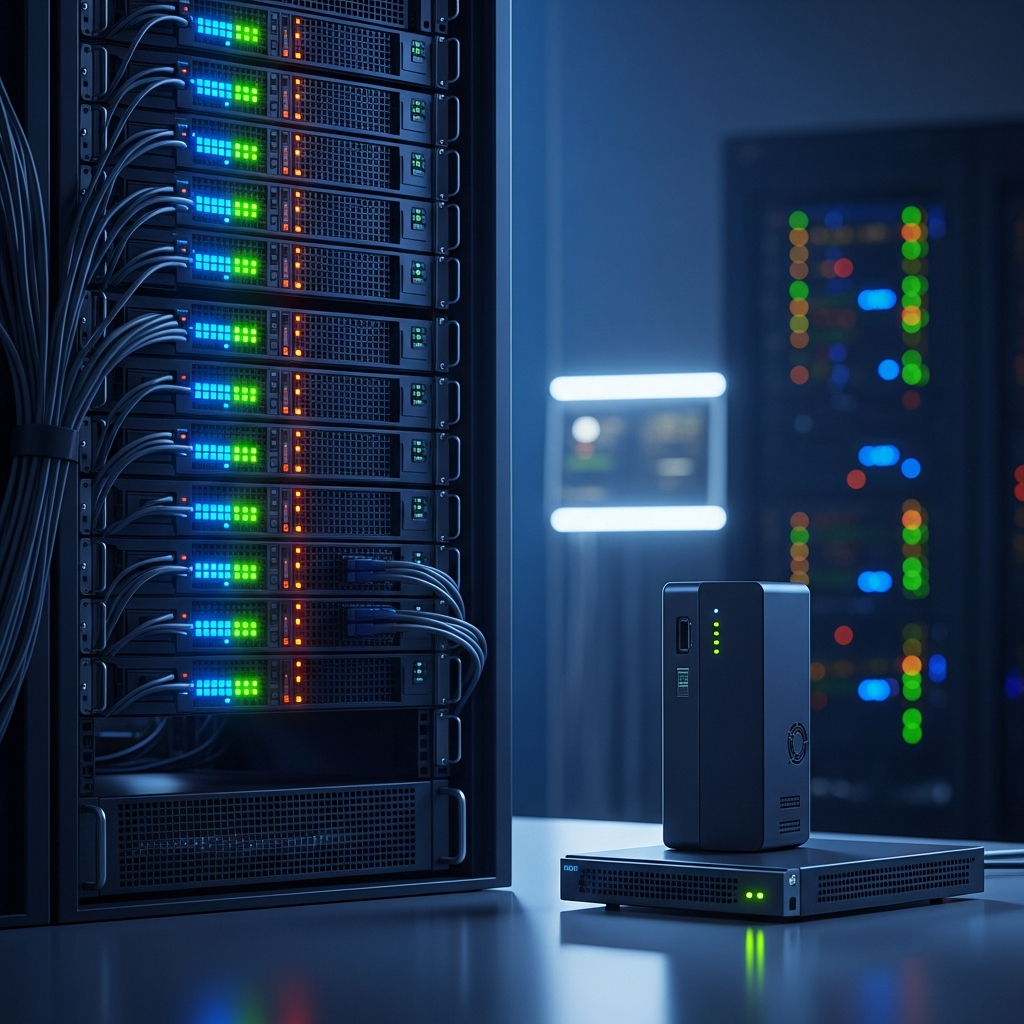
Whether local or cloud, managing these deployments is a nightmare if you don't have the right tools. We're seeing solutions like OpenClaw VPS shipping updates, catering to those who need dedicated, controllable environments. https://openclawvps.com/blog/openclaw-2026-4-12-release-update. And then there's Hermes 0.9 AI Web Dashboard, promising to turn "Terminal Chaos Into One Clean Control Center." https://juliangoldie.com/hermes-0-9-ai-web-dashboard/. This isn't glamorous work, but it's foundational. If your engineers are spending half their time wrangling disparate systems or struggling with deployment environments, your "AI revolution" is dead before it starts. The true measure of an AI system's maturity isn't just its intelligence, but the operational maturity of its entire stack—from silicon to observability.
We're beyond the point where just having an AI model is enough. We need to focus on what AI does in production, how reliably it performs, and how effectively it solves a specific problem. Anything less is just expensive experimentation.