BLOG // 2026.04.30 // 18:00 SGT
AI Agents: Augmentation, Not Autonomy—The Real Value on the Ground
Beyond the hype, AI agents deliver real business value by augmenting human workflows and automating grunt work, demanding relentless infrastructure, shrewd risk management, and indispensable human expertise.
It's April 2026. The noise around AI is deafening, as expected. Everyone's talking about agents, innovation, transformation. But what’s actually moving the needle for businesses on the ground? Beyond the demos and the venture capital narrative, the real work—and the real value—is in deployment, risk management, and the relentless grind of infrastructure.
AI Agents: The Reality of Augmentation, Not Replacement
We've all seen the headlines promising fully autonomous AI agents revolutionizing everything. I'm skeptical of anything that sounds like a silver bullet. The reality, as always, is far more grounded.
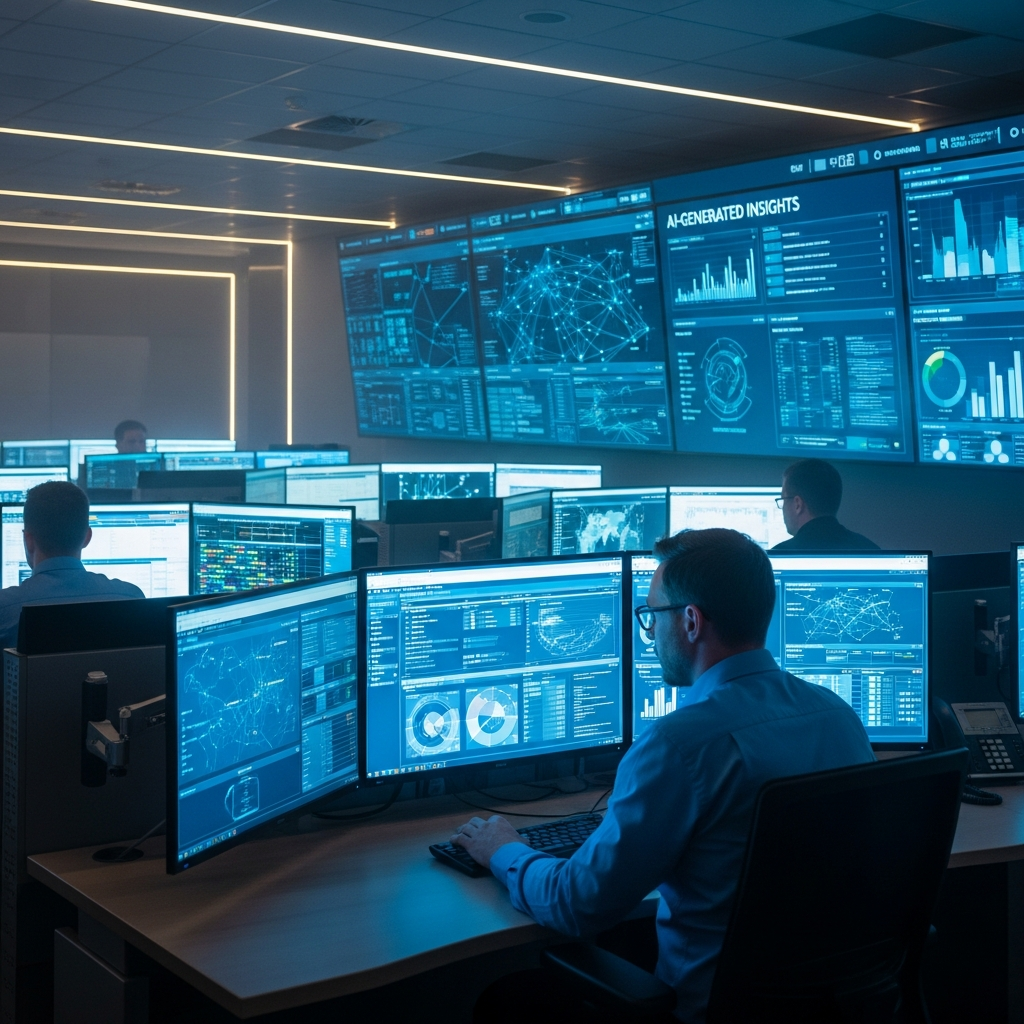
Consider Amazon. They’re reportedly targeting mass hiring using agentic software, with the stated goal to "humanize AI." [https://azeritimes.com/amazon-targets-mass-hiring-with-agentic-software-goal-to-humanize-ai/]. This isn't about replacing recruiters entirely. It's about automating the grunt work—the initial screening, the scheduling, the data collation—freeing up human experts to focus on the nuanced, high-value aspects of talent acquisition. That's augmentation. That's scale.
It’s a similar story in legacy systems. Agentic AI is speeding up mainframe modernization, a task traditionally slow and painful. But even here, the crucial caveat remains: human experts are key [https://ai-analysis.ai/industry-news/91eda717-67be-476b-8224-4b514f060b38]. The agent handles the repeatable, rule-based migrations, the syntax conversions. The human understands the business logic, the edge cases, the historical context that no model can fully grasp—not yet, anyway.
What does this tell us? AI agents, in their current practical deployment, are powerful tools for specific, well-defined tasks. They excel at reducing friction and accelerating processes, often by orders of magnitude for the right use cases. But they are not sentient, autonomous decision-makers for complex, ambiguous problems. Anyone selling you that future today is selling you vaporware. Focus on identifying the 10-20% of repetitive tasks that eat up 80% of your team's time. That’s where agents deliver ROI. Anything else is a science project.
The Geopolitics of Code and Chips: A New Frontier of Risk
If you're building a tech business today, especially in APAC, you can't afford to ignore geopolitics. The notion of technology as a neutral, global force is increasingly naive. We saw this starkly with China blocking Meta’s Manus deal, explicitly citing "AI Tech Transfer Risks" [https://www.mirrorreview.com/news/china-blocks-meta-manus-deal/].
This isn't just about trade tariffs or market access anymore. It's about national security, intellectual property, and control over foundational technologies. AI capabilities—from advanced algorithms to specialized hardware—are now strategic assets. Governments are actively intervening to protect or acquire these assets.
For CTOs and founders, this translates to concrete challenges:
- Supply Chain Resilience: Are your critical components—especially chips from suppliers like NXP Semiconductors—vulnerable to geopolitical shifts?
- Data Sovereignty: Where is your data stored? Who has access? Compliance with evolving data residency laws isn't just a legal check box; it's a strategic imperative.
- IP Protection: How do you protect your core AI models and algorithms when operating across borders with varying legal frameworks and national interests?
The era of unrestricted global tech collaboration, if it ever truly existed, is over. Every strategic partnership, every cloud deployment, every hardware choice now carries a geopolitical calculus. Ignore it at your peril.

The Unseen Foundation: Powering AI from Cloud to Edge
While agents and geopolitical maneuvers grab headlines, the silent, relentless work of building and maintaining the underlying infrastructure continues. AI doesn't run on magic—it runs on silicon and power.
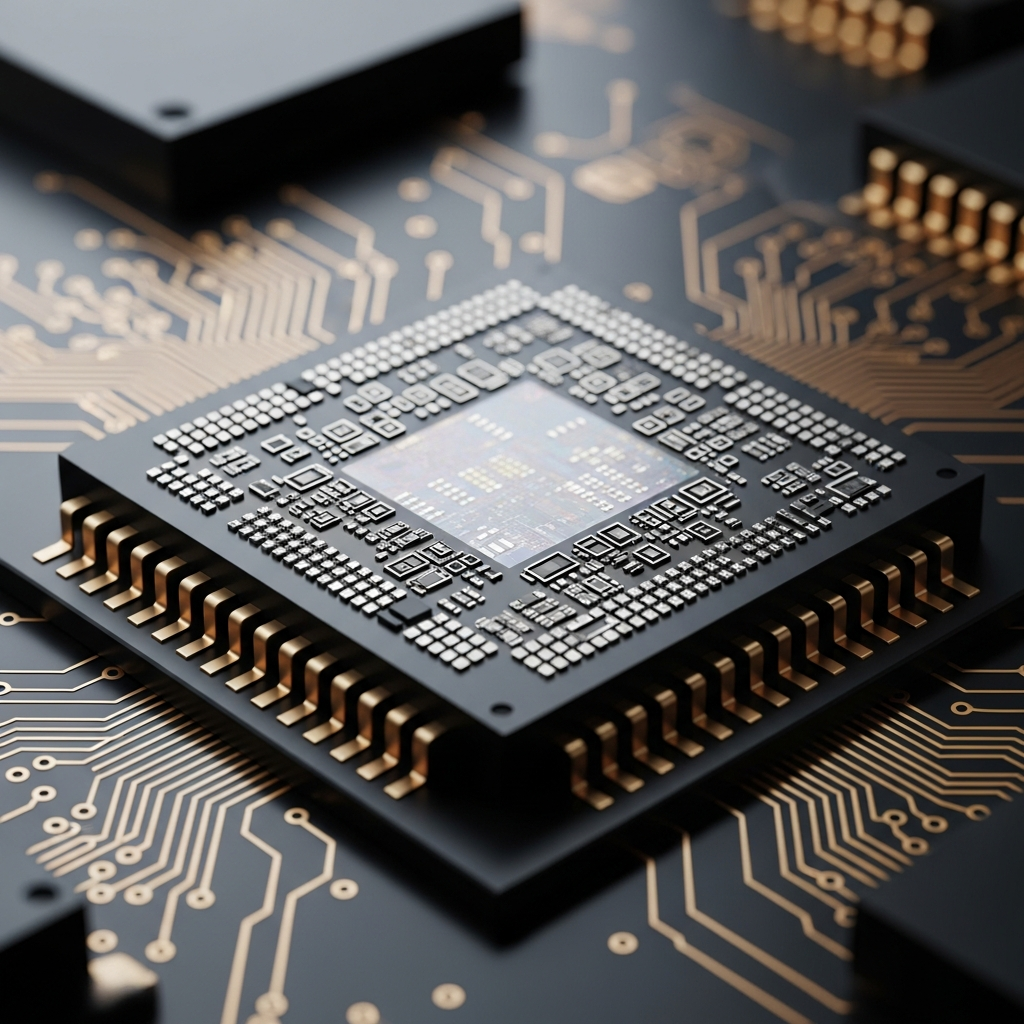
NXP Semiconductors, for example, posted Q1 2026 revenue of $3.18 billion [https://www.stocktitan.net/sec-filings/NXPI/8-k-nxp-semiconductors-n-v-reports-material-event-86c628442e79.html]. This isn't a flashy AI startup, but a testament to the continued, robust demand for the microcontrollers and processors that are the bedrock of everything from industrial IoT to next-gen smartphones. The "game-changing AI features and battery tech" promised in these new smartphones [https://technogensolutions.com/next-gen-smartphones-unveiled-with-game-changing-ai-features-and-battery-tech/] are only possible because companies like NXP are consistently delivering more powerful, efficient chips.
This signals a critical trend: AI is moving beyond the datacenter. Edge AI—running models directly on devices like phones, sensors, and even small industrial machines—is becoming mainstream. This shift has massive implications for latency, privacy, and cost. It means you need to think about power consumption, model quantization, and efficient inference on constrained hardware.
Don't just chase the latest large language model. Understand the entire stack. The performance gains you get from a 20% more efficient model or a 10% faster chip compound over time, leading to significant cost savings and better user experiences. That's where real competitive advantage is built—in the trenches, not just the boardrooms.
The AI narrative is often dominated by grand visions. But the operators, the builders, the ones actually shipping product and managing P&Ls—we know better. We know that real progress comes from pragmatism, from understanding constraints, and from the disciplined execution of boring but essential work. The hype cycle will continue its dizzying ascent, but the hard truths remain: AI is a tool, not a deity. Its power is derived from meticulous engineering, not magic. And its future is shaped as much by geopolitics as by algorithms. Focus on what you can control, measure, and deploy. Everything else is just noise.