BLOG // 2026.05.01 // 02:00 SGT
AI Agents Are Operational: Corporate Cards, Automated Trading
AI agents have moved past demos and hype, now deployed with corporate Visa cards and automating significant business operations, demanding a serious re-evaluation of financial and operational strategies.
A year or two ago, "AI agent" was mostly a concept, a demo on a screen that often fell short of its promise. Today, we're past the theoretical. We're seeing actual deployments, actual dollars — and actual revenue shifts. The talk isn't about if agents will work, but how we operationalize them, how much they cost, and how they're changing the bottom line.
The Agent Reality: From Demos to Dollars
If you've been sitting on the fence, waiting for proof that AI agents are more than just a hype cycle, the data points are coming in. They're not always pretty, but they are real. Consider Oobit, the Tether-backed financial platform, which is now giving AI agents their own corporate Visa cards as reported by Bitcoin.com. This isn't just an API call or a workflow automation; it's an agent with a corporate expense account. Think about the implications for audit trails, compliance, and delegated authority. This pushes agents from being purely internal automation tools to external actors in the financial world. It’s a leap.

Then there's Kambi, the sports betting technology provider. They've committed to a 100% AI-traded World Cup, having already seen Q1 bet automation hit 60% according to Gate News. That’s a massive commitment, backed by clear metrics. Sixty percent automation is a significant chunk of their core business, not a side project. When a company stakes its performance on AI for a major global event, it means they've moved well past experimentation. European Union teams are actively shipping workflow automation agents in 2026, as noted by CallSphere, and similar adoption signals are emerging from healthcare in Brazil and Latin America. These aren't just proofs-of-concept; these are companies integrating agents into core operations, from asset management to media planning. The focus has shifted to building production-ready AI agents, with resources like LangChain guides emerging to support this new reality. Alibaba's recent release of Qwen3.6-Max-Preview, performing well on agentic coding benchmarks, underscores that the underlying models supporting these agents are also rapidly maturing, making more complex agent tasks feasible.
The Shifting Economics of AI
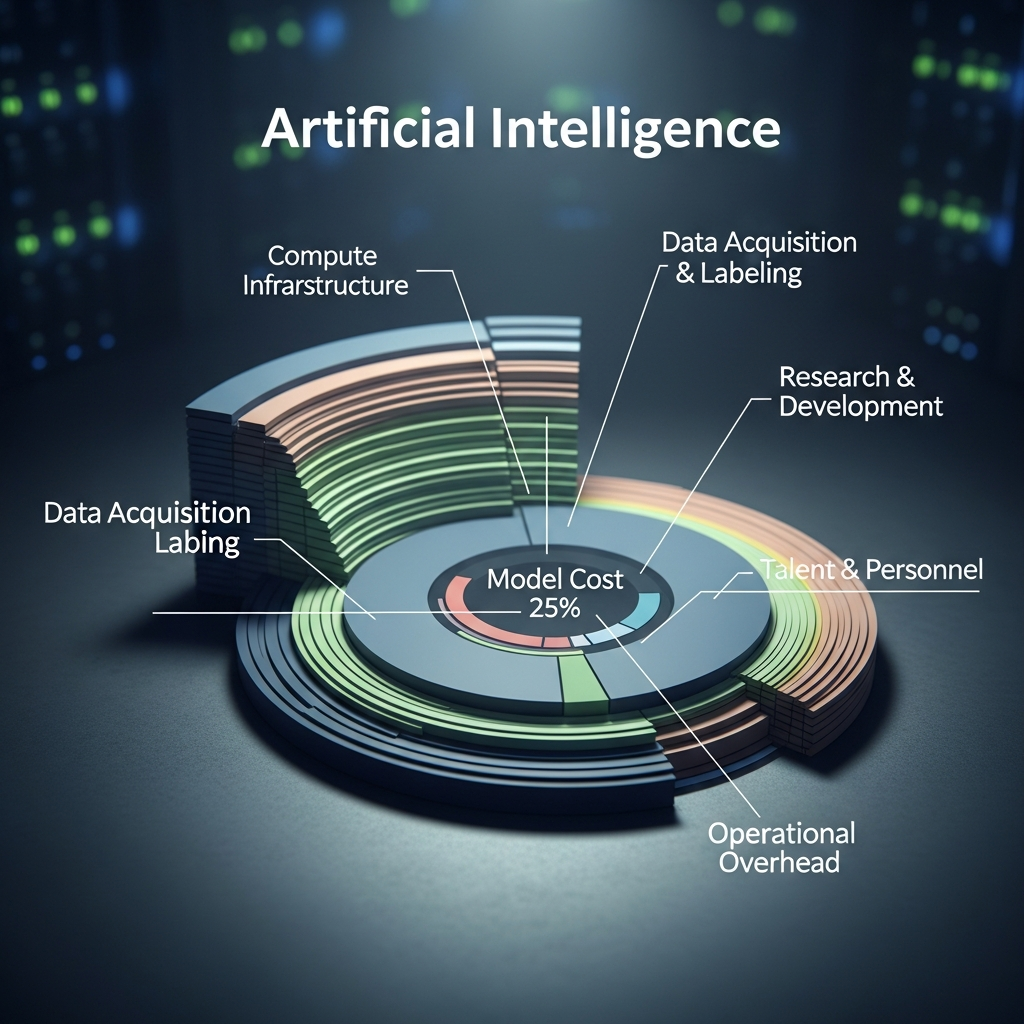
The operational reality of agents also brings a new financial calculus. It's not just about building them; it's about the cost of running them and, more critically, the impact they have on existing revenue streams. Spendwall points out that with ChatGPT 5.5, the model is no longer the whole bill when it comes to agentic cost control. This is a critical insight. For CTOs, this means the cost equation now includes the orchestration layer, the tool integrations, the persistent memory, the monitoring, and the security of these autonomous entities. We're moving beyond simple inference costs to a more complex total cost of ownership for agent systems.
But the impact isn't just on costs; it's on revenue too. Alphabet's Q1 2026 earnings highlight this starkly: Google Network ad revenue fell 4% as AI reshapes the web. This isn't a minor blip; it’s a bellwether. When AI agents start doing the searching, synthesizing, and summarizing for users, the traditional ad-supported web model faces direct disruption. If users are getting their answers from an agent rather than clicking through to a dozen ad-filled websites, the economics of the internet fundamentally change. This is the kind of order-of-magnitude shift we need to prepare for. It’s not just about optimizing existing systems; it's about reimagining entire business models. The "Claude Compromise," which enables single inputs to unlock enterprise AI agent permissions, hints at the complexities and potential cost savings of managing agent access and security at scale, but also the inherent risks of granting such capabilities.
The agent paradigm is forcing us to confront a new reality where automated entities don't just execute tasks, but interact, decide, and transact. This isn't future-gazing anymore. It's happening now, impacting everything from how we build software to how we monetize attention. The question isn't whether agents are here; it's whether your organization is ready for the operational and financial reckoning they bring.