BLOG // 2026.04.21 // 18:00 SGT
AI Agents: APAC's Governance Reality Trumps Gimmicks
The compelling vision of AI agent marketplaces quickly hits the governance wall in APAC's regulated markets, separating slick demos from viable, scalable deployments.
The air is thick with talk of AI agents. Every other day, there's a new platform, a new "skill marketplace," or a new promise of autonomous systems handling everything from customer service to financial trading. But as Coinbase asks, are these new AI agents the future, or just a techie gimmick? (Coinbase’s New AI Agents: Are They the Future or Just a Techie Gimmick?) It's a fair question. The buzz is undeniable—look at the emergence of "AI Agent Skill Marketplaces" being discussed by outfits like Rapid Claw (Rise of AI Agent Skill Marketplaces | Rapid Claw). On paper, the vision is compelling: plug-and-play AI capabilities, custom workflows built in minutes. But the real world, especially in Singapore and APAC's regulated markets, always hits harder than a demo.
Beyond the Demo: The Governance Gap for AI Agents
We're seeing an explosion in conversational AI and agent-driven interfaces. Autovit.ro, for instance, is now letting users search for cars directly in ChatGPT (Autovit.ro lansează căutarea de mașini direct în ChatGPT). This isn't just a novelty; it's a shift in user interaction, moving from structured forms to natural language. The promise is efficiency, personalization, and a better user experience. But what happens when these agents operate in domains with real stakes—like finance, healthcare, or critical infrastructure?

This is where the rubber meets the road. "Off-the-shelf AI in Marketo sounds great," one recent post noted, "but governance is where it gets real." (Off-the-shelf AI in Marketo sounds great. But governance is where it gets real...) This isn't just about marketing fluff; it's about accountability, auditability, and control. Who is responsible when an agent makes a mistake? How do you ensure it adheres to internal policies, industry regulations, and ethical guidelines?
MetaComp, a Singapore-based firm, is tackling this head-on, launching what they call the world's first AI agent governance framework specifically for regulated financial services (MetaComp launches the world's first AI agent governance framework for regulated financial services). This isn't about stifling innovation; it's about enabling responsible innovation. Without robust governance, the operational risks—from data breaches to compliance failures—can quickly outweigh any perceived efficiency gains. Deploying agents without a clear framework is like letting a new intern manage your investment portfolio without supervision. It's a recipe for disaster, and the financial and reputational costs can compound faster than any exponential AI growth.
The AI Skills Chasm: Perception vs. Reality
While the agent ecosystem evolves, a more fundamental challenge persists: human capability. A recent report out of India highlights a stark disconnect: 89 percent of engineers feel AI-ready, but only 19 percent actually are ([Scaler becomes India’s first AI-native technology career platform, rebuilding programs as 89 percent engineers feel AI-ready but only 19 percent are](https://indiatodayheadlines.co.in/scaler-becomes-indias-first-ai-native-technology-career-platform-rebuilding-programs-as-89-percent-engineers-feel-ai-ready-but-only 19-percent-are/)). That's an 80-point gap between confidence and competence. It’s not just a statistic; it's a flashing red light for any CTO or engineering leader.
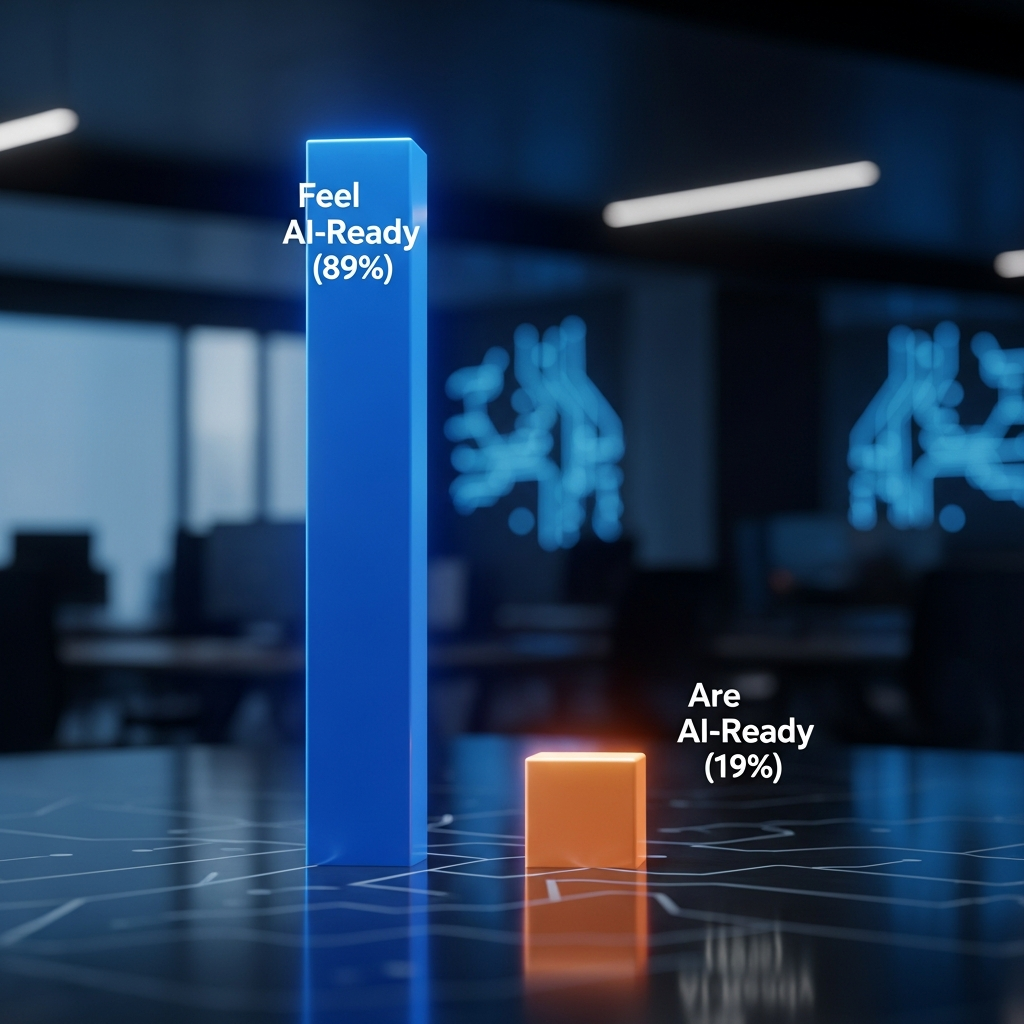
This chasm isn't theoretical. It manifests directly in project failures. "Why Most Enterprise AI Projects Never Scale" is a common headline, and this skills gap is a core reason (Why Most Enterprise AI Projects Never Scale). You can buy the best GPUs, license the most advanced models, but if your team can't integrate, fine-tune, monitor, and troubleshoot these systems effectively, they remain pilots—demos that never see the light of production.
We see a paradox: India leads global AI health adoption at 85%, far ahead of the US or UK (India tops global AI health adoption at 85 pc, far ahead of US, UK: Report). This suggests a strong drive for adoption, perhaps fueled by necessity and opportunity. But adoption isn't the same as effective, scalable deployment. The underlying engineering discipline—understanding how Large Language Models actually work, not just how to prompt them—remains critical. Without that deep understanding, companies are building on shaky foundations. Time is the ultimate constraint for any business, and wasting it on poorly executed AI initiatives, driven by perceived readiness rather than actual skill, is a luxury few can afford.
The tools are getting better, no doubt. But the hard truth remains: AI is not a magic bullet; it's a powerful tool that demands discipline, deep understanding, and rigorous governance. Without these, the future of AI agents and enterprise deployments will be littered with more gimmicks than game-changers.