BLOG // 2026.04.04 // 07:00 SGT
Infrastructure as Destiny: Multi-Model Routing in the Agentic Era
As AI platforms move past initial experimentation, multi-model routing emerges as the necessary bedrock for reliable, compounding agentic workflows.
The noise around AI right now is deafening. Every week brings a new model release, a fresh benchmark, or a grand proclamation about the autonomous future. But if you look past the hype, the real story of April 2026 isn't about which single model is the "smartest." It’s about the infrastructure required to make these systems actually work, reliably and continuously, in the real world.
We are fully entering the agentic AI era. This means moving from simple prompt-and-response interactions to complex workflows where AI systems break down tasks, make decisions, and execute multi-step processes autonomously. However, relying on a single monolithic model for these workflows is a fragile strategy.
The structural shift we are seeing—highlighted by Google’s recent release of Gemma 4 and the growing focus on edge and local deployments—is the absolute necessity of multi-model routing. It has transitioned from a nice-to-have optimization to foundational infrastructure.
The Problem with Monolithic Reliance
For a long time, the default approach was to throw the largest, most capable model at every problem. This works well in a research environment or for highly unconstrained creative tasks, but it fails in enterprise execution.
Why? Because of constraints. Time to solve a problem is constrained by API latency. Reliability is constrained by rate limits and service outages. Cost is constrained by the sheer token volume of agentic loops. When an agentic workflow involves twenty discrete steps—from basic data extraction to complex reasoning and code execution—using a flagship, trillion-parameter model for every step is both economically and architecturally unsound.
This is where multi-model routing becomes essential.
What is Multi-Model Routing?
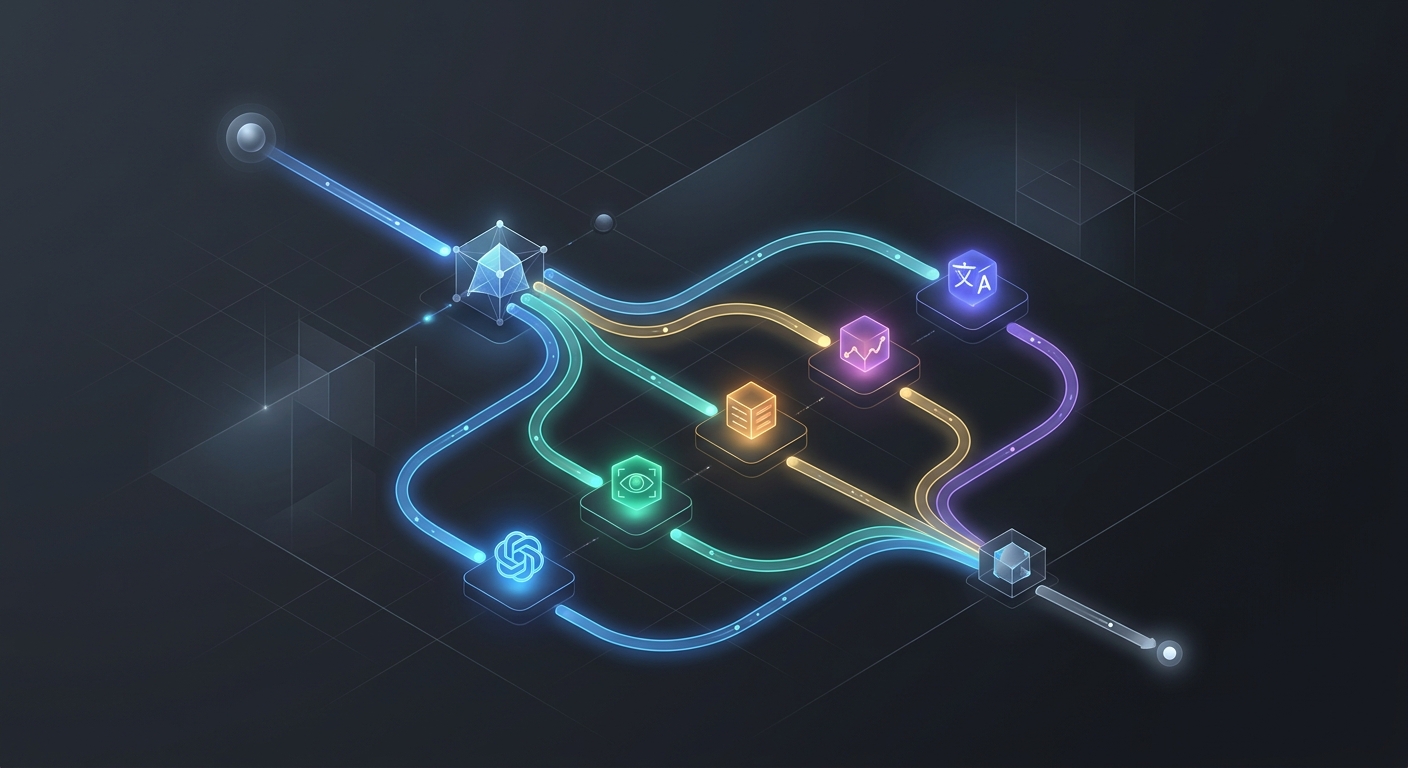
At its core, multi-model routing is an intelligence gateway. Instead of hardcoding a specific model into an application, you route requests through a decision layer that dynamically selects the best model for the specific task at hand.
Need to summarize a massive internal log file? Route it to a fast, cost-effective model with a massive context window. Need complex logical reasoning to determine the next step in a workflow? Route it to a flagship reasoning model. Need to execute code securely? Route it to a specialized, locally hosted model operating within a secure enclave.
This approach acknowledges a simple truth: no single model is the best at everything. By decoupling the application logic from the underlying model provider, enterprises build resilience. If one provider goes down or deprecates a model, the routing layer simply shifts traffic to an alternative.
Compounding Behavior and the Baseline
I often talk about the rate of change and compounding behavior. The goal isn't just to solve a problem once; it’s to build systems that make solving the next problem faster and easier.
Multi-model routing is compounding infrastructure. Once you have a unified routing layer, adding new capabilities becomes trivial. When a new open-source model like Meta Llama or Gemma 4 drops, offering strong performance for specific coding tasks under a permissive license, you don't need to rewrite your application. You simply add it to your routing registry and direct relevant tasks to it.

This raises the baseline of your entire organization. Your systems become faster, more resilient, and more cost-effective without requiring fundamentally new engineering efforts. The infrastructure itself compounds in value as the ecosystem around it matures.
The Rise of Specialized Agents
The UK regulators recently outlined a five-level framework for agentic AI, warning of near-term risks while acknowledging the massive potential. A key takeaway is the need for governance and control.
Multi-model routing provides a mechanism for this governance. By routing sensitive tasks to localized, highly constrained models, organizations can implement semantic guardrails. You can ensure that an agent tasked with drafting an email never has access to the internal financial database, simply by routing its requests to a model physically incapable of accessing that data.
We are moving away from generalized "do-it-all" AI and toward specialized, highly constrained agents working in concert.
Pragmatic Integration
So, how do you actually implement this? It starts with acknowledging reality.
- Audit Your Workflows: Break down your existing AI integrations. What are the discrete steps? What is the actual requirement for each step (speed, cost, reasoning capability)?
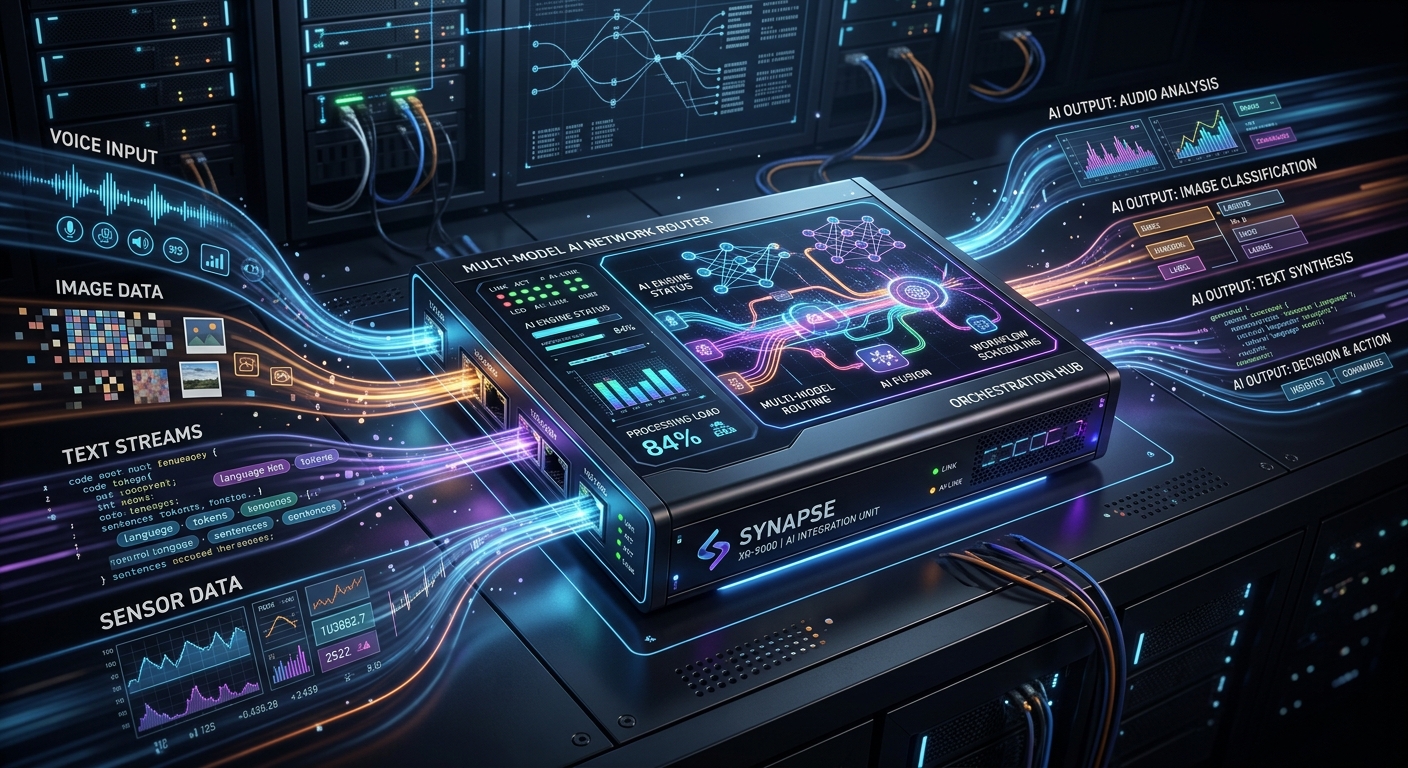
- Implement a Gateway: Don't call APIs directly from your application logic. Introduce an abstraction layer. Whether you build it in-house or use an emerging platform like AWS Bedrock, all requests must pass through a router.
- Embrace Open Weights: The gap between proprietary and open-weights models is closing rapidly. For many enterprise tasks, models running locally or on dedicated infrastructure offer sufficient capability with vastly superior control and cost profiles.
Looking Ahead
The next phase of AI isn't about intelligence; it's about operations. It’s about building the plumbing that allows intelligence to flow reliably where it’s needed.

By focusing on infrastructure like multi-model routing, we stop chasing the latest shiny object and start building systems that last. We move from performing parlor tricks to executing critical business functions. That is the essence of compounding value, and it is the only sustainable way to navigate the agentic era. How you build your foundation today dictates what you can build on top of it tomorrow.